



An End to the Autocrat at the Table
Every group has one. The person who, through no fault of their own, holds veto power over the entire meal. It could be the friend with a new gluten allergy, the staunch vegan, or the picky eater who subsists on a diet of plain chicken and potatoes. In
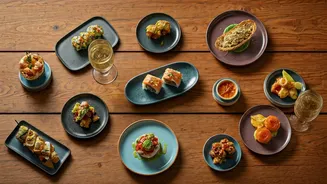
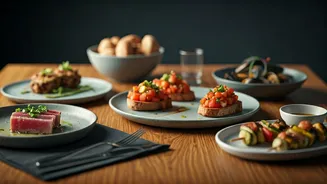
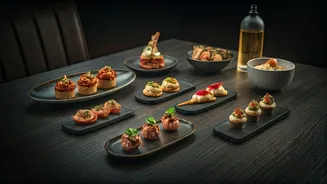
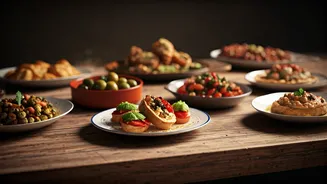
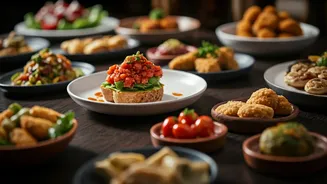
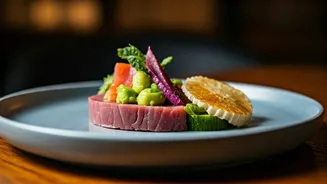
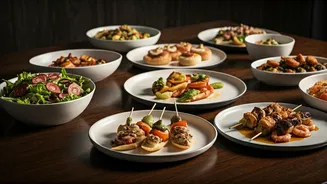
a traditional restaurant setting—where everyone orders a single, large entrée—that one person’s needs can dictate the choice of restaurant for everyone. If you’re craving a juicy steak but your friend can’t eat there, the steakhouse is out. Small plates dismantle this dynamic entirely. A tapas or mezze-style meal is a decentralized democracy of dining. The vegan can order the patatas bravas, the grilled asparagus, and the white bean dip. The carnivore can get their albondigas and chorizo. The person with a dairy intolerance can easily steer clear of the queso fundido. Everyone gets what they want, and no one has to make a sacrifice for the good of the table. The meal becomes an 'and' proposition, not an 'or' one, liberating the group from the tyranny of the single most restrictive palate.
The Check-Splitting Ceasefire
There are few social rituals more fraught with tension than splitting the bill after a big group meal. The performative, 'Oh, let’s just split it evenly,' is immediately followed by a chorus of quiet resentments. Jessica, who only had a side salad, bristles at subsidizing Mark’s third old-fashioned. David, who didn’t touch the calamari appetizer everyone else devoured, mentally subtracts $4.50 from his share. The whole process can require a certified public accountant and a degree in conflict resolution, often ending with a pile of credit cards and a flustered server. Small plates offer a blessed truce in this age-old war. When everyone has shared every dish, the logic for splitting the check evenly becomes airtight and genuinely fair. The meal was a communal effort, and so is the payment. The individual accounting of who-ate-what disappears, replaced by a simple, clean division. Everyone contributed to the shared experience, so everyone contributes equally to the bill (drinks aside, which are easily handled). It’s the fastest, cleanest, and most socially elegant way to end a meal.
A Built-In Conversation Starter
In a standard dining format, the food arrives and a quiet lull often falls over the table. Everyone retreats into their personal entree zone. You might ask a perfunctory 'How’s your salmon?' but the experience is fundamentally individual. You have your plate, I have mine. Small plates are the opposite. They are inherently interactive. The arrival of each new dish is an event, a prompt for conversation. 'Who wants to try the bacon-wrapped dates?' 'Is this spicy?' 'You *have* to try a bite of this.' The act of passing, sharing, and portioning forces engagement. It turns the food from mere sustenance into a centerpiece of the social gathering. This style of eating encourages a more fluid, dynamic, and communal energy, breaking down the invisible walls that individual plates can create and keeping the conversation flowing as freely as the food.
Solving for Different Appetites
It’s a classic group dining mismatch: one person is starving and ready to eat a three-course meal, while another just wants a light snack. In the world of entrees, this forces the light eater into a corner. They either over-order and over-spend on a massive plate they can’t finish, or they try to make a meal out of a sad side salad while their friend demolishes a porterhouse steak. It’s awkward for everyone. Small plates gracefully solve this imbalance. The ravenous friend can champion ordering a few extra dishes for the table, satisfying their hunger without pressure. The friend who wants a lighter meal can nibble on a few items, contributing to the group order without committing to a 1,200-calorie entrée. It allows each person to calibrate their consumption to their own appetite and budget, all within the same communal framework. Everyone leaves satisfied, nobody leaves feeling uncomfortably stuffed or short-changed.