








What Makes AI Weather Forecasts Different?
For decades, weather forecasting has relied on complex physics-based simulations. These traditional models are incredibly powerful but also computationally intensive, taking hours to run on massive supercomputers. This is where Artificial Intelligence,
specifically machine learning, marks a significant leap forward. AI models, like Google's groundbreaking GraphCast, don't try to simulate the physics of the entire atmosphere from scratch. Instead, they are trained on decades of historical weather data. By analyzing countless past weather patterns, the AI learns to recognize how atmospheric conditions evolve over time. The result? It can predict future states with remarkable speed and accuracy, often in under a minute on a single computer. This allows for more frequent updates and, crucially, a better handle on forecasts extending beyond the typical three-to-five-day window of high confidence. For road trippers, this translates to more reliable 7-to-10 day outlooks, which can be the difference between packing rain gear or sunscreen.
From the Lab to Your Smartphone
This advanced technology isn't just a science experiment; it's already being integrated into the consumer apps you know and use. Major providers like The Weather Company (owned by IBM) and AccuWeather have been incorporating machine learning for years to refine their forecasts. They blend AI predictions with traditional models and human expertise to create a hybrid forecast that aims for the best of all worlds. What’s new is the speed and public availability of purely AI-driven models. While you might not see a big “Powered by AI” button on your favorite app’s home screen, the technology is working behind the scenes. It's responsible for the growing confidence in those week-out predictions for temperature, precipitation, and wind. Think of it as a quiet upgrade that makes your existing tools smarter, helping you decide whether that Memorial Day weekend trip to the mountains is a green light or a potential washout.
Planning Your Route, Not Just Your Destination
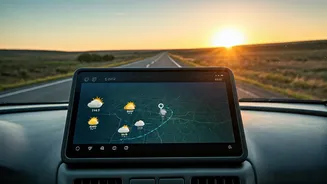
The real magic for road trippers isn’t just knowing the weather at your final stop; it's understanding the conditions along the entire journey. This is where route-specific forecasting tools shine. Apps like DriveWeather and the weather layers in navigation apps such as Waze or Google Maps are designed for this exact purpose. These services pull forecast data and plot it directly onto your driving route, showing you what the weather will be like when you are expected to be in a specific location. Will you hit that mountain pass before the snow starts? Will you be driving through a line of thunderstorms in Texas three hours into your trip? AI-enhanced forecasting improves the data these apps use, allowing them to more accurately predict the timing of weather fronts moving across your path. This granular, on-the-go insight allows for dynamic planning, like leaving an hour earlier to beat a storm or planning a lunch stop to let the worst of a downpour pass.
Tips for the AI-Powered Traveler
Even with better tools, smart planning is key. First, use the improved long-range forecasts to make your initial go/no-go decision about a week out. As your trip gets closer, start checking the forecast more frequently. An AI model can run many predictions a day, so the forecast you see Tuesday morning may be more refined than the one from Monday night. Second, don't just check the weather at your destination. Use a route-planning weather app to visualize your whole trip. This helps you anticipate changing conditions and avoid surprises. Third, pay attention to probabilistic forecasts. Many apps are moving away from simply saying “30% chance of rain” and toward more intuitive graphs showing when rain is most likely to occur. This helps you plan activities with more precision. Finally, remember that AI is a powerful tool, not a crystal ball. It’s excellent at predicting large-scale systems, but localized, pop-up thunderstorms can still be tricky. Always have a backup plan and stay flexible.