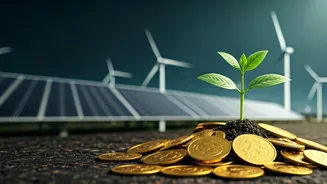









Investing with a Conscience
For many Millennials and Gen Zers entering the market, investing is an extension of their personal identity and ethical beliefs. This isn't your grandfather's stock market, where the only color that mattered was green. Today's first-time investors have
grown up with climate change as a constant, defining issue. They are more likely to see their capital as a tool for change. Investing in a green energy mutual fund isn't just a financial transaction; it's a vote for a future they want to see. By pooling their money into funds that support solar, wind, and other renewable technologies, they are actively divesting from fossil fuels and aligning their portfolio with their principles. This values-driven approach, often called 'impact investing,' is a fundamental departure from previous generations who may have separated their financial goals from their social concerns.
The Performance Myth Is Busted
For decades, a stubborn myth persisted in financial circles: investing sustainably meant sacrificing returns. The assumption was that 'feel-good' funds couldn't compete with the profitability of traditional energy, tech, or industrial giants. That perception has been thoroughly debunked. In recent years, many green energy and ESG (Environmental, Social, and Governance) funds have not only met but often exceeded the performance of broader market indexes. Several factors are at play. The cost of producing renewable energy has plummeted, making solar and wind companies more competitive and profitable. Furthermore, as industries face increasing regulatory pressure and consumer demand for sustainability, companies leading the green transition are often seen as better long-term bets. First-time investors, unburdened by old biases, are simply looking at the data and seeing a sector with significant growth potential.
Accessibility and a Favorable Policy Wind
The rush to green funds wouldn't be possible without a revolution in market access. The rise of low-fee brokerage accounts, commission-free trading apps, and fractional shares has democratized investing. You no longer need thousands of dollars and a stuffy financial advisor to get started. A new investor can put $50 into a green energy mutual fund or ETF from their smartphone. This ease of access has opened the door for millions. At the same time, government policy is creating a powerful tailwind. Landmark legislation like the Inflation Reduction Act has funneled billions of dollars in subsidies and tax credits into the clean energy sector. This government backing provides a layer of stability and signals a long-term commitment to the industry, reducing perceived risk and making these funds even more attractive to newcomers looking for a growth story they can believe in.
The Power of Diversification
For a first-time investor, one of the most intimidating concepts is risk. Putting all your money into a single company—even a promising one—is a gamble. Mutual funds offer a powerful solution: instant diversification. A green energy mutual fund doesn't just own stock in one solar company; it holds positions in dozens or even hundreds of companies across the entire renewable ecosystem. This could include wind turbine manufacturers, battery storage innovators, electric vehicle infrastructure companies, and green utility providers. If one company falters, the fund's overall performance is cushioned by the success of others. This built-in safety net is incredibly appealing to new investors who want to participate in the green energy boom without taking on the concentrated risk of picking individual winners and losers.