





A Tale of Two Threats
When we think of rocks from space, our minds often jump to the cataclysmic, dinosaur-ending asteroids from Hollywood movies. While NASA does track these large Near-Earth Objects (NEOs), they represent only one side of the coin. The more persistent and
immediate threat to astronauts and their spacecraft comes from something far smaller: micrometeoroids and orbital debris, collectively known as MMOD. Think of it this way: a large asteroid is like a potential wrecking ball you can see coming from miles away. MMOD, on the other hand, is like a constant storm of cosmic sandblasting. These particles, often no bigger than a grain of sand, travel at hypersonic speeds—up to 17,000 miles per hour or more. At that velocity, even a fleck of paint can impact with the force of a bowling ball, capable of puncturing a suit or damaging critical systems.
NASA's Eyes on the Sky
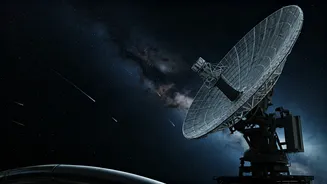
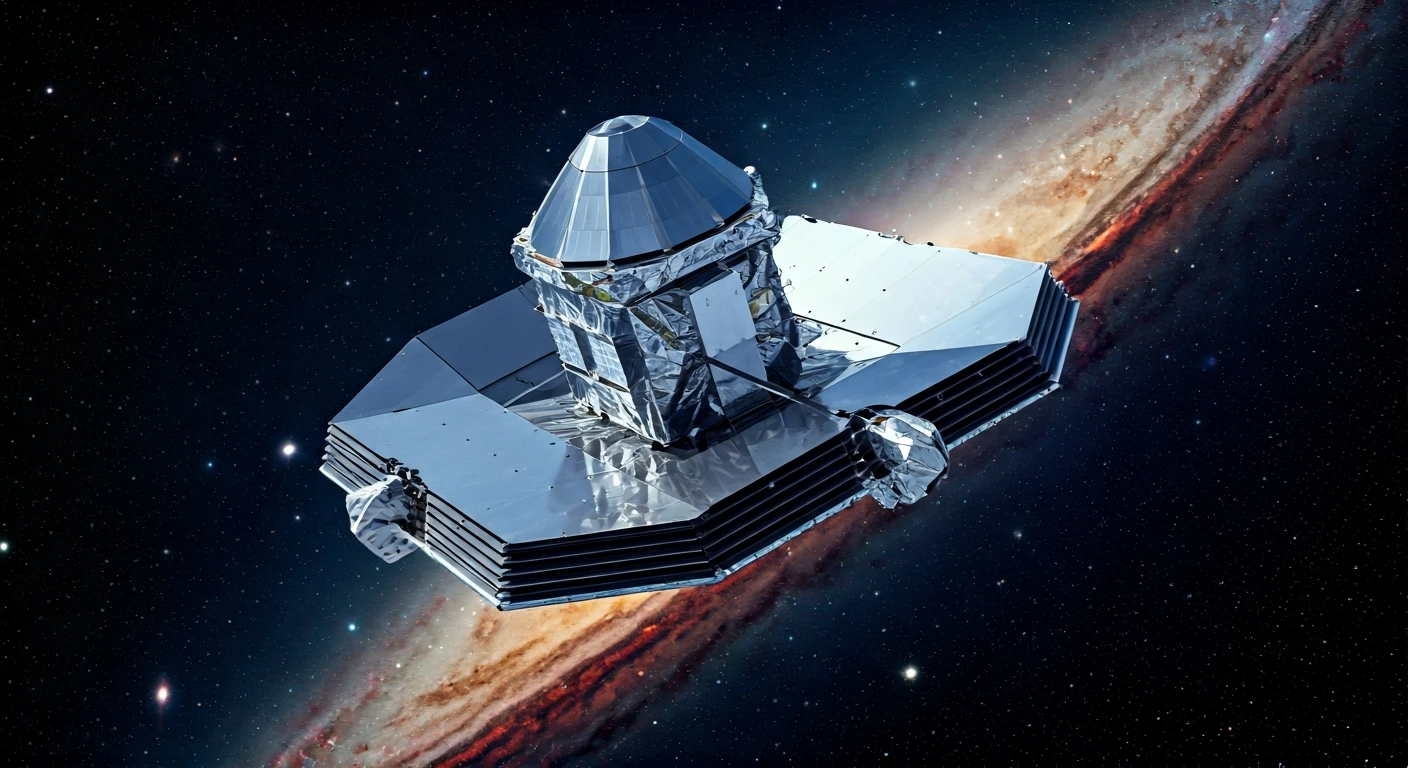
To counter these threats, NASA runs a sophisticated, multi-layered surveillance program. The Planetary Defense Coordination Office (PDCO) is the agency's nerve center for this effort. Its primary job is to find, track, and characterize NEOs that are 140 meters in size or larger—big enough to cause severe regional damage on Earth. This involves a global network of ground-based telescopes and, soon, the space-based NEO Surveyor telescope, dedicated to spotting these objects. But tracking isn't just for planetary defense. Knowing the precise orbits of thousands of asteroids helps mission planners chart the safest possible course for spacecraft. For the smaller MMOD threat, the U.S. Space Surveillance Network tracks tens of thousands of pieces of orbital debris larger than a softball. This catalog allows missions in low-Earth orbit, like the International Space Station, to perform avoidance maneuvers. The real challenge is the millions of smaller, untrackable particles that constitute a constant, ambient risk.
Designing a Cosmic Shield
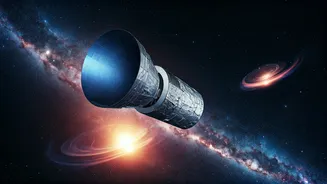
Since you can’t dodge every single piece of cosmic shrapnel, the only solution is to build spacecraft that can withstand the impacts. This is where engineering and materials science come into play. Spacecraft like the Orion capsule, which will carry Artemis astronauts, are equipped with advanced shielding. This isn't just a thick slab of metal; it’s a multi-layered system designed to break up and vaporize an incoming particle. The most common design is the Whipple shield, named after astronomer Fred Whipple. It consists of a thin outer layer—the sacrificial shield—that shatters the MMOD particle into a cloud of smaller fragments. A gap then allows this cloud to spread out before it hits a thicker second wall, distributing the impact energy over a wider area and preventing a catastrophic puncture. Every critical component of a spacecraft, from the crew module to fuel tanks, is protected by this kind of layered armor, acting as a high-tech bulletproof vest against the hazards of space.
Why Future Missions Raise the Stakes
For decades, most human spaceflight has been confined to low-Earth orbit, which benefits from the partial protection of Earth's magnetic field. But missions like Artemis, which will send astronauts back to the Moon and eventually to Mars, are pushing into a far more hazardous environment. The journey to the Moon takes astronauts through different debris fields and exposes them to higher-velocity meteoroids that aren't slowed by an atmosphere. The Orion spacecraft will travel at much higher speeds than the Space Shuttle ever did, meaning any impact will carry significantly more energy. Furthermore, the longer the mission, the higher the statistical probability of a damaging MMOD strike. This is why NASA's risk models and shielding designs for Artemis are so rigorous. Every square inch of the spacecraft has been analyzed to understand its vulnerability, ensuring that the vessel carrying humanity back into deep space is as resilient as modern science can make it.