





The Familiar 5 Percent
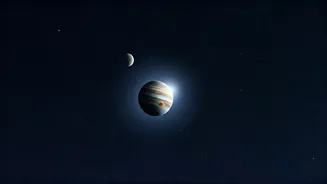
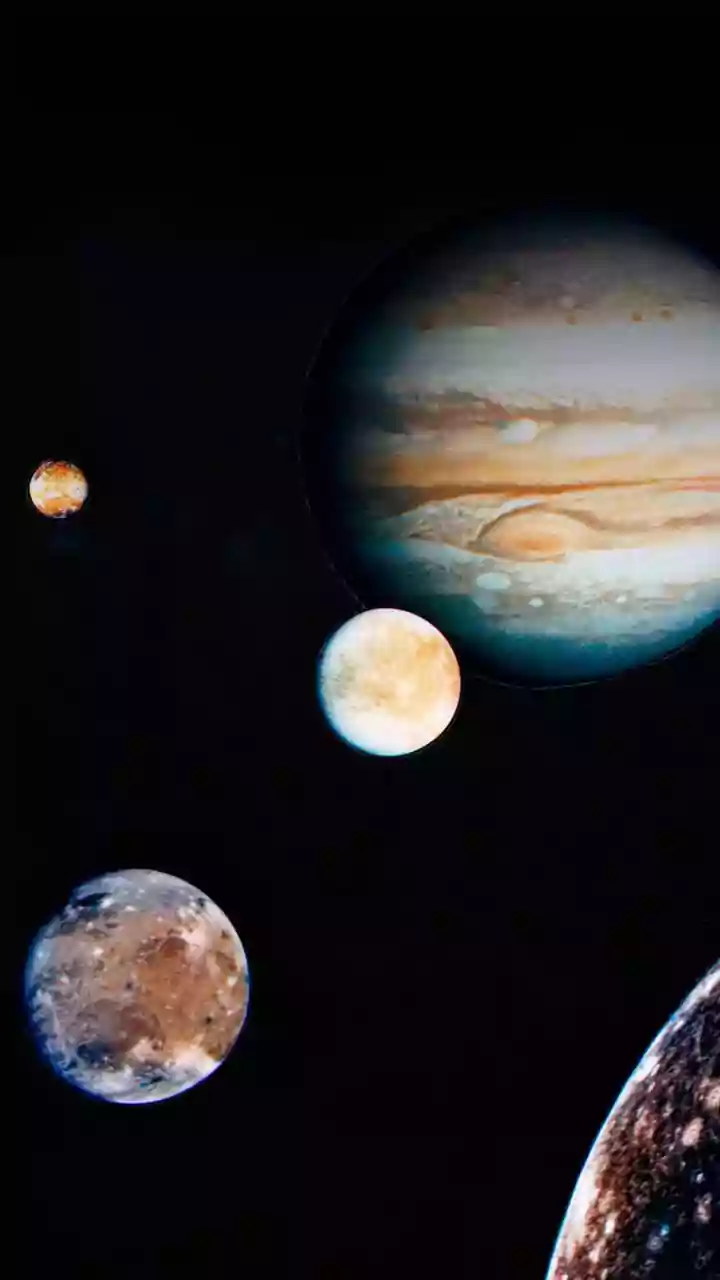
Let’s start with what we know. Everything you’ve ever interacted with, from your morning coffee to the planet Jupiter to the most distant star captured by the James Webb Space Telescope, is made of what physicists call “baryonic matter.” It’s the stuff
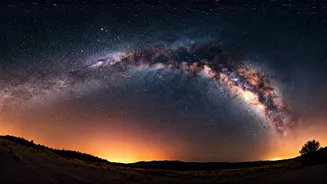
composed of protons, neutrons, and electrons—the building blocks of atoms that form you, me, and everything in the visible universe. For centuries, we assumed this was it. The universe was a grand collection of this tangible, observable material. But as our measurements got better, a startling picture emerged. All of this “normal” matter, the entire glorious catalog of stars and galaxies, accounts for less than 5% of the total mass and energy in the universe. We are, in a very real sense, living on the tip of a cosmic iceberg, oblivious to the immense, invisible structure beneath the surface.
The Case of the Missing Gravity
The first major clue that something was deeply wrong came from watching galaxies spin. In the 1970s, astronomer Vera Rubin observed that stars on the outer edges of galaxies were rotating just as fast as stars near the center. This defied the laws of physics as we knew them. Based on the visible matter, those outer stars should have been moving much slower, or else flung off into space like a child letting go of a merry-go-round. The only way to explain this was if there was a massive, invisible halo of… something… surrounding the galaxy, providing the extra gravitational pull needed to hold it all together. Scientists dubbed this mysterious substance “dark matter.” It doesn’t emit, reflect, or interact with light in any way, which is why we can’t see it. But its gravitational effects are undeniable, shaping the very structure of galaxies and galaxy clusters. This invisible glue is estimated to make up about 27% of the universe.
The Universe’s Runaway Expansion
If discovering an invisible substance that outweighs all visible matter wasn't humbling enough, the mystery deepened in the late 1990s. For decades, we knew the universe was expanding, a remnant of the Big Bang. The logical assumption was that gravity, acting like a cosmic brake, should be gradually slowing this expansion down. But two independent teams of astronomers, studying distant supernovae, found the exact opposite. Not only is the universe expanding, but its expansion is accelerating. It’s as if you threw a ball into the air and, instead of slowing down and falling back, it suddenly shot upward faster and faster. To explain this baffling phenomenon, scientists proposed the existence of “dark energy,” a sort of anti-gravity force inherent to the fabric of spacetime itself. This isn’t just another component of the universe; it’s the dominant one. Current estimates suggest dark energy accounts for a staggering 68% of everything in existence, relentlessly pushing the cosmos apart.
The Grand Scientific Frontier
So, where does that leave us? With the humbling conclusion that 95% of reality is composed of two things we can’t see and don’t understand. We have names for them—dark matter and dark energy—but these are really just placeholders for our ignorance. We don’t know what dark matter particles are. We don’t know why dark energy is causing cosmic acceleration. This isn't a failure of science; it's the very definition of a frontier. Every major physics experiment, from underground detectors searching for dark matter particles to space telescopes mapping the universe’s expansion, is aimed at shedding light on this profound darkness. Finding the answers will likely require a complete revolution in our understanding of physics, potentially revealing new forces of nature or extra dimensions of reality. The greatest discoveries aren't in our past; they are waiting for us in the vast, unknown territory that makes up nearly all of everything.