


A World Washed in Color
When most Americans picture the Himalayas, they imagine jagged, snow-dusted peaks and stoic climbers battling the elements. It’s a landscape defined by scale, stone, and sky. But from late July through August, a different kind of magic takes hold in certain
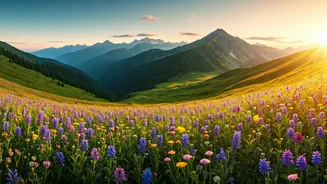
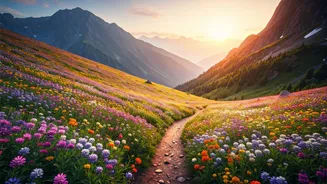
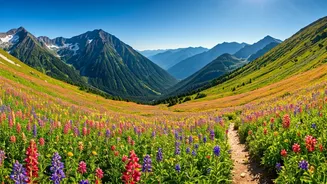
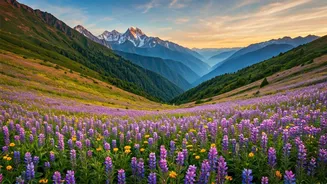
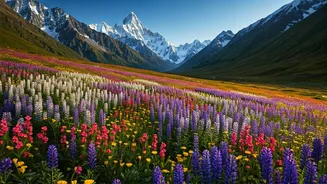
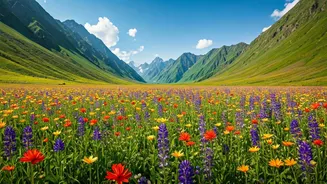
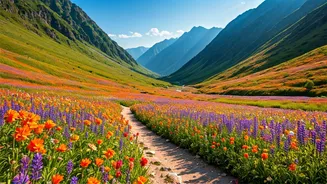
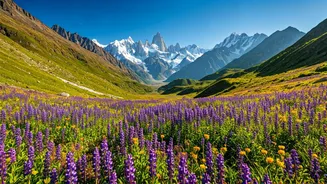
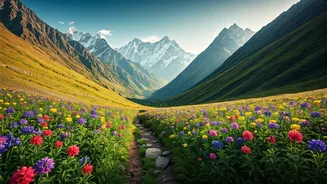
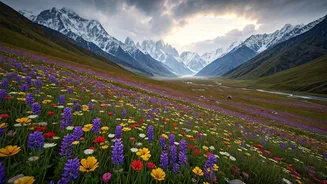
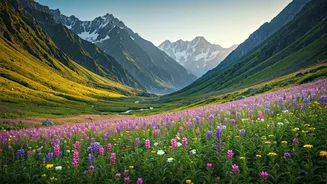
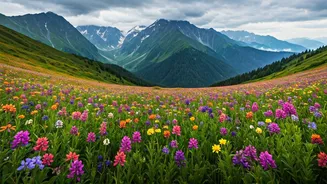
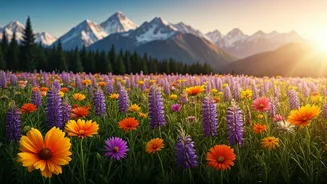
high-altitude valleys. The monsoon season, often considered the “off-season” for trekking, triggers a biological spectacle: the mass blooming of alpine flowers. Entire meadows, nestled between 11,000 and 14,000 feet, erupt in a riot of purples, yellows, blues, and reds. The air, usually thin and crisp, becomes thick with the scent of damp earth and wild blossoms. It’s a temporary paradise, a fleeting reward for those willing to embrace the mist and rain for a chance to walk through a real-life impressionist painting.
The Valley of Flowers: A Hiker's Paradise
The most famous and accessible place to witness this phenomenon is India’s Valley of Flowers National Park. Located in the state of Uttarakhand, this UNESCO World Heritage site is legendary among botanists and trekkers alike. The valley itself is a glacial corridor, about six miles long, carpeted with over 500 species of flowers, many of which are found nowhere else on Earth. Local legend claims it is the place from which the Hindu deity Hanuman collected a life-saving herb. For modern travelers, it’s a protected sanctuary where nature’s artistry is on full display. The trek isn’t a technical climb, but a moderate walk that allows you to be fully immersed in the environment, surrounded by a sea of color framed by dramatic, cloud-wreathed cliffs.
When and How to Go
Timing is everything. The floral peak is startlingly brief, lasting from the last week of July through the end of August. Before that, snow covers the valley; after, the flowers wither with the approaching autumn. The journey typically begins from the small village of Govindghat, which is a day’s drive from the larger hub of Rishikesh. From Govindghat, it’s a multi-day trek. The first leg is a steady, mostly paved path to the base camp village of Ghangaria. This is where trekkers acclimatize and spend the night before making the day hike into the Valley of Flowers itself. The trail from Ghangaria into the valley is a well-maintained path, but the altitude makes it a challenge. Expect to walk slowly, breathe deeply, and be prepared for afternoon showers—a good rain jacket is non-negotiable.
What You'll Actually See
The sheer diversity of flora is staggering. You’ll walk through fields of Himalayan balsam, geraniums, and potentillas. But the real prizes are the rarer species. Look for the ethereal blue poppy, a flower so vivid it seems unreal. You might also spot the elusive Brahma Kamal, a sacred, saucer-like blossom that blooms only at night at these high altitudes, or the bizarre-looking cobra lily. The valley is also home to wildlife, including the Himalayan black bear, musk deer, and a variety of birds. While sightings of larger mammals are rare, the constant hum of insects and the flutter of butterflies create a vibrant, living ecosystem that engages all the senses. It’s a place that demands you slow down and look closely at the miniature world thriving underfoot.
Beyond the Blooms
The base camp at Ghangaria serves as a crossroads for another significant journey. A separate, steeper trail from the village leads to Hemkund Sahib, one of the most revered pilgrimage sites for Sikhs. Perched at an altitude of over 15,000 feet, the gurdwara (Sikh temple) sits beside a glacial lake, also surrounded by blooming Brahma Kamal flowers. Many trekkers combine a visit to the Valley of Flowers with this spiritual high-altitude trek. Making the strenuous climb to Hemkund Sahib offers a profound cultural counterpoint to the natural splendor of the valley, blending physical challenge with a powerful sense of peace and devotion that has drawn pilgrims here for centuries.