








A Landing Heard Around the World
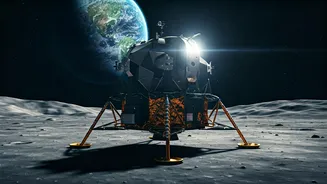
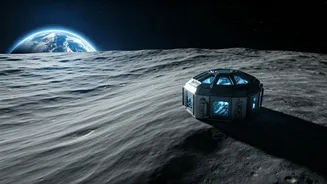
For decades, space exploration was the exclusive domain of a few superpowers. But India’s achievement was historic on multiple levels. It became only the fourth country to execute a soft lunar landing, joining the United States, the former Soviet Union,
and China. More significantly, it was the first to ever reach the Moon's forbidding south pole—a region of permanent shadow and frozen water ice that is seen as critical for future lunar bases and long-term missions. Where others had tried and failed, India succeeded. The moment captivated the world, transforming the Indian Space Research Organisation (ISRO) from a respected, if modest, agency into a top-tier player. It wasn't just about planting a flag; it was a demonstration of precision, resilience, and advanced engineering on a shoestring budget, proving that audacious goals in space are no longer the sole property of the world’s wealthiest nations.
The Secret Sauce: Frugal Innovation
Perhaps the most disruptive aspect of India’s space program is its unparalleled cost-effectiveness. The entire Chandrayaan-3 mission cost an estimated $75 million—less than the production budget for many Hollywood sci-fi blockbusters. This isn't an anomaly; it's a core philosophy. ISRO has built a global reputation for what many call “frugal engineering,” a mindset focused on simplifying designs, using existing technologies creatively, and maximizing every dollar. This approach stands in stark contrast to the multi-billion-dollar programs often run by NASA and other legacy agencies. By proving that cutting-edge space exploration can be done affordably, India isn't just competing; it's changing the economic model of the industry. This makes it an attractive partner for nations looking to get into space without breaking the bank and a serious competitor in the burgeoning commercial satellite launch market, which was once dominated by American and European companies.
What’s Next? Humans, a Space Station, and Mars
The lunar landing was not a finish line but a starting block. ISRO has a slate of ambitious projects that signal its intent to become a comprehensive space power. The most anticipated is the Gaganyaan programme, which aims to send a crew of three Indian astronauts into low-Earth orbit. A successful mission would make India the fourth country to achieve independent human spaceflight capability. Beyond that, the ambitions grow. Prime Minister Narendra Modi has directed the agency to establish an Indian space station, the “Bharatiya Antariksha Station,” by 2035 and to aim for sending an Indian astronaut to the Moon by 2040. There is also serious talk of a follow-up mission to Mars and a probe to study Venus. These aren't just far-off dreams; they are national priorities backed by a government eager to cement India’s status as a global technology and science leader.
A New Player in a Crowded Field
India’s rise is happening within a complex geopolitical landscape. As the U.S. and China increasingly view space as a domain of strategic competition, India is carving out a unique role as a powerful, largely independent actor. The United States sees India as a key democratic partner in space, signing it onto the Artemis Accords—a set of principles for peaceful lunar exploration—and collaborating on projects like the NASA-ISRO Synthetic Aperture Radar (NISAR) satellite. For the U.S., a strong Indian space program provides a valuable counterweight to China’s opaque and rapidly expanding ambitions. At the same time, India maintains its strategic autonomy, collaborating with a wide range of partners, including European agencies and Japan. It offers a blend of high-tech capability and diplomatic flexibility that few other nations can match, making it a pivotal player in shaping the rules and norms of the new space age.