




It Eliminates Kitchen Traffic Jams
Think about the main pathways in your kitchen: from the fridge to the sink, from the stove to the counter. In many designs, a standard rectangular island creates sharp, 90-degree corners that become natural pinch points. These corners jut out into walkways,
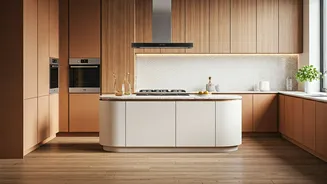
forcing you to maneuver around them and creating invisible bottlenecks. A rounded or curved island does away with this problem entirely. By softening the edges, it creates a gentler, more intuitive traffic pattern. People can flow around the island without subconsciously stopping or turning sharply, making the entire room feel more open and accessible. This is the 'dynamic' optimization—it’s not about saving static square feet, but about improving the movement of people within them.
It Creates a More Social Hub
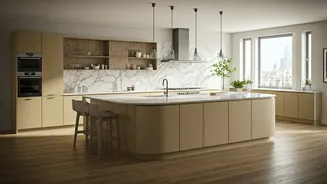
A long, straight island can feel like a diner counter, lining everyone up in a row. This setup isn't ideal for conversation, as it forces people to crane their necks to speak with someone who isn't right next to them. A rounded island, particularly one with a semi-circular end for seating, completely changes the social geometry. It allows people to angle themselves toward one another, creating a natural gathering spot that encourages face-to-face interaction. Whether it's kids doing homework or guests enjoying a drink while you cook, a curved design turns the island from a simple workspace into a true communal table, making the kitchen feel more welcoming and connected.
It’s a Major Win for Safety
This benefit is as simple as it is crucial: no more bruised hips. Sharp corners on a kitchen island are a notorious hazard, especially in busy households or homes with small children who tend to run without looking. A painful bump against a granite corner is a rite of passage many would prefer to skip. Opting for a rounded design completely removes this everyday risk. It’s a subtle but significant detail that contributes to a safer, more comfortable environment for everyone. This 'soft' approach to design isn't just about aesthetics; it’s about creating a space that is forgiving and fundamentally more pleasant to live in.
It Softens the Room’s Hard Lines
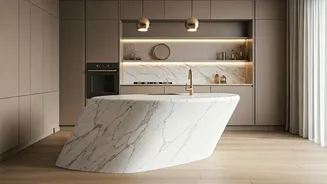
Kitchens are inherently full of rigid lines and hard angles—from the grid of the cabinetry to the sharp rectangles of the refrigerator, oven, and dishwasher. This can sometimes make the space feel sterile or boxy. A rounded island introduces an organic element that provides powerful visual relief. The gentle curve draws the eye, breaking up the monotony of straight lines and adding a touch of elegance and sophistication. It acts as a natural focal point, making the island feel less like a bulky block in the center of the room and more like a deliberate, sculptural piece of furniture. This softening effect can make the entire kitchen feel more custom-designed and architecturally interesting.
It Can Maximize Comfortable Seating
While it might seem counterintuitive, a curved overhang can be more efficient for seating than a straight one. On a rectangular island, corner seats are often awkward and cramped. A continuous curve, however, allows for more flexible stool placement and provides more elbow room between each person. You might be able to comfortably fit three stools along a curve where a squared-off design would awkwardly accommodate only two. This design choice prioritizes the comfort of those sitting at the island, encouraging them to linger longer. It’s a smart way to maximize the island's function as a casual dining spot without sacrificing precious floor space.