


Beyond the Postcard Vacation
When you think of a getaway, your mind probably drifts to sun-drenched beaches or the charming chaos of a European capital. Kharchi Puja is neither. Held for a week every July in Old Agartala, this festival is a sensory overload in the best way possible.
The air is thick with incense, the rhythmic clang of bells, and the murmur of thousands of devotees. Instead of quiet contemplation, you’ll find a bustling fairground atmosphere, a sea of people celebrating a tradition that predates modern religion and national borders. It’s not a place you come to unwind; it’s a place you come to witness something ancient, alive, and profoundly different from the sanitized version of culture often served to tourists. This is travel as participation, a chance to stand at the vibrant, messy intersection of history and faith.
A Pantheon of 14 Deities
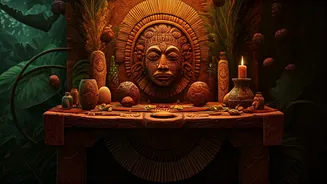
At the heart of Kharchi Puja are the Chaturdasha Devata, or the 14 deities, who are the ancestral gods of the Tripuri people. According to legend, these deities were once protected by a sacred cloth. When their mother left, she instructed them not to uncover it until her return. Driven by curiosity, they disobeyed, and their bodies withered away, leaving only their heads. Today, the festival venerates these 14 sculpted heads, which are housed in a temple in the old capital. For 51 weeks of the year, they remain hidden from public view. But during Kharchi Puja, they are brought out and celebrated. This isn't just an abstract religious event; it's a deeply personal affair tied to the royal lineage of Tripura and the very identity of its indigenous people. The festival serves as an annual reunion with the divine guardians of the land.
Where Tribal Roots Meet Hindu Rituals
What makes Kharchi Puja so unique is its syncretic nature—a beautiful, complex blend of indigenous tribal customs and mainstream Hinduism. The name itself, “Kharchi,” derives from “khar” (sin) and “chi” (cleaning), marking it as a festival for washing away collective sins and praying for the community’s well-being. While Hindu gods like Shiva, Vishnu, and Durga are part of the pantheon, the core rituals are performed by the Chantai, the royal head priest, who must belong to a tribal community. The festival begins with a ceremonial procession where the deities are carried to the Saidra River for a holy bath, a ritual that feels both deeply sacred and joyously public. This fusion is a living testament to India’s layered history, where different belief systems didn't just coexist but merged into something new and enduring.
The Spectacle and the Sacrifice
This is where the festival departs most sharply from a “basic getaway.” Kharchi Puja involves animal sacrifice. For many Western visitors, this can be a jarring sight, but it's an integral and ancient part of the proceedings, seen as a sacred offering to appease the deities and ensure their blessings. Pigeons and goats are offered on behalf of the state and by individual devotees seeking divine favor. It’s a raw, unfiltered expression of faith that stands in stark contrast to the often-performative spirituality found in more tourist-trodden destinations. The ritual isn't for the faint of heart, but it provides a powerful, unvarnished look into a belief system that has remained steadfast for centuries. It underscores the festival's purpose: this is not entertainment; it is a deeply serious covenant between a people and their gods.