



Your Pre-Dawn Appointment with a Giant
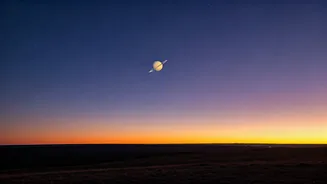
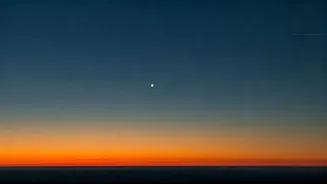
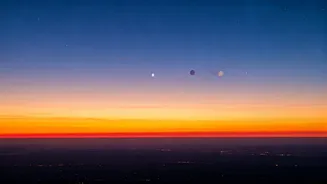
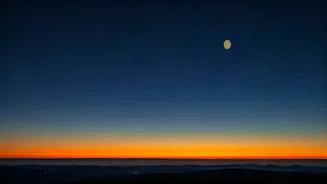
The key to spotting Saturn is timing. You’ll need to be an early riser, or a very late-nighter. Look to the eastern sky about 60 to 90 minutes before your local sunrise. This is the sweet spot when the sky is beginning to lighten but is still dark enough
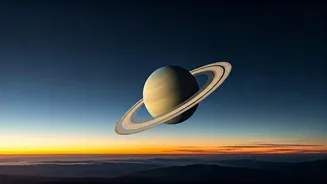
for planets and bright stars to stand out. Saturn will appear as a steady, non-twinkling point of light. While stars twinkle because their light is distorted by our atmosphere, planets are much closer and appear as tiny discs, making their light much more stable. Scan the low eastern or southeastern horizon. If you see a moderately bright 'star' that isn’t flickering and has a distinctly yellowish tint, you’ve likely found it. For many across the U.S., it will be hanging out in the constellation Aquarius, but you don't need to know constellations to find it—just look for the brightest, steadiest 'star' in that part of the sky.
Why the Warm Yellow Glow?
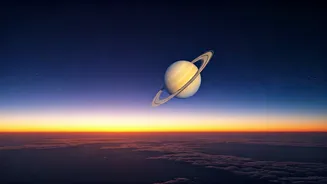
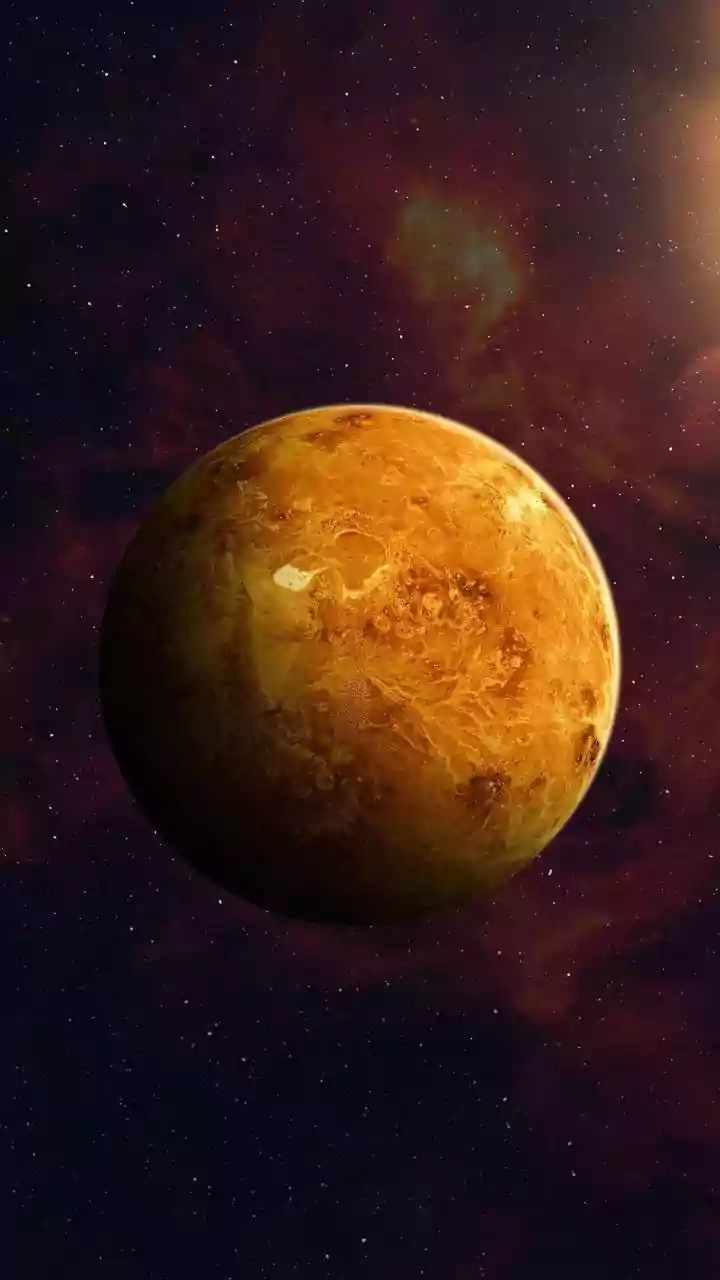
That signature color isn’t an accident. Saturn is a gas giant, a colossal ball of hydrogen and helium. Its upper atmosphere is filled with ammonia ice clouds, and traces of other chemical compounds. When sunlight, which is white light containing all colors, travels hundreds of millions of miles to reach Saturn, it reflects off these cloud tops. The chemical composition of the clouds absorbs some colors of the light spectrum while reflecting others, primarily in the yellow-white part of the spectrum. This is what our eyes perceive from Earth. It’s a calm, golden-hued light, a stark contrast to the brilliant silver of Venus or the rusty red of Mars. You’re not just seeing a point of light; you’re seeing ancient sunlight bouncing off a world 800 million miles away.
Upgrade Your View (No Telescope Required)
While you can absolutely spot Saturn with just your naked eyes, a simple pair of binoculars will dramatically enhance the experience. You won’t see the rings in glorious detail—for that, you really do need a telescope—but binoculars will do two important things. First, they will gather more light, making Saturn appear brighter and its color more pronounced. Second, they will stabilize the view and magnify the planet just enough that you might be able to discern it’s not a perfect point. With a steady hand or by bracing your elbows on a fence or car roof, you might notice a slight oblong shape. That subtle elongation is caused by the rings, even if you can’t distinguish them from the planet itself. It's a thrilling hint of the incredible structure that's just beyond your vision. For pinpointing its location, stargazing apps like SkyView Lite, Star Walk, or Stellarium are your best friends. Just point your phone at the sky, and the app will identify everything for you.
Say Hello to the Neighbors
Saturn isn’t alone in the early morning sky. Depending on the month, it shares the stage with other celestial wanderers. Trailing behind Saturn, and rising a bit later, you can often find Mars. The Red Planet is dimmer than Saturn right now but is distinguished by its obvious reddish-orange color. Seeing them in the same patch of sky provides a wonderful opportunity for comparison. Notice the clear color difference between the warm, steady yellow of Saturn and the duller, coppery glint of Mars. Over the coming months, these planets will continue their slow dance across our sky, with their positions shifting week by week. It’s a free, ongoing show that serves as a powerful reminder of the vast, clockwork motion of our solar system.