



Color Is a Red Herring for Ripeness
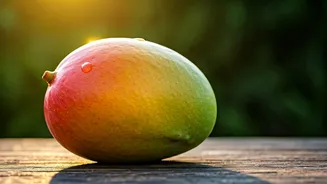
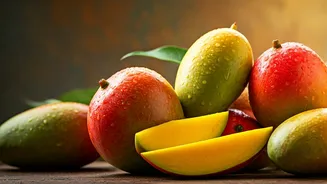
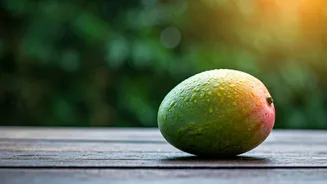
Let’s start with the most common mistake made in the produce aisle. Many of us hunt for mangoes with a beautiful red or rosy blush, assuming it’s a sign of sweetness and maturity. In reality, a mango’s color is more like a fingerprint—it indicates the variety,
not its ripeness. Some mangoes, like the Ataulfo (or honey mango), are a deep yellow when perfectly ripe, while others, like the Keitt, can stay green even when they’re ready to eat. Instead of judging by color, trust your other senses. A ripe mango will have a slight give when you gently squeeze it, similar to a peach or avocado. It should also have a distinct, fragrant, and fruity aroma near the stem. If it’s rock-hard and smells like nothing, it needs more time.
It Has a Surprisingly Toxic Family
Here’s a piece of trivia that might change how you see your fruit salad. Mangoes belong to the Anacardiaceae family, a group of flowering plants informally known as the cashew family. Its relatives include the pistachio and, you guessed it, the cashew. But the family reunion gets a little awkward from there, because poison ivy, poison oak, and poison sumac are also members. This explains why some people experience a mild skin reaction, similar to a poison ivy rash, after handling mango skin or sap. The culprit is urushiol, an oily compound found in the plant's sap, leaves, and skin. While the fruit’s flesh is perfectly safe, those with a sensitivity might want to wear gloves when peeling a mango or have someone else do it for them.
There Are Thousands of Varieties
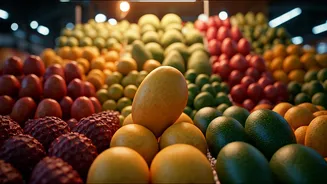
The handful of mango types you see at the average American grocery store—Tommy Atkins, Kent, Keitt, Haden, Ataulfo—is just the tip of the iceberg. Globally, there are over 500 documented varieties of mango, with some experts estimating the true number is in the thousands, each with its own unique flavor, texture, size, and color. In India, where the mango originated, the fruit is a national obsession, and regional varieties like the Alphonso, Langra, and Dasheri are celebrated with the same reverence some reserve for fine wine. The Alphonso, often called the “king of mangoes,” is known for its creamy, non-fibrous texture and intensely sweet flavor, making it a prized (and expensive) delicacy.
A Fruit with Ancient Roots
Long before it became a staple in smoothies and salsas, the mango was a sacred fruit with a history stretching back more than 4,000 years. Native to the region encompassing northeastern India, Bangladesh, and Myanmar, the mango is deeply woven into the culture and religious lore of South Asia. It’s mentioned in ancient Sanskrit texts, and legend has it that the Buddha himself was gifted a mango grove where he could rest in its shade. For centuries, the fruit remained a regional treasure until Portuguese traders, who established a post in Goa, India, fell in love with it in the 15th century. They are largely credited with introducing the mango and its cultivation to the rest of the world, carrying it to Africa, Brazil, and eventually the Caribbean.
More Than a Fruit, It's a National Symbol
The mango's cultural weight is undeniable. It's not just a popular fruit; it’s the official national fruit of India, Pakistan, and the Philippines, and the national tree of Bangladesh. In these cultures, the mango symbolizes love, prosperity, and happiness. Its leaf and paisley-like shape are common motifs in art, textiles, and architecture. In Hinduism, mango leaves are used in religious ceremonies and strung across doorways during weddings and celebrations to signify good fortune. This reverence highlights just how much more a mango can be than just a sweet snack—it’s an icon of heritage and a cornerstone of cultural identity for billions of people.