





The 'PFP' Philosophy
Forget trendy cleanses and complicated meal plans. The most effective strategy for long-term health and weight management isn't a diet at all—it's a philosophy. By prioritizing three key elements at every meal—Protein, Fibre, and Portions (PFP)—you can
build a satisfying and nourishing eating pattern that works with your body, not against it. This approach shifts the focus from restriction and deprivation to abundance and awareness. Instead of asking, 'What can't I eat?' you start asking, 'How can I add protein and fibre to this meal?' It’s a subtle but powerful change that helps you build meals that keep you full, energized, and in control without the mental fatigue of traditional dieting.
The Power of Protein
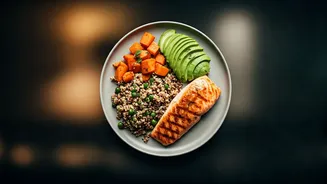
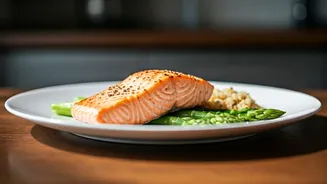
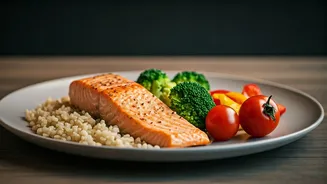
Protein is the undisputed heavyweight champion of satiety—the feeling of fullness and satisfaction after a meal. Including a good source of protein with your food does several important things. First, it takes longer to digest than carbohydrates, meaning it stays in your stomach longer and keeps hunger pangs at bay. Second, it has a higher thermic effect of food (TEF), which means your body burns more calories simply digesting it compared to fats and carbs. Finally, adequate protein intake is crucial for maintaining and building lean muscle mass, especially if you're active or trying to lose weight, as muscle burns more calories at rest than fat does. Aim to include a source of protein in every meal and snack. Think eggs or Greek yogurt for breakfast, chicken or lentils in your salad at lunch, and a piece of fish or a serving of beans with dinner. This steady supply helps stabilize your energy and appetite throughout the day.
The Fullness Factor of Fibre
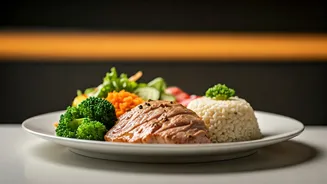
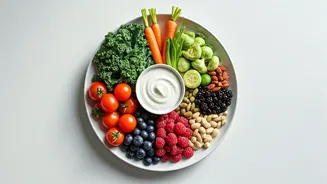
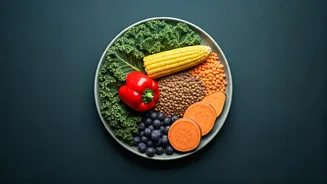
If protein is the champion of satiety, fibre is its essential tag-team partner. Found in fruits, vegetables, whole grains, nuts, and legumes, dietary fibre is a type of carbohydrate that your body can’t digest. It might sound like a bad thing, but it's incredibly beneficial. Soluble fibre dissolves in water to form a gel-like substance in your stomach, which slows digestion and helps you feel fuller for longer. It's also great for stabilizing blood sugar levels, preventing those sharp spikes and crashes that lead to cravings. Insoluble fibre, on the other hand, adds bulk to your stool, promoting regularity and a healthy digestive system. The easiest way to boost your fibre intake is to 'eat the rainbow.' Fill half your plate with non-starchy vegetables like broccoli, spinach, and bell peppers. Swap white bread for whole grain, choose brown rice over white, and incorporate beans and lentils into your soups and stews. These simple swaps add up to major benefits for both your appetite and your overall health.
Mindful Portions, Not Deprivation
The word 'portion' often brings to mind tiny, unsatisfying meals. But mastering portions isn't about deprivation; it's about awareness. In the U.S., plate sizes, restaurant servings, and packaged foods have ballooned over the decades, skewing our perception of what a normal serving looks like. By focusing on protein and fibre first, you'll naturally feel fuller on less, making portion control easier. To start, you don't need measuring cups or a food scale. Use your hand as a simple guide: a palm-sized serving for protein (like chicken or fish), a fist-sized serving for carbohydrates (like rice or pasta), and a cupped hand for fruits or nuts. Aim to fill half of your plate with fibre-rich vegetables. Using a slightly smaller plate can also be a powerful psychological trick, making a normal-sized portion appear more substantial. The goal is to eat until you're satisfied, not stuffed, and to re-learn your body's natural hunger and fullness cues.