







The Sun's Summer Bonus
It’s no surprise that the sun shines more in the summer. For the U.S. energy grid, this simple fact has become a game-changer. As millions of solar panels across the country—from vast desert arrays in Arizona to rooftop installations in suburban Ohio—soak
up the long summer days, they generate a massive surplus of clean electricity. Data from the U.S. Energy Information Administration (EIA) consistently shows that solar generation peaks in June and July, precisely when energy demand soars due to air conditioning. In states like California and Texas, solar power now frequently meets a significant portion, and at times nearly all, of midday electricity demand. This seasonal boom means that for a few hours on a sunny afternoon, the power humming through the wires is significantly greener than it is on a cloudy day in December. This isn't a distant-future concept; it's the new annual rhythm of the American power supply.
Charging Up the American Road Trip
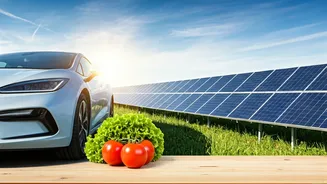
The first “familiar plate” getting a dose of this clean energy is the one on the back of your car—especially if it’s an electric vehicle. The classic American road trip is undergoing a quiet reinvention. When an EV driver plugs in at a charging station on a sunny July afternoon, there's a high probability they are pulling power generated just moments before by solar panels, perhaps hundreds of miles away. This phenomenon, known as the “solar duck curve,” describes a pattern where abundant midday sun drives down the need for fossil-fuel power plants. As a result, the carbon footprint of driving an EV can be substantially lower in the summer. For the growing number of EV owners, this means their summer getaways are not just powered by electricity, but by cleaner, sun-drenched electricity. The license plate, a symbol of mobility and freedom, now also represents a direct connection to the nation’s renewable energy transition.
From Farm to Fork, with a Side of Solar
The second “familiar plate” is the one on your dinner table. The connection here is less direct but equally important. The modern food system is an energy-intensive machine, from the tractors that till the fields to the refrigerated trucks that transport produce and the factories that process our food. As the grid gets cleaner, so does every step of this journey. But the link is becoming more direct. A practice known as “agrivoltaics”—installing solar panels on farmland in a way that allows crops to grow underneath—is gaining traction. These installations can provide shade that helps certain crops thrive in hotter climates, reduce water evaporation, and generate clean power for farm operations or the local grid. Furthermore, food processing plants and distribution centers are increasingly installing their own large-scale solar arrays to cut costs and lower emissions. That summer salad or grilled corn on your plate is increasingly brought to you by the power of the sun, in more ways than one.
The Grid's Balancing Act
This flood of summer sun isn’t without its challenges. The grid was designed for a world of predictable, on-demand power from fossil fuels, not the variable ebb and flow of renewables. When the sun goes down, solar power vanishes, but evening energy demand remains high. This is where innovation comes in. Utility-scale battery storage is being deployed at a record pace, acting like giant rechargeable batteries for the grid. These systems store the excess solar energy generated during the day and release it in the evening, smoothing out the fluctuations and ensuring the lights stay on. Smart grids and sophisticated software help balance supply and demand in real time. It's a complex, behind-the-scenes dance, but it’s essential for harnessing the full potential of summer's clean energy bounty.