



The Legend of the NASA Study
Much of the Peace Lily’s reputation comes from a landmark 1989 NASA study. Researchers, looking for ways to clean the air in sealed space stations, tested the ability of common houseplants to remove volatile organic compounds (VOCs) like benzene, formaldehyde,
and trichloroethylene from the air. The Peace Lily (Spathiphyllum) performed exceptionally well, earning its spot in the air-purifying hall of fame. This study is the foundation for nearly every article and plant tag you’ve seen touting its air-cleaning powers. On paper, it’s a powerful endorsement from one of the world's leading scientific organizations. The story, however, doesn’t end there.
A Reality Check for Your Living Room
The catch with the NASA study is its methodology. The tests were conducted in small, airtight chambers—a far cry from your bedroom or office, which has drafts, open doors, and significantly more air volume. Subsequent research has concluded that to replicate the study's results in a typical home, you would need a literal jungle. Scientists estimate you’d need hundreds, if not thousands, of plants to have the same air-cleaning effect as simply opening a window for a few minutes or using a modern HEPA filter. While Peace Lilies do absorb trace amounts of pollutants, they cannot single-handedly purify the air in a closed room. Their impact on air quality is, realistically, negligible. But that doesn't mean they don't help keep a room feeling fresh.
The Real 'Freshness' Factor
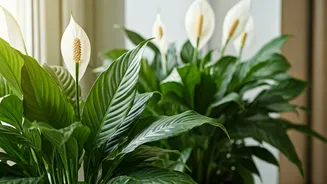
So if it's not scrubbing pollutants, how does a Peace Lily make a room feel better? Its real magic lies in two other areas: transpiration and psychology. Through transpiration, plants release water vapor into the air. In a dry, stagnant room, this can gently raise the humidity, making the air feel less harsh and more comfortable. This subtle humidifying effect can reduce dry skin and throat irritation, contributing to a feeling of 'freshness.' Beyond the physical, there are proven psychological benefits to having plants indoors. The presence of greenery is known to reduce stress, improve mood, and boost focus. The simple act of caring for a living thing connects us to nature and adds a dynamic, beautiful element to a static space. This visual and mental boost is arguably its greatest contribution.
How to Keep Your Peace Lily Thriving
The Peace Lily is popular for a reason: it's resilient and communicates its needs clearly. To get the most from your plant, follow these simple guidelines.
Light: They prefer bright, indirect light. Direct sunlight will scorch their leaves, while very low light will prevent them from blooming. An east-facing window is often perfect.
Water: This is their most famous trait. Peace Lilies will dramatically droop when they are thirsty, taking all the guesswork out of your watering schedule. When you see the droop, give it a thorough watering until it drains from the bottom, and it will perk back up within hours. Don’t let it sit in a saucer of water, which can cause root rot.
Humidity: As tropical plants, they love humidity. A bathroom with a window is a perfect home. Otherwise, occasional misting or placing the pot on a tray of wet pebbles will keep it happy.
Toxicity: Be aware that Peace Lilies are toxic to cats and dogs if ingested, causing irritation and vomiting. Place them out of reach of curious pets.
Best Placement for a Fresh Feel
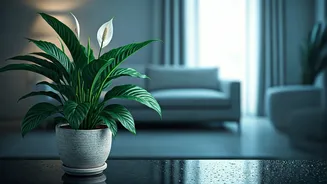
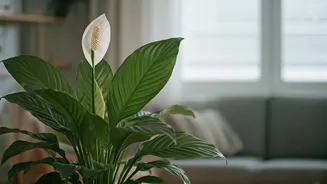
To maximize the aesthetic and ambient benefits, placement is key. In a bedroom, a Peace Lily on a nightstand or dresser adds a calming, natural element to the first and last thing you see each day. Its preference for lower light makes it suitable for corners that other plants might shun. In a home office, it can break up the monotony of screens and paperwork, providing a welcome green focal point. Because they thrive in humidity, they are one of the best plants for a bathroom, turning a purely functional space into something more spa-like. The key is to place it where its elegant form can be appreciated and where its subtle environmental contributions can make the most impact on your sense of well-being.