




The Pre-Launch Symphony of Confusion
It begins long before your raft touches the glacial melt of the Ganges River. The experience starts at a dusty roadside assembly point, where dozens of groups from different tour operators converge. A logistical ballet of glorious disorder unfolds. Drivers
shout, guides try to corral their respective tourists—a mix of college students from Delhi, Israeli backpackers on a gap year, American yogis taking a day off, and bewildered families—and gear is distributed with the frenetic energy of a stock market floor. You’re trying to find a helmet that doesn’t wobble and a paddle that isn't a splinter waiting to happen. The safety instructions are shouted over the din of truck horns, a mixture of Hindi and broken English. The key takeaways seem to be: “Paddle forward! Paddle back! And if you fall in, don’t panic!” It’s a fitting overture for the beautiful mess to come.
The Ganges Doesn't Wait
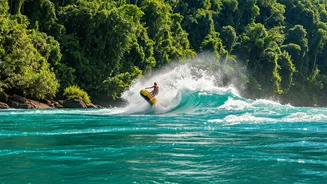
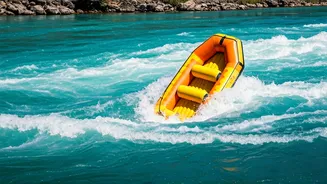
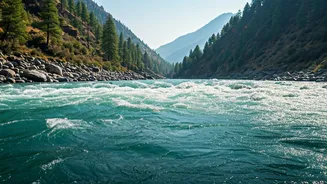
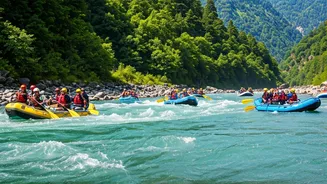
The moment your inflatable raft is shoved into the shockingly cold, turquoise water, any lingering sense of individual control vanishes. You are now a single, eight-person organism, and your nervous system is a guide named Sonu who communicates primarily through booming commands like “FORWARD PADDLE NOW!” and “GET DOWN!” The first few minutes are a frantic comedy of errors. Oars clash. Someone gets a face full of water from an overzealous paddle stroke. You realize you’re one of at least twenty other rafts, all bobbing in the current, a flotilla of chaos navigating one of the world's most sacred rivers. Your small talk with the person next to you is cut short as the guide points ahead to a churning wall of white. The first rapid has arrived, and it has no interest in waiting for you to get your act together.
Teamwork, But Make It a Shouting Match
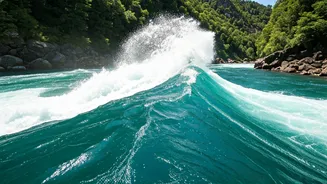
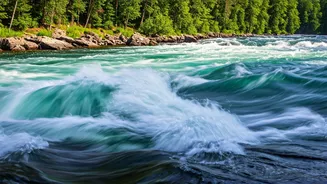
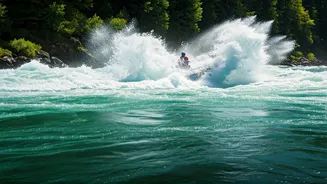
Navigating a Class III rapid like “Roller Coaster” or “Golf Course” is where the magic happens. It’s less about technique and more about collective, adrenaline-fueled will. The guide is the conductor of a very loud, very wet orchestra. You paddle furiously, not because you know what you’re doing, but because everyone else is. The raft bucks and plunges. Icy water crashes over the bow, eliciting a chorus of screams that are equal parts terror and pure, unadulterated joy. For thirty seconds, you and seven strangers are a single, cohesive unit, fighting the same battle. Then, just as suddenly, you’re through it, floating in calm water, laughing hysterically. You look at the person who just whacked you with their paddle, not with annoyance, but with the camaraderie of fellow survivors. This is the core of the Rishikesh experience: shared struggle makes for instant friendship.
Between the Rapids, a Glimpse of Heaven
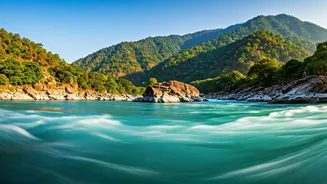
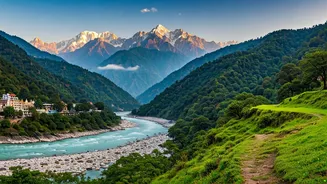
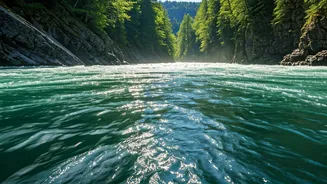
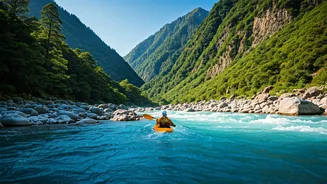
But the chaos is only half the story. In the stretches between rapids, the river turns to glass. The shouting stops. All you can hear is the gentle lapping of water against the raft and the distant call of birds. You look up and see the staggering beauty of the Himalayan foothills, with terraced fields and ancient temples clinging to the lush green slopes. Guides will often command “Paddles up!” and tell everyone to just float. Many rafts make a stop at a designated cliff-jumping spot—a 20-foot leap of faith into the frigid Ganges—or pull over at “Maggi Point,” a sandy bank where vendors sell hot, steaming bowls of instant noodles. In these quiet moments, floating on your back in a life vest or sipping sweet chai, you realize the chaos of the rapids is what makes the peace of these interludes so profound.