








What is a Circular Kitchen?
You’ve probably heard the phrase “reduce, reuse, recycle,” but the concept of a 'circular' system takes it a step further. In a traditional, linear kitchen, resources flow in one direction: you buy food, you cook and eat it, and you throw away the scraps,
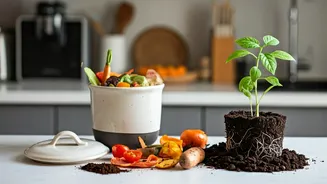
which end up in a landfill. A circular kitchen, however, aims to close that loop. The goal is to minimize waste by designing it out of the system from the start. This means not just recycling packaging but also finding a new purpose for every part of the food you bring home. Those carrot tops, onion skins, and eggshells aren't seen as garbage; they're seen as the starting point for something new. By turning food scraps into compost, you’re essentially sending the nutrients from your leftovers back into the earth to help grow more food, creating a self-sustaining cycle.
Why Composting is the Cornerstone
Composting is the engine of the circular kitchen. When food scraps are sent to a landfill, they get buried under tons of other trash. Deprived of oxygen, they decompose anaerobically, releasing methane—a potent greenhouse gas that contributes significantly to climate change. According to the EPA, food is the single largest category of material placed in municipal landfills. Composting completely changes this equation. By exposing organic matter to oxygen, water, and microorganisms, it breaks down into a rich, dark, soil-like material called humus. This 'black gold' is packed with nutrients that can be used to enrich garden soil, feed houseplants, or improve your lawn. It’s a simple but powerful act that diverts waste from landfills, reduces harmful emissions, and creates a valuable, all-natural fertilizer for free.
The High-Tech Option: Countertop Composters
For those in apartments or without a yard, the idea of a sprawling compost pile can seem impossible. This is where modern technology comes in. Electric countertop composters are sleek, compact appliances that do the work for you in a matter of hours, not months. Most models use a combination of heat, aeration, and grinding to break down food scraps—including things like meat and dairy that are often discouraged in traditional piles—into a dry, soil-like fertilizer. They are odorless, quiet, and require little more effort than pressing a button. While they come with a higher upfront cost and use electricity, they represent a major leap in accessibility, making it easy for anyone to start diverting their food waste, regardless of their living situation.
The Classic Method: Backyard Bins and Tumblers
If you have outdoor space, traditional composting is a rewarding, low-cost option. The simplest method is a stationary bin or even just an open pile. The key is to maintain a healthy balance of 'greens' (nitrogen-rich materials like fruit and vegetable scraps, coffee grounds) and 'browns' (carbon-rich materials like dried leaves, cardboard, and twigs). This mixture provides the right food for the microbes doing the decomposition. For a more contained and faster process, a compost tumbler is a great choice. These sealed barrels are mounted on a frame, allowing you to easily turn and aerate the contents, which speeds up the breakdown and keeps pests out. This method takes more patience than an electric unit, but it’s a time-tested way to produce large quantities of rich compost for a garden.
No Yard? No Problem. Community Solutions
Even without a yard or a fancy gadget, you can still participate in the circular food movement. A growing number of cities and towns offer curbside compost pickup services, just like recycling. You simply collect your scraps in a provided bin and leave it out for collection. The material is then taken to an industrial composting facility to be processed. Another excellent option is to find a local community garden, farmers market, or private service that accepts food scrap drop-offs. A quick online search for 'compost drop-off near me' will often reveal multiple options. Many of these programs are free or low-cost and allow you to contribute to a local, sustainable food system without managing a pile yourself.