



Beyond the Digital Brag
For years, the proof of a trip well-traveled was a digital one. We collected likes, comments, and views, broadcasting our experiences to a wide audience. But a growing number of travelers are finding that performance exhausting. The endless search for the perfect
photo can detract from the experience itself, turning moments of potential wonder into content-creation opportunities. The travel journal offers a powerful antidote: a private space for unfiltered thoughts and imperfect memories. It’s a return to documenting travel for oneself, not for an algorithm or an audience. This isn't about rejecting technology, but about complementing it. While a photo can capture a scene, a journal page can capture the feeling—the surprising chill in the air, the taste of a street-cart pastry, the snippet of a conversation overheard in a café. It’s the context, the emotion, and the personal narrative that a perfect, public-facing photo often misses.
A Mandate for Mindfulness
Perhaps the most significant driver of the journal's resurgence is its power to foster mindfulness. To write about an experience, you must first truly have it. The act of journaling forces you to slow down and engage all your senses. You start noticing the little things: the intricate pattern of a tile floor, the specific shade of blue in the evening sky, the melody of a foreign language. It transforms you from a passive consumer of sights into an active participant in your surroundings. This deliberate act of observation and reflection is a form of meditation. In a world that constantly pulls at our attention, sitting down with a notebook and pen is a radical act of focus. It anchors you in the present moment, deepening your connection to a place and ensuring the memories you forge are rich, detailed, and lasting. Research has long shown that writing by hand aids memory retention, and travelers are discovering this firsthand. The details you jot down are the ones you're most likely to recall vividly years later.
The Ultimate Analog Canvas
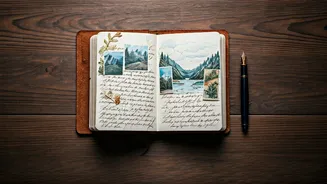
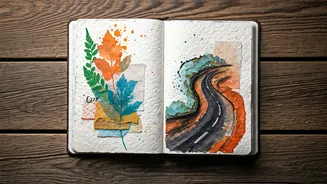
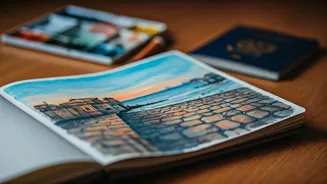
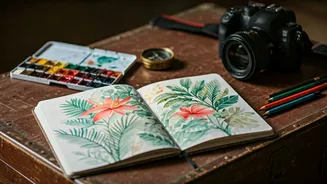
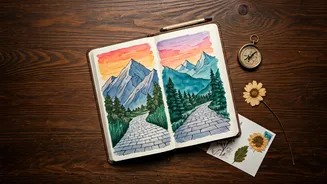
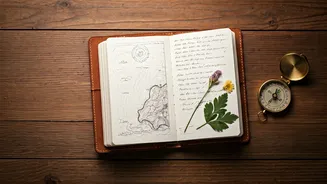
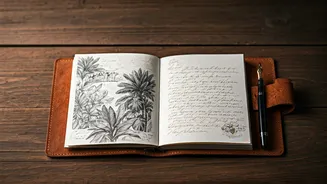
Today’s travel journal is far more than a simple diary filled with text. It has evolved into a multimedia, analog masterpiece—a personal artifact that is as much a scrapbook and art project as it is a record of events. A quick scroll through the #traveljournal tag on social media reveals a world of stunning creativity. Pages are adorned with ticket stubs from train journeys, labels peeled from local beer bottles, and pressed flowers gathered on a hike. Travelers are incorporating quick watercolor sketches of landscapes, charcoal drawings of interesting architecture, and instant photos that add a nostalgic, tangible feel. This approach turns the journal into a tactile, sensory object. It’s a junk drawer of the best kind, filled with the physical ephemera of your journey. There are no rules. A minimalist might stick to elegant prose in a sleek notebook, while an artist might create a vibrant, chaotic collage. This freedom makes the journal an extension of the traveler's personality and a uniquely creative outlet.
A Souvenir That Talks Back
We all bring things home from our travels. But how many T-shirts, keychains, or snow globes truly capture the essence of a trip? The travel journal is the ultimate souvenir because it’s a conversation with your past self. Flipping through its pages years later is an immersive experience that no other keepsake can offer. You don't just see where you were; you remember who you were in that moment. You revisit your anxieties before a big hike, your delight at discovering a hidden alleyway, and your reflections on how a place changed your perspective. It’s a time capsule of your own growth and curiosity. While a photo album shows the highlight reel, a journal holds the director's commentary—the inside jokes, the mishaps that became funny stories, and the quiet moments of introspection. It’s a legacy of your adventures, written in your own hand, that becomes more valuable with every passing year.