







The Numbers Are Staggering
To understand Mawsynram, you have to start with the statistics, which sound like typos. The village holds the Guinness World Record for the highest average annual rainfall, clocking in at an almost unbelievable 467.4 inches. Let’s put that into perspective.
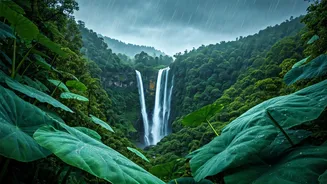
Seattle, a U.S. city famous for its drizzle, gets about 38 inches a year. New York City sees around 50. Mawsynram gets nearly ten times that. We’re not talking about inches; we’re talking about more than 38 feet of rain. Every. Single. Year. In a single 24-hour period in June 2022, the village recorded nearly 40 inches of rain—more than Seattle gets in an entire year. The rain here isn’t an occasional inconvenience; it is the central, defining feature of existence.
A Perfect Storm of Geography
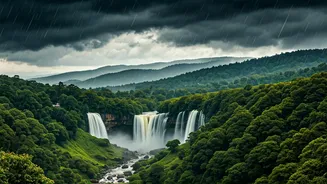
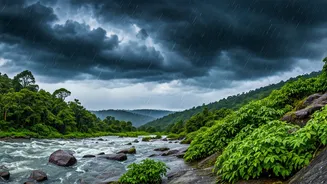
Mawsynram’s extreme weather isn't a fluke; it's the result of a unique geographical setup. The village is perched on the Khasi Hills in India's northeastern state of Meghalaya, which literally translates to "abode of the clouds." During the monsoon season, moisture-laden winds sweep north from the warm Bay of Bengal. As these clouds hit the steep hills, they are forced to rise rapidly in a process called orographic lift. This rapid ascent causes the moisture to cool and condense, dumping colossal amounts of water directly onto Mawsynram and its neighbor, Cherrapunji. The landscape acts as a perfect funnel, wringing every last drop from the clouds before they can pass over the mountains.
Life Under a Waterfall
So what is it like to live in the wettest place on Earth? It’s loud, for one. Locals often have to shout to be heard over the percussive drumming of rain on their corrugated tin roofs. To combat the noise, many homes have extra soundproofing made from grass. Outside, the world is perpetually slick and moss-covered. Instead of using flimsy umbrellas, workers in the fields wear traditional, full-body rain shields called ‘knups.’ These are woven from bamboo and banana leaves, looking like oversized turtle shells that allow them to work with both hands-free. Construction and farming are scheduled around the few drier months. During the peak monsoon, school children might stay home for weeks at a time, not because of a storm, but because the storm is the norm. The constant dampness seeps into everything, making rust and mold a persistent enemy.
A Resilient, Verdant World
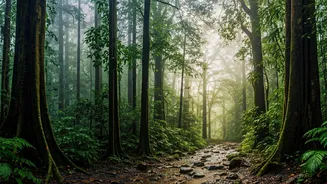
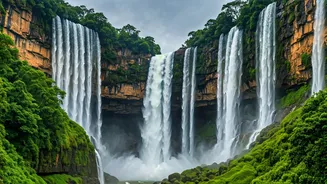
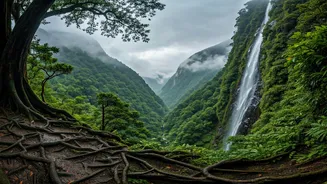
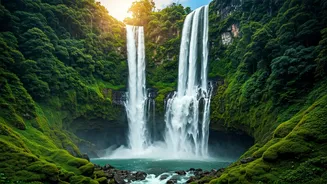
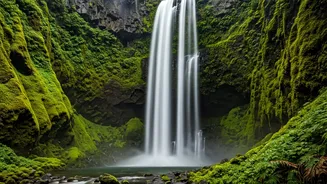
Despite the challenges, life in Mawsynram is not a miserable struggle. It is a masterclass in human adaptation. The people of the Khasi Hills have developed an ingenious form of bio-engineering: living root bridges. By guiding the aerial roots of rubber fig trees across rivers and ravines, they create sturdy, living structures that only grow stronger over time, easily withstanding the powerful monsoon runoff that would wash away conventional bridges. The landscape, fed by the relentless rain, is a stunning, almost impossibly lush green. Waterfalls cascade from every cliff face, and the air is thick with the smell of wet earth and vegetation. For the people here, the monsoon isn't something to be endured; it’s the force that shapes their culture, their ingenuity, and their breathtakingly beautiful world.