






The Strength-to-Weight Showdown
The headline's bold claim hinges on one key metric: tensile strength, or how much a material can be stretched before it breaks. On this front, bamboo is a giant-slayer. Certain species of bamboo have a tensile strength comparable to, or even exceeding,
some types of steel. When you factor in its weight, the picture becomes even more dramatic. Bamboo has a much higher strength-to-weight ratio than steel—and even concrete. This means that for a given amount of structural support, a bamboo component can be significantly lighter than its steel counterpart. This isn't just a trivia fact; it has huge implications for construction. Lighter materials mean easier transportation to the job site, less need for heavy-duty cranes, and potentially smaller, less expensive foundations. So, in the specific battle of strength-for-its-weight, bamboo isn't just competing; it’s a world-class contender.
Not Your Garden's Bamboo
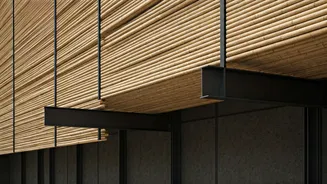
It's crucial to understand we’re not talking about the raw bamboo stalks you see in a garden store. The material challenging steel is ‘engineered bamboo’ or ‘laminated bamboo lumber’ (LBL). The process is similar to how plywood or glulam beams are made. Mature bamboo culms (the hollow stems) are harvested, split into strips, treated for pests and moisture, and then laminated together with powerful adhesives under high pressure. This process creates large, predictable, and exceptionally strong structural elements like beams, columns, and panels. It transforms a natural, variable material into a reliable, industrial-grade product. This engineering is what unlocks bamboo’s potential, overcoming the inconsistencies of the raw plant and allowing it to be used in standardized architectural designs.
The Sustainability Equation
Here's where bamboo builds a strong case. As one of the fastest-growing plants on Earth, some species can grow several feet in a single day and reach maturity in just 3 to 5 years, compared to the decades or centuries required for timber forests. It also regenerates from its own root system, so it doesn't require replanting. Furthermore, bamboo forests are excellent at sequestering carbon from the atmosphere. Steel production, by contrast, is notoriously energy-intensive and responsible for a significant percentage of global carbon emissions. While steel is highly recyclable, the initial production carries a heavy environmental cost. However, the sustainability of engineered bamboo isn't perfect. The equation must include the energy used in processing and the environmental impact of the adhesives and resins used in lamination. Shipping bamboo from its primary growing regions in Asia and South America to the U.S. also adds to its carbon footprint.
Where Steel Still Reigns Supreme
So, what about the word 'effortlessly'? That’s where the headline veers into hyperbole. Steel has centuries of engineering, testing, and building code acceptance behind it. It’s a known quantity. Structural engineers know precisely how it will behave under tension, compression, and extreme temperatures. Bamboo, while strong, has weaknesses. Its performance in a fire is a major concern; while heavy timber can char and retain some structural integrity, bamboo requires significant fire-retardant treatment. It's also more susceptible to moisture and rot if not properly sealed and detailed. Most importantly, building codes in many parts of the U.S. are still catching up to this 'new' material, making permits and inspections a more complex hurdle than for a standard steel-frame project. For very long spans, like those in stadiums or massive skyscrapers, steel’s uniform properties and sheer might remain unchallenged.