


Not Your Average Uber
Let’s be clear: you can’t just open your Uber app in Tokyo and select “Drift Mode” next to UberX and Black. “Uber Drift” was a brilliant, limited-time marketing campaign from Uber Eats Japan in late 2023, designed to generate buzz and deliver a uniquely
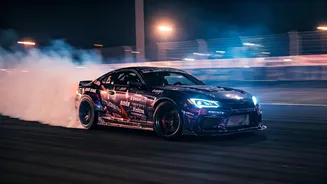
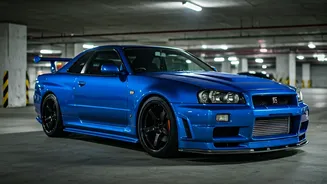
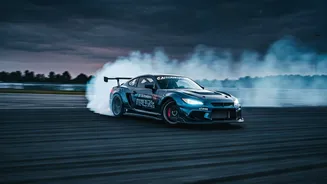
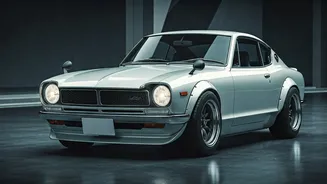
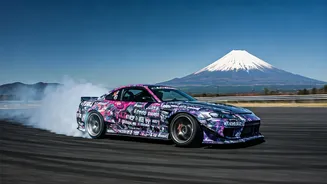
Japanese thrill. The company partnered with a local drift experience provider, The Drift Mob, to offer a handful of lucky tourists and locals the ride of their lives. Instead of a Prius pulling up to the curb, passengers were strapped into the bucket seat of a heavily modified Toyota Chaser or Nissan Silvia—legendary chariots of the Japanese drift scene. At the wheel wasn't a part-time driver navigating with GPS, but a professional competition drifter ready to turn the laws of physics into a suggestion.
A Symphony of Sideways
The experience itself is a sensory overload in the best possible way. The ride starts like any other taxi fare, pulling calmly away from the curb. Then, with a sudden, violent kick of the clutch and a flick of the wheel, the world goes sideways. The roar of a tuned six-cylinder engine fills the cabin as the driver expertly balances the car on a knife's edge of control, sliding through corners with smoke billowing from the rear tires. For passengers, it’s a mix of terror and elation. G-forces press you into your seat as the scenery blurs into a watercolor of greens and grays. Yet, inside the car, there’s a strange sense of calm. The driver is a picture of focus, making thousands of micro-adjustments to the steering, throttle, and handbrake. It’s not chaos; it’s a high-speed, high-stakes ballet.
The Culture of Controlled Chaos
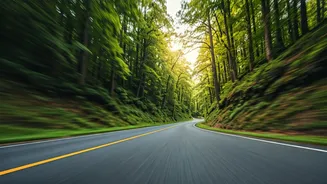
To understand Uber Drift, you have to understand the culture of drifting itself. Born on the winding mountain passes (*touge*) of rural Japan in the 1970s, drifting is the art of intentional oversteer. It’s less about speed and more about style, precision, and car control. For decades, it was a rebellious, underground scene, but it exploded into a global phenomenon thanks to pop culture touchstones like the anime series *Initial D* and the movie *The Fast and the Furious: Tokyo Drift*. What was once a niche subculture is now a legitimate, worldwide motorsport. This tourist experience, then, isn't just a cheap thrill. It’s a direct, high-octane injection of one of Japan’s most influential modern cultural exports. It’s a way to feel the spirit of the *touge* runners without breaking the law or, you know, needing superhuman driving skills.
How to Actually Ride the Lightning
While the official “Uber Drift” promotion may have been a fleeting moment of marketing genius, the dream isn't over. The experience was operated by The Drift Mob, a company founded by professional drifters that offers these “Drift Taxi” experiences to the public. Located in Hakone, a popular resort town about an hour from Tokyo, they provide the car, the pro driver, and a closed course to ensure everything is safe and legal. So, while you can’t book it through Uber, you can book it directly. It’s a perfect example of Japan’s evolving tourism landscape. As visitors seek more than just ancient temples and serene gardens, operators are finding creative ways to package the country’s vibrant contemporary culture—from its world-class food scene to its legendary car culture—into unforgettable experiences.