








A Tale of Two Rockets
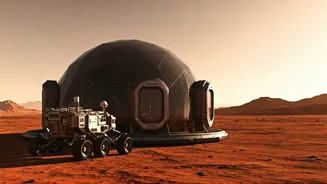
For decades, the road to Mars was envisioned as a purely governmental endeavor, a spiritual successor to the Apollo program. Today's momentum comes from a different model: a potent mix of public-private partnership and outright competition. On one side,
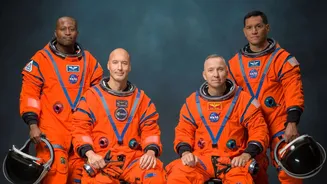
you have NASA, leveraging its deep institutional knowledge and federal backing to build the foundational architecture for deep space travel through its Artemis program. On the other, you have SpaceX, the disruptive private company led by Elon Musk, driven by the singular, ambitious goal of making humanity a multi-planetary species. This dual-track approach has created a sense of urgency and innovation unseen since the 1960s. NASA provides the steady, safety-focused roadmap, while SpaceX provides aggressive, iterative development that pushes the boundaries of what’s possible. They are both partners and rivals, and their combined efforts are accelerating the timeline dramatically.
The Hardware Is Here (Finally)
The most significant reason for this new optimism is the hardware. For years, Mars missions were theoretical concepts rendered in CGI. Now, giant rockets are being built, tested, and flown. NASA's Space Launch System (SLS), the most powerful rocket ever built, successfully launched the uncrewed Artemis I mission around the Moon, proving its capability to send the Orion spacecraft into deep space. This is the official, government-approved ride for the first stages of a return to lunar orbit. Meanwhile, in South Texas, SpaceX’s Starship is the wild card and the potential game-changer. This fully reusable super-heavy lift vehicle is designed not just to get to Mars, but to do so at scale, capable of carrying 100 tons of cargo or dozens of people. While its test flights have been explosive spectacles, each one provides crucial data, refining a design intended for interplanetary colonization. The sheer existence of two separate, viable heavy-lift systems marks a fundamental shift from previous eras.
The Moon as a Stepping Stone
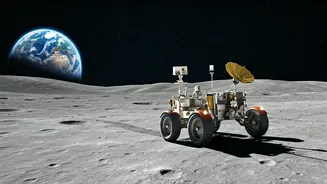
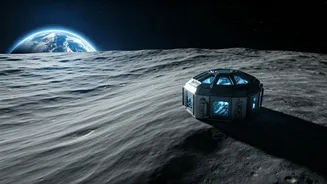
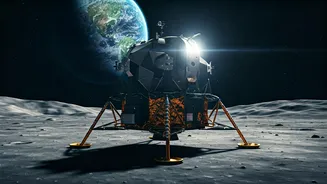
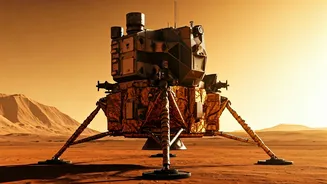
So why all the talk about the Moon if the goal is Mars? NASA’s strategy, laid out in the Artemis program, treats our celestial neighbor as a crucial proving ground. A round trip to Mars can take up to two years, a logistical and physiological nightmare to attempt from scratch. The Moon, just a three-day journey away, is the perfect place to test the technologies needed for a Martian outpost. This includes building and operating habitats on a planetary surface, practicing in-situ resource utilization (like extracting water ice from lunar craters to create rocket fuel), and studying the long-term effects of radiation. Establishing a "Gateway" station in lunar orbit and a sustainable lunar presence isn't a detour from Mars—it's the critical first leg of the journey. It allows teams to learn, fail, and adapt much closer to home before committing to the nine-month transit to the Red Planet.
The Hurdles We Still Face
Despite the incredible progress, reaching Mars is still staggeringly difficult. The challenges are no longer just about propulsion; they are about keeping humans alive and healthy for years in one of the most hostile environments imaginable. The biggest hurdle is radiation. Outside of Earth's magnetosphere, astronauts will be exposed to a constant barrage of galactic cosmic rays and solar particles, dramatically increasing their long-term health risks. Effective, lightweight shielding has yet to be perfected. Furthermore, life support systems must be flawlessly reliable, capable of recycling air and water for years without resupply. Finally, there's the human element. The psychological strain of being confined in a small space millions of miles from home is an immense challenge that simulations can only partially prepare a crew for. Solving these human-centered problems is now as important as perfecting the rockets.