




The Five-Chulha Reveal
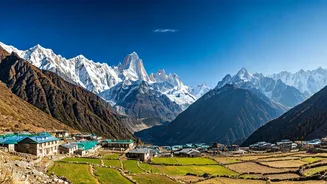
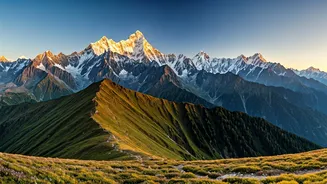
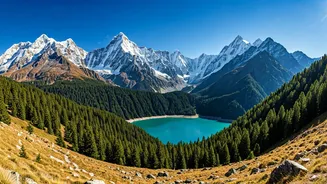
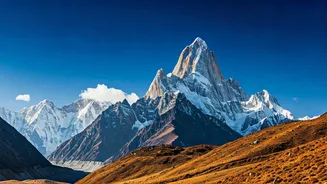
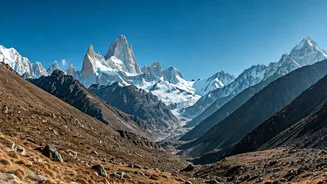
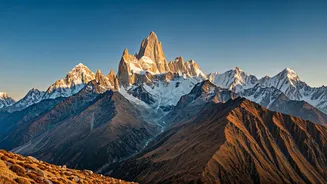
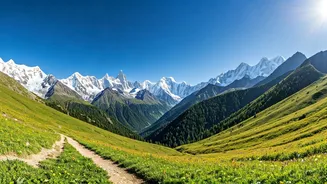
You don’t just casually notice the Himalayas in Munsiyari; they detonate on your senses. The main event is the Panchachuli massif, a formidable range of five snow-crowned peaks that stand like celestial sentinels directly in front of the town. The name
translates to “five hearths,” a reference to the legend where the five Pandava brothers from the epic Mahabharata cooked their last meal here before ascending to heaven. The myth feels strangely appropriate. Seeing them for the first time, especially at sunrise when the first rays of light set their tips ablaze in shades of orange and pink, is less a visual experience and more a spiritual collision. The scale is impossible to process. Your brain tries to find a reference point—a skyscraper, another mountain—and fails. All that’s left is a profound, humbling silence as you witness a spectacle that feels both ancient and brand new.
A Town at the End of the Road
Part of Munsiyari’s power comes from its isolation. Tucked away in the Kumaon region of Uttarakhand, India, it’s not a place you stumble upon. Getting there requires a long, winding journey on mountain roads that cling to the sides of cliffs, a pilgrimage that sheds the layers of modern life with every hairpin turn. The town itself feels like the last outpost of civilization before the great wilderness begins. It sits in a gentle bowl-shaped valley, but that comfort is juxtaposed with the raw, vertical power of the peaks looming over it. This feeling of being at the world’s edge creates a unique mental space. The constant hum of emails, notifications, and deadlines simply can’t survive at this altitude. Here, the only thing demanding your attention is the colossal wall of rock and ice, and its silence is louder than any city noise you left behind.
Echoes of the Salt Route
Before it was a haven for mountain-gazers, Munsiyari was a bustling hub on the ancient trade route to Tibet. It was a place of commerce and grit, where traders known as the Shaukas would load up their mules and yaks for the treacherous journey across high passes. You can still feel the echoes of this past in the town's DNA. You see it in the weathered faces of the older locals, in the architecture of the older homes, and in the trails that spin out from the town, not just for trekkers, but as lifelines that have existed for centuries. This history adds a profound layer to the experience. You’re not just looking at a pretty view; you’re standing in a place that has been a crossroads of culture, survival, and ambition for generations. The big feelings here aren't just about nature’s grandeur, but also about the enduring, quiet resilience of the people who have long called this demanding landscape home.
The Rhythm of Mountain Life
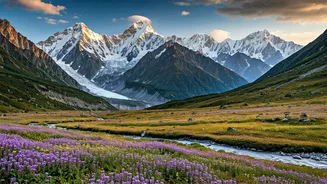
In Munsiyari, the day is measured not by clocks, but by the movement of light across the Panchachuli. Mornings are for watching the sun paint the peaks. The afternoon might bring a sudden cloud cover, swallowing the entire range in a mysterious fog, a reminder that the mountains give and take the view on their own terms. Evenings are for watching the alpenglow fade and the first stars appear, brighter and closer than you’ve ever seen them. Life slows to this natural, elemental rhythm. It encourages you to find a small tea shop, sit, and simply watch. To listen to the chatter in the market, to notice the small wildflowers pushing through a crack in a stone wall, and to feel the crisp, clean air fill your lungs. It’s in these small, quiet moments—the counterpoints to the overwhelming grandeur of the peaks—that the big feelings truly crystallize.