





Beyond Just ‘Eating Slowly’
First, let’s clear up what “mindful eating” really means. It’s a term that gets thrown around a lot, often reduced to simply “chewing more” or “putting your fork down.” While those are components, they miss the heart of the practice. At its core, mindful eating is about
bringing your full awareness to the experience of eating—to the colors, textures, smells, and tastes of your food. It’s about listening to your body’s hunger and fullness cues without judgment. It’s the direct antidote to shoveling down a sad desk lunch while scrolling through emails, or finishing a bag of chips without remembering eating the first one. The goal isn’t restriction; it’s satisfaction. By paying attention, you become more attuned to what your body actually needs and can derive more pleasure from less food.
The Rise of the Small Plate
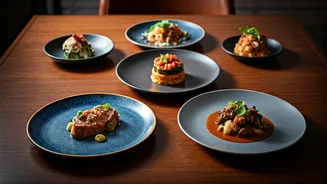
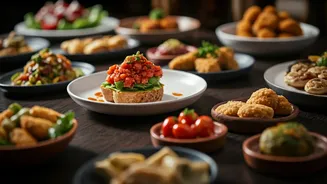
Enter the small plate. For the last couple of decades, American restaurant menus have increasingly embraced the tapas-style, shareable format. What started as a Spanish tradition has become a global dining phenomenon. Instead of one large, personal entrée, a table orders a variety of smaller dishes that arrive as they’re ready, encouraging everyone to taste and share. This style of dining fundamentally changes the rhythm of a meal. It transforms eating from a quiet, head-down task into an interactive, conversational event. The focus shifts from the singular, monolithic main course to a diverse landscape of flavors and experiences explored together.
A Natural Partnership for Presence
Here’s where the magic happens: the structure of small-plate dining naturally encourages the core tenets of mindfulness without you even having to think about it. Because dishes arrive sequentially rather than all at once, there are built-in pauses. These gaps create space for conversation and digestion, preventing the meal from becoming a race to the finish line. When a new plate of, say, crispy Brussels sprouts or whipped feta with hot honey arrives, it commands attention. You pause, you look, you discuss. You’re not just consuming fuel; you're actively participating in the experience. This social engagement keeps you anchored in the present moment, which is the very definition of mindfulness.
Variety Over Sheer Volume
One of the biggest hurdles in mindful eating is recognizing satiety—that subtle signal from your body that you’ve had enough. A giant plate of pasta can be visually overwhelming and encourage you to eat past the point of comfort. Small plates circumvent this entirely. Your brain registers a high degree of variety: a bite of spicy shrimp, a taste of marinated olives, a forkful of patatas bravas. This sensory diversity can lead to a feeling of satisfaction much more quickly than a large volume of a single food. You’re not depriving yourself; you’re enriching your palate. You get the pleasure of tasting ten things instead of just one, often resulting in consuming less overall while feeling more gratified.
Making Your Meal an Event, Not a Task
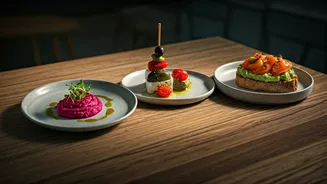
The “shareable” aspect is perhaps the most powerful tool. Sharing requires communication, negotiation (“Did you get to try the meatballs yet?”), and a communal focus. It forces a slower, more deliberate pace. Instead of being lost in your own thoughts or zoned out on your phone, you are connected to the people and the food in front of you. It makes mindfulness a team sport. This approach beautifully reframes the practice from a rigid, solo discipline into a joyful, communal celebration of food. It proves that you don’t have to choose between being a social person and a mindful one.