


The Ultimate Icebreaker
First and foremost, dogs are potent social lubricants. In the anonymous river of a city sidewalk, a dog is an island of acceptable interaction. You can’t just walk up to a stranger and comment on their shoes without seeming odd, but you can absolutely
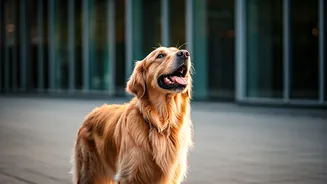
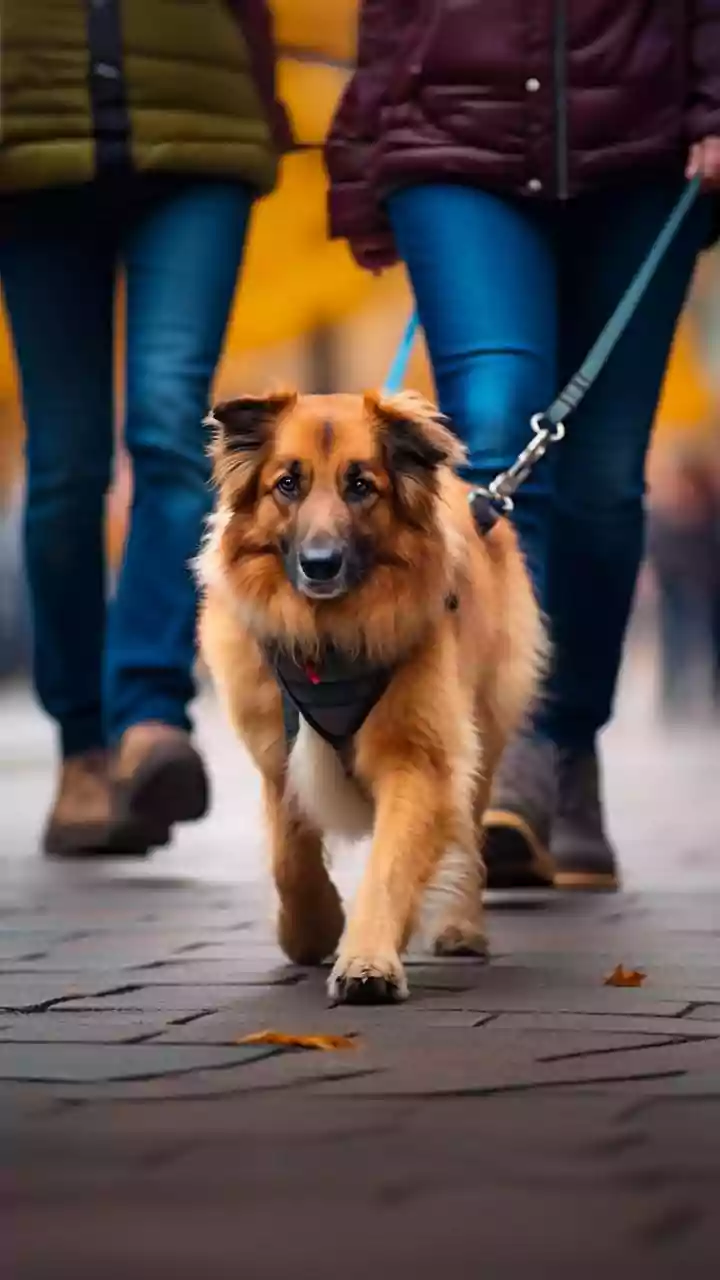
stop and say, “Your Golden Retriever is beautiful.” Suddenly, a barrier dissolves. Two strangers, who moments before were occupying separate universes, are now connected, sharing a brief, pleasant moment. This isn't just a feeling; sociologists have studied it for decades. Pets act as a social catalyst, prompting conversations that would otherwise never happen. A dog’s leash becomes a literal and figurative link, pulling two people into a temporary, shared social space. For a moment, you're not just two commuters; you're two people who appreciate a happy dog. This small-scale friendliness, repeated thousands of time a day across a city, begins to soften its entire social texture.
Putting ‘Eyes on the Street’
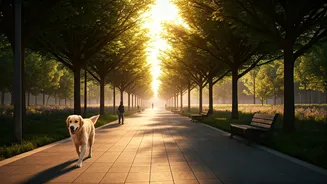
Urbanist Jane Jacobs famously wrote about the importance of “eyes on the street” for creating safe, vibrant neighborhoods. She argued that a steady, casual flow of people using public spaces naturally increases security and community cohesion. Dog walkers are the unsung heroes of this principle. They are out at all hours—the early morning risers, the post-work constitutionalists, the late-night-potty-break crew. Their routines create a reliable, organic presence in parks, on sidewalks, and in public squares. This consistent, low-level activity makes public spaces feel cared for and lived-in, rather than abandoned and menacing after business hours. A park with a few people tossing a ball for their Labradors feels infinitely more welcoming and safer than an empty one. Dog walkers aren't just exercising their pets; they are performing a quiet, civic duty, weaving a web of passive surveillance that benefits everyone.
A Welcome Dose of Unpredictability
Modern cities are engineered for efficiency. People move in straight lines. Traffic flows (or tries to) in predictable patterns. We optimize our routes and minimize our delays. Dogs are a glorious, furry wrench in this machine. A walk with a dog is not a straight line; it’s a meandering journey of a thousand fascinating smells. They stop. They sniff. They greet other dogs with an elaborate, butt-sniffing diplomacy that humans can only envy. This behavior forces their human companions to slow down, to pause, and to actually inhabit the space they’re moving through. This gentle, non-threatening disruption of urban efficiency is exactly the “softness” cities need. It reminds us that a city isn’t just a grid of streets for getting from Point A to Point B; it's a habitat to be experienced. The playful chaos of a dog chasing a leaf or rolling in the grass injects a dose of organic, joyful life into our concrete canyons.
Designing for Delight
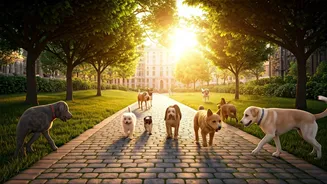
When a city embraces its canine residents, the environment itself begins to change for the better. The softness becomes tangible. You see it in the water bowls left outside storefronts, a small but powerful gesture of welcome. You see it in the cafes that proudly advertise their dog-friendly patios, creating bustling, social outdoor spaces. You see it in the planning of new parks, which increasingly include dedicated off-leash areas that function as vibrant community hubs—the dog park is the new town square for many. This shift isn't just about catering to pet owners. It's a signal that the city values life, community, and moments of unprogrammed delight over sterile order and pure utility. A city that makes room for dogs is a city that, by extension, is making more room for people to connect.