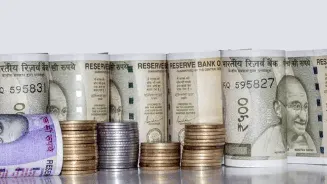










First Off, What's the RBI?
Think of the Reserve Bank of India (RBI) as India's version of the U.S. Federal Reserve. It’s the country's central bank, and its job is to manage the nation’s currency, keep inflation in check, and ensure the stability of the financial system. Just like
the Fed's decisions on interest rates can send ripples through the U.S. economy, the RBI's moves have a massive impact on India, a country with over 1.4 billion people and one of the fastest-growing major economies in the world. Its Monetary Policy Committee (MPC), a group of six members, meets every two months to decide the key lending rate, known as the repo rate. This rate dictates the cost of borrowing for commercial banks, which in turn affects everything from home loans and car payments to business investment and, ultimately, economic growth.
The 'Drama' of the June Decision
So, why is this particular meeting dramatic? It’s all about the classic central banker's dilemma: fighting inflation versus stimulating growth. For months, India has been grappling with stubborn inflation, particularly in food prices, which hits the average citizen hard. The RBI's primary mandate is to keep inflation around a 4% target. However, raising interest rates too aggressively to cool prices can also choke off economic growth, which is a major concern for a developing nation that needs to create millions of jobs. The 'drama' comes from the uncertainty. Market watchers and economists are split. Will the RBI hold rates steady to see if previous hikes are working? Or will surprisingly persistent inflation force them into another hike that could spook markets? The commentary from the RBI governor after the decision will be dissected for every nuance, with any hint of a 'hawkish' (aggressive on inflation) or 'dovish' (focused on growth) stance moving billions of dollars.
Why a U.S. Investor Should Care
You might be thinking, 'That's interesting, but I don't own Indian stocks. Why does this matter to me?' The connections are more direct than you’d think. First, many popular 401(k) and IRA funds, especially those labeled 'Emerging Markets' or 'International Growth,' have significant exposure to India. An unexpected RBI rate hike could cause a short-term drop in the Indian stock market, impacting your fund's value. Second, there's the currency effect. RBI decisions heavily influence the Indian Rupee (INR). If the RBI signals concern, the rupee could weaken against the dollar. For major U.S. companies like Apple, Amazon, and Microsoft that do huge business in India, a weaker rupee means the revenue they earn there translates into fewer U.S. dollars, which can hurt their quarterly earnings reports. Finally, India is a bellwether for the global economy. A slowdown there, potentially triggered by aggressive RBI policy, is a bad sign for global demand and investor sentiment everywhere.
What to Watch Beyond the Rate
The headline decision on the interest rate is just the beginning of the story. Professional investors will be looking much deeper. They'll be scrutinizing the RBI's official statement and the governor's press conference for subtle shifts in language. Are they more worried about inflation or growth than they were two months ago? The RBI will also release updated forecasts for GDP growth and inflation. If they downgrade their growth forecast or upgrade their inflation prediction, it’s a powerful signal about the future health of the Indian economy. Another key aspect is 'liquidity management'—how much cash the RBI is injecting into or pulling out of the banking system. These technical moves can have just as much impact on the market as the main interest rate decision itself. This full package—the rate, the tone, and the forecasts—is what truly dictates the market's reaction.