


1. Check Your Tire Tread
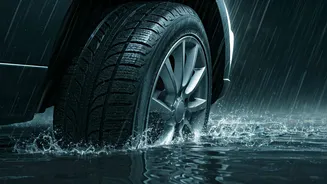
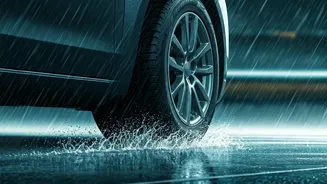
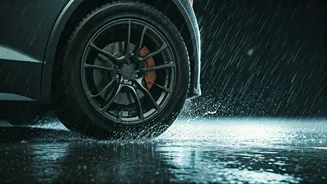
Your tires are the only part of your car that actually touches the road, and in the rain, their job is twice as hard. The grooves in your tire tread are designed to channel water away, allowing the rubber to maintain contact with the pavement. When that tread wears
down, your tires can’t disperse water effectively. This creates a thin layer of water between the tire and the road, a dangerous phenomenon known as hydroplaning, where you lose steering and braking control. How can you check it? The classic “penny test” is still a reliable method. Take a penny and place it upside down in several tread grooves across the tire. If you can see the top of Abraham Lincoln's head, your treads are worn too low (below 2/32 of an inch) and it's time for new tires. For optimal wet-weather performance, many experts recommend replacing them even sooner, when they reach 4/32 of an inch. Also, check your tire pressure; underinflated tires can affect handling in any condition, but especially on slick surfaces.
2. Inspect Your Wiper Blades
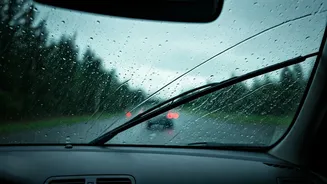
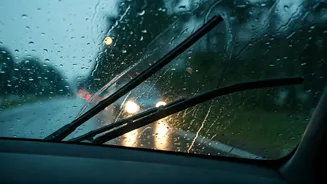
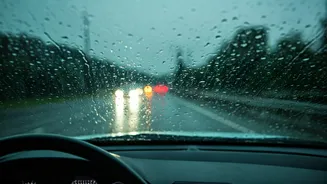
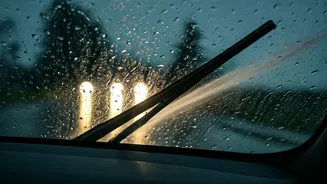
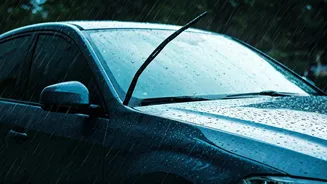
If you can’t see the road clearly, you can’t react to hazards. Windshield wipers are your first line of defense against poor visibility in a storm, but the rubber on them degrades over time due to sun exposure and use. Worn-out wipers don't clear water effectively; instead, they smear it across the glass, creating a blurry, distorted view that can be especially dangerous at night when facing oncoming headlights.
Inspect your blades by lifting them away from the windshield and running your finger along the rubber edge. If you feel nicks, cracks, or sections that are hard and brittle, they need replacing. Most auto parts stores can help you find the right size for your vehicle, and it’s a simple replacement you can often do yourself in the parking lot. A good rule of thumb is to replace your wipers every six to twelve months, and don't forget to top off your windshield washer fluid with a rain-repellent formula for extra help.
3. Test All Exterior Lights
In a downpour, visibility drops for everyone. Your lights aren’t just for you to see the road—they’re for other drivers to see you. A burned-out headlight, taillight, or brake light can make your car nearly invisible from certain angles, dramatically increasing the risk of a collision. Before the rainy season hits, do a quick “walk-around” check.
With your car in park, turn on your headlights (both low and high beams), then your hazard lights (which flash your turn signals), and finally, have a friend or family member stand behind the car while you press the brake pedal to ensure all brake lights are functional. It’s a five-minute check that could prevent a serious accident. If you find a bulb that's out, replacing it is typically an inexpensive and straightforward fix.
4. Listen to Your Brakes
Wet roads significantly increase your car’s stopping distance. This is where healthy brakes are non-negotiable. While a full brake inspection is best left to a professional, you can be mindful of warning signs. Listen for any high-pitched squealing, scraping, or grinding sounds when you apply the brakes. These noises often indicate that your brake pads are worn down and need to be replaced. Also, pay attention to how the pedal feels. If it feels spongy, soft, or goes down further than usual, it could be a sign of a problem with your brake fluid or hydraulic system. If you notice any of these signs, don't wait. Get your brakes inspected by a qualified mechanic immediately.
5. Ensure Your Defroster Works
Rain often brings humidity, which can cause your car’s interior windows to fog up in seconds, blinding you to the road. Your defroster is essential for quickly clearing that condensation. Test both your front and rear defrosters to make sure they are blowing air (for the front) and heating up (for the rear grid). For the front windshield, your car’s air conditioning system is a key part of the defrosting process, as it removes moisture from the air. If you turn on your defroster and the windows only seem to get foggier, it might be a sign of a problem with your A/C or a blocked cabin air filter. Keeping the glass clear is just as important as keeping the rain off it.