







Why the Moon, Again?
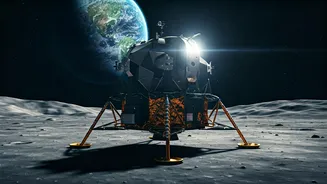
For fifty years, the Moon was treated like a historical artifact—a place we’d *been*. Low-Earth orbit, robotic Mars rovers, and deep space telescopes were the priorities. So why the sudden return? It’s not about flags and footprints anymore. This new
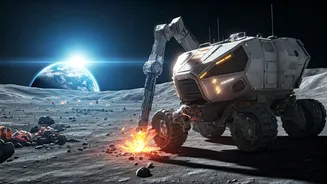
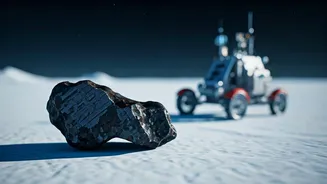
race is about resources and real estate. In 2018, scientists confirmed what they had long suspected: there are significant deposits of water ice hidden in permanently shadowed craters at the lunar south pole. Water is the oil of the solar system. You can drink it, you can use it to grow plants, and you can split it into hydrogen and oxygen to create rocket fuel. A permanent base with access to water ice could become a strategic refueling station for more ambitious missions to Mars and beyond. The Moon is no longer just a destination; it’s a gas station, a factory, and a launchpad, all rolled into one.
The New Cast of Characters
The original space race was a simple two-player game: the United States vs. the Soviet Union. Today’s version looks more like a global tournament with multiple teams and a few powerful wild cards. On one side, you have the U.S.-led Artemis program. NASA is the quarterback, but it’s backed by a coalition of international partners (like Japan, Canada, and European nations) and, crucially, a new wave of private American companies. SpaceX’s massive Starship is slated to be the lunar lander, while Blue Origin is developing its own lander, Blue Moon. This public-private model is a game-changer, designed to drive down costs and accelerate innovation. On the other side is the China-led International Lunar Research Station (ILRS). Beijing has made no secret of its lunar ambitions, successfully landing robotic missions on the far side of the Moon and returning lunar samples. Allied with Russia, China aims to establish its own robotic, and eventually human, base at the south pole by the 2030s. Then there are the independents. India made history in 2023 by becoming the first nation to successfully land a craft at the lunar south pole with its Chandrayaan-3 mission, proving that you don’t have to be a superpower to make a major impact.
The Real Prize: Lunar Real Estate
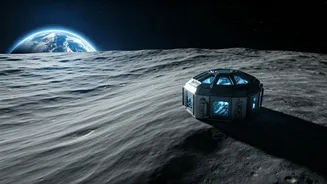
The focus on the lunar south pole has turned this race into a high-stakes competition for prime real estate. The areas with accessible water ice are limited, and the 1967 Outer Space Treaty—which governs celestial bodies—is famously vague. It forbids any nation from claiming sovereignty over the Moon but says little about extracting and using its resources. This has created a legal gray area that nations are rushing to define on their own terms. The U.S. is pushing the Artemis Accords, a set of principles that, among other things, establishes “safety zones” around a nation’s lunar operations, which critics argue could be a backdoor to de facto property rights. China and Russia have rejected the Accords, viewing them as an attempt by Washington to set the rules of the game. The first nation or company to successfully mine lunar ice won’t just be making history; they’ll be setting a precedent for the future of space commerce and law, effectively writing the rulebook as they go.
More Than Just a Race
While geopolitical rivalry is the engine, this new lunar push is also about something more fundamental: the beginning of a true space-based economy. For the first time, the staggering costs of space exploration are being justified not just by national pride or scientific discovery, but by a business case. Companies are envisioning a future with lunar mining operations, orbital manufacturing facilities, and off-world infrastructure. The technologies being developed for the Moon—from advanced life support to autonomous robotics and resource extraction—have massive implications for life on Earth. This isn’t just about putting more boots on the Moon. It’s about building a sustainable human presence beyond our home planet, unlocking new scientific knowledge, and potentially creating entirely new industries. The competition is fierce, but the ultimate goal shared by all players is to finally make humanity a multi-planetary species.