


A Megacity's Twin Crises
To understand the promise of hydroponics in Delhi, you first have to grasp the scale of its problems. As one of the world's most densely populated urban areas, every square inch of land is precious. Traditional farming is a near impossibility within the city's
core. Simultaneously, Delhi is facing a catastrophic water crisis. Its groundwater levels have plummeted, and the city relies heavily on strained rivers and unpredictable monsoons. The government has issued warnings about the city potentially running out of its own groundwater within years. In this context, conventional agriculture, which consumes vast amounts of both land and water, simply isn't a sustainable option for feeding its massive population locally.
Enter Hydroponics: Farming Without Soil
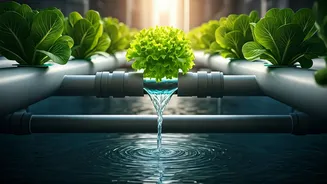
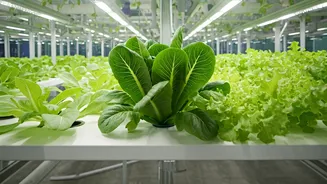
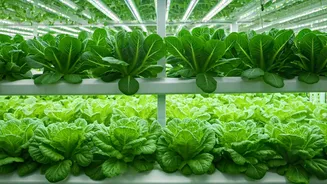
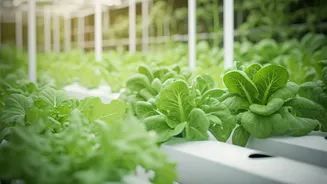
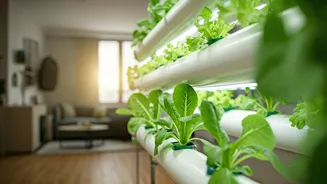
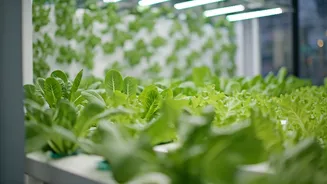
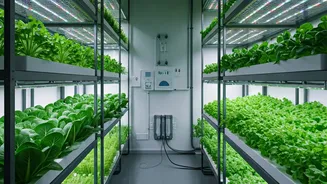
Hydroponics sounds futuristic, but the concept is simple: it’s the practice of growing plants without soil, using a water-based solution rich in mineral nutrients. Plants are typically held in an inert medium like perlite or gravel, with their roots directly exposed to the nutrient-rich water. The real magic lies in its efficiency. Hydroponic systems can use up to 90% less water than traditional soil-based agriculture because the water is recirculated and reused, rather than lost to evaporation and ground seepage. Furthermore, because it doesn't require soil, it decouples farming from land. This is the key that unlocks its potential for a city like Delhi.
The Rise of the Rooftop Farm
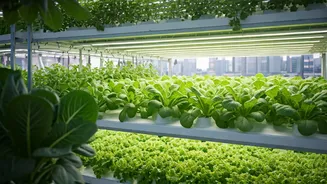
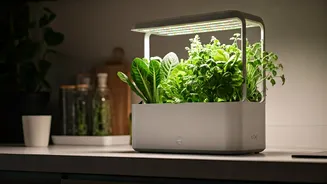
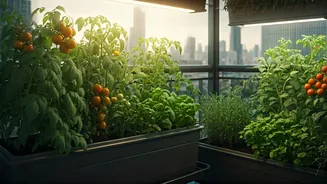
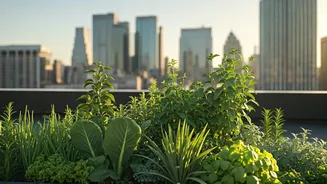
While the headline's claim that hydroponics has entirely 'solved' these issues is an overstatement, its impact is becoming undeniable. Across Delhi, entrepreneurs and everyday residents are converting unused spaces—rooftops, balconies, and even spare rooms—into small-scale, high-yield farms. Systems can be stacked vertically, allowing farmers to grow many more plants in the same square footage. A small rooftop setup can produce hundreds of pounds of fresh produce a year. These hyper-local farms are providing fresh, pesticide-free greens, herbs, and vegetables to communities, drastically cutting down on 'food miles' and the carbon footprint associated with transporting produce from rural areas into the city.
More Than Just Lettuce
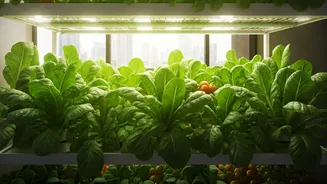
The initial wave of urban hydroponics often focuses on leafy greens like lettuce and spinach, which grow quickly and reliably. But in Delhi, growers are diversifying. Tomatoes, peppers, cucumbers, strawberries, and a wide variety of herbs are now being successfully cultivated. This provides not only a source of fresh food but also of economic opportunity. Some small-scale entrepreneurs sell their produce to local restaurants and markets, creating a new 'farm-to-table' economy within the urban jungle. For consumers, this means access to produce that is fresher, more nutritious, and free from the pesticides often used in large-scale commercial farming.
A Solution, Not a Silver Bullet
Despite its advantages, hydroponics is not a perfect fix. The initial setup costs can be high, putting it out of reach for some of Delhi's poorest residents without subsidies or support. These systems also require a stable, uninterrupted supply of electricity to power the pumps and lights—a significant challenge in a city that can experience power cuts. Furthermore, it requires a degree of technical knowledge to manage nutrient levels and prevent disease. Rather than a silver bullet, hydroponics is best seen as one powerful tool in a much larger toolkit for building urban resilience. It's a decentralized, adaptable solution that empowers individuals to address city-wide challenges on a local scale.