



Sir Vivian Richards: The Original
Before T20 cricket even existed, there was Viv Richards. The West Indian legend played in an era of patient, defensive batting, but he saw the game differently. With an intimidating swagger and zero fear, he dismantled bowling attacks with a ferocity
never before seen in the five-day format. He played from 1974 to 1991, long before the pyrotechnics of modern short-form cricket, yet his career Test strike rate of 86 (runs per 100 balls) would be elite even today. Richards didn't just score runs; he dominated bowlers psychologically. He treated every ball as an opportunity for boundary-clearing punishment, proving that aggression wasn't just for the one-day game. He laid the blueprint for every power-hitter who followed, playing a brand of cricket that was decades ahead of its time.
Virender Sehwag: The Fearless Opener
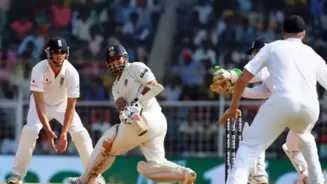
Traditionally, an opening batsman in Test cricket is supposed to be a cautious gatekeeper, seeing off the new ball and laying a solid foundation. Virender Sehwag didn't get the memo. The Indian opener’s philosophy was simple: “See ball, hit ball.” He approached the first over of a Test match with the same intent a player might have in the final over of a T20 chase. With minimal footwork and incredible hand-eye coordination, Sehwag would often hit the first ball of an innings for a boundary, a statement of intent that sent shockwaves through the opposition. He is one of only four batsmen to score two triple-centuries in Tests, and he got there with blistering speed. His first triple-ton included 39 fours and 6 sixes, a T20-style assault stretched over a historic Test innings.
Adam Gilchrist: The Game-Changer
Just when opponents thought they had a chance against the dominant Australian team of the late '90s and 2000s, Adam Gilchrist would walk out to bat. Coming in at number seven, his job was often to demoralize an already tired attack, and he did it with brutal efficiency. A wicketkeeper-batsman, Gilchrist redefined the role, proving you could be a specialist with both the gloves and the bat. He swung for the fences with a clean, powerful arc, turning the tide of countless matches in a single session. His 57-ball century against England in Perth in 2006 remains one of the fastest in Test history. It was a classic Gilchrist performance: seeing his team in a dominant position, he decided to stomp on the accelerator and obliterate any remaining hope the opposition had.
Brendon McCullum: The Modern Architect
If you want to understand modern aggressive Test cricket, look no further than Brendon McCullum. As captain of New Zealand, he instilled a fearless, hyper-aggressive philosophy that transformed his team into one of the most exciting in the world. He led by example, often opening the batting and charging down the pitch at fast bowlers from the very first ball. His approach was about putting pressure back on the opposition at all times, freeing his players from the fear of failure. His magnum opus was his final Test match, where he smashed the fastest century in Test history—a mind-boggling 54-ball masterpiece. Today, he coaches the England team, whose revolutionary style is nicknamed “Bazball” in his honor, a testament to his enduring impact on the game’s longest format.
Ben Stokes: The 'Bazball' Embodiment
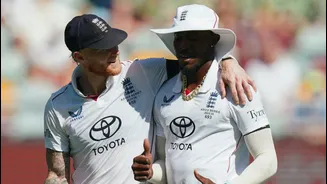
While McCullum was the architect, England captain Ben Stokes is the on-field general executing the “Bazball” philosophy to perfection. Stokes has always been an aggressive, all-action cricketer, but as captain, he has taken it to a new level. He encourages his batsmen to play with T20-like freedom, chasing down massive totals and setting aggressive declarations to force a result. It’s not just about hitting sixes; it’s a mindset to make every moment of a five-day match an entertaining spectacle. Under his leadership, England has transformed Test cricket from a sometimes-plodding affair into must-watch television. His own match-winning innings, like his heroic 135 not out at Headingley in 2019, are filled with the kind of high-stakes drama and power-hitting that feel ripped straight from a T20 final.