







The Spectacle on the Roof of the World
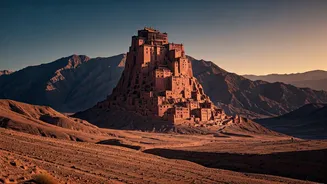
Imagine a place often called 'Little Tibet' or 'The Land of High Passes.' This is Ladakh, a starkly beautiful cold desert nestled in the Indian Himalayas. Every year, during the fifth month of the Tibetan lunar calendar, the region’s largest and oldest
monastery, Hemis Gompa, explodes with color and sound. For two days, its vast courtyard transforms into a stage for one of the most significant cultural events in the Buddhist world. Thousands of Ladakhis, dressed in their finest traditional clothing—heavy silk robes and ornate turquoise jewelry—gather alongside monks and international visitors. They come to witness a sacred performance that reaffirms their connection to their history, their faith, and each other, set against a dramatic backdrop of barren, snow-dusted peaks.
Honoring the Second Buddha
At its heart, the Hemis Festival celebrates the birth of Guru Padmasambhava, also known as Guru Rinpoche. Revered as the 'Second Buddha,' he is credited with establishing Tibetan Buddhism in the Himalayas in the 8th century. According to legend, his life's mission was to vanquish the demons and dark forces that stood in the way of enlightenment. The festival isn't just a birthday party; it’s a living reenactment of this cosmic struggle between good and evil. For Ladakhis, Guru Padmasambhava is not a distant historical figure but a present and powerful protector. The annual celebration reinforces his teachings and his promise to defend the dharma (the cosmic law and order). Every twelve years, the festival becomes even more significant with the ceremonial unfurling of a giant, ancient thangka—a silk appliqué scroll depicting Guru Padmasambhava—that covers several stories of the monastery wall.
The Dance of Gods and Demons
The centerpiece of the festival is the Cham dance, a mesmerizing and highly symbolic masked performance by the monastery's monks. These are not just dances; they are profound religious meditations in motion. Each mask represents a specific deity, demon, or historical figure from Buddhist lore. Donning the elaborate, and often terrifying, masks and brilliantly colored silk costumes, the monks are believed to embody these beings. Their slow, deliberate movements, choreographed to the rhythm of drums, cymbals, and long, droning horns, tell stories of spiritual battles. The audience watches in rapt attention as figures representing compassionate deities subdue wrathful demons, not by destroying them, but by transforming their negative energy into a force for good. The Cham dance serves as a public lesson in Buddhist philosophy, making complex theological ideas accessible and visceral for everyone, from elders to young children.
A Lifeline for Ladakhi Identity
In a world of rapid globalization, the Hemis Festival acts as a powerful anchor for Ladakhi cultural identity. For centuries, Ladakh has existed at a crossroads of cultures, but its Tibetan Buddhist roots run deepest. The festival is a crucial mechanism for passing this heritage to the next generation. It’s where oral histories are shared, social bonds are strengthened, and the community collectively remembers who they are. In the face of modern pressures and the influx of outside influences, this annual gathering is a deliberate and joyful act of preservation. By performing these ancient rituals, the monks ensure the survival of sacred knowledge. By attending, the laypeople reaffirm their commitment to their faith and traditions. The festival is a declaration that Ladakhi culture is not a museum piece but a living, breathing entity that continues to evolve while holding fast to its ancient core.