


The Mystical Heartbeat: Assam's Ambubachi Mela
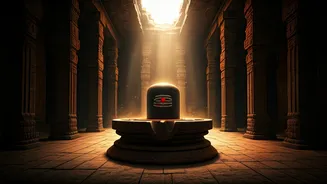
In the northeastern state of Assam, perched atop a hill in Guwahati, sits the Kamakhya Temple. This is not just another place of worship; it’s one of the most revered centers of Shakti, the divine feminine power in Hinduism. And for a few days each June,
as the first monsoon clouds gather, the temple becomes the epicenter of one of India's most unique spiritual gatherings: the Ambubachi Mela. The festival is rooted in a powerful belief: that the temple’s presiding deity, a form of the goddess Sati, undergoes her annual menstruation during this period. The earth itself is considered fertile and impure, mirroring the female cycle of life. For three days, the temple’s inner sanctum is closed. All agricultural work, like plowing and sowing, ceases. It is a time of quiet respect for the earth’s restorative period. While the temple doors are shut, the surrounding grounds transform into a magnet for mystics. Holy men, or sadhus, particularly those from the reclusive tantric traditions, descend from their Himalayan abodes. Their presence, often dramatic with matted hair and ash-smeared bodies, adds an otherworldly aura to the festival, drawing pilgrims and curious onlookers from across the globe.
A Celebration of Fertility and Faith
When the temple reopens on the fourth day, the celebration begins. The energy shifts from quiet reverence to joyous devotion. Devotees surge forward to receive the festival’s unique blessing, or 'prasad.' Instead of food, they are given small bits of red cloth, called 'rakta bastra,' believed to be moistened with the goddess’s menstrual fluid. This is not seen as taboo but as a potent symbol of fertility and creative power. Receiving this cloth is considered an immense blessing, believed to ward off evil and bestow prosperity. The Ambubachi Mela is a profound expression of a faith that deifies the natural cycles of the body and the earth. It celebrates menstruation not as a subject of shame but as the very source of life, inextricably linking female biology with the planet’s ability to regenerate and provide sustenance through the monsoon rains.
The Joyful Plunge: Goa's São João Festival
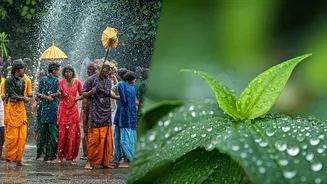
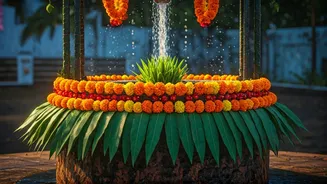
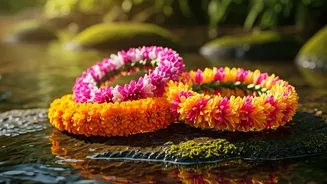
Travel over 2,000 miles southwest to the coastal state of Goa, and you’ll find a completely different kind of monsoon celebration. Here, the welcome is not one of quiet mysticism but of raucous, communal joy. The São João festival, celebrated on June 24th, is Goa’s ode to St. John the Baptist. But over the centuries, it has absorbed local traditions to become a vibrant water festival that marks the arrival of the rains. The legend says that St. John leaped with joy in his mother’s womb when Mary, pregnant with Jesus, visited. In that spirit, Goans take a leap of faith—and fun. Young men, often fueled by local feni liquor and wearing crowns of flowers and leaves called ‘copels,’ jump into overflowing wells, streams, and ponds. It’s a chaotic, colorful, and utterly joyous spectacle. Entire villages erupt into street parties. Music blares as locals and tourists alike parade through the streets, singing traditional songs and feasting on seasonal fruits. It is a baptism of a different sort—a full-throated, collective embrace of the abundance and relief the monsoon brings.
Piety and Partying: Two Sides of One Celebration
On the surface, the two festivals could not be more different. One is ancient, deeply esoteric, and centered on a specific tantric belief system. The other is a syncretic Christian festival that has morphed into a community-wide pool party. The Ambubachi Mela is about drawing inward, respecting a period of sacred impurity before celebrating divine feminine power. São João is about outward expression, of leaping, singing, and sharing joy with your neighbors. Yet, at their core, both are deeply connected to the same powerful force of nature. Both festivals are fundamentally about fertility. In Assam, it’s the fertility of the earth goddess. In Goa, it’s the celebration of life itself, brought forth by the water that fills the wells and nourishes the crops. They represent two poles of human response to the divine and the natural: the solemn, spiritual acknowledgment of power, and the exuberant, physical celebration of its gifts.