








Understand the Real AI Skill Gap
When companies say they’re hiring for AI skills, most aren’t looking for an army of PhDs in machine learning. While those roles exist, the much larger, more immediate demand is for “AI-literate” professionals. This means people across all departments—marketing,
finance, HR, legal, and design—who understand how to use generative AI tools to do their jobs better, faster, and more creatively. The real skill gap isn't a lack of coders; it's a lack of employees who can intelligently prompt a large language model, critically evaluate its output, and ethically integrate it into their workflow. Recruiters are beginning to value candidates who can demonstrate they see AI not as a magic black box, but as a powerful collaborator.
Get Hands-On, Now
Theoretical knowledge about AI is no longer enough. To stand out, you need practical, hands-on experience. This is the easiest—and cheapest—upskilling you can do. Start by using the tools yourself. Spend hours with ChatGPT, Claude, and Gemini to understand their strengths and weaknesses. Use Midjourney or DALL-E to generate images for a class project. Ask Microsoft Copilot to summarize research papers or help you structure a presentation. The goal is to move from a passive user to an active, strategic operator. Keep a simple log of your projects: What was the task? What prompt did you use? How did you refine it? How did it improve the final outcome? This experience is more valuable on a resume than simply listing “Familiar with AI.”
Show, Don't Just Tell, on Your Resume
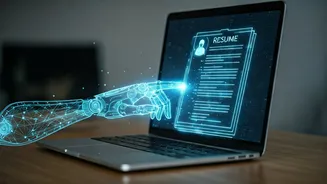
Vague claims of being “AI-proficient” are the new “proficient in Microsoft Office”—meaningless without evidence. Instead, embed your AI skills into the concrete achievements on your resume. Instead of saying you “used AI,” describe the outcome. For example: “Used ChatGPT-4 to analyze customer feedback surveys, reducing data synthesis time by 75% and identifying three key areas for product improvement.” Or, “Developed a series of prompts for Midjourney to create a cohesive set of brand assets for a mock ad campaign, resulting in a project that received top marks for creativity.” By tying your AI use to a specific, measurable result, you demonstrate not just familiarity but competence and impact.
Double Down on 'Human' Skills
The paradox of the AI hiring wave is that it makes uniquely human skills more valuable than ever. As AI automates routine, analytical, and repetitive tasks, the premium shifts to abilities that machines can't replicate. These include critical thinking (is the AI's output accurate, biased, or relevant?), creative problem-solving (how can we use this tool in a novel way?), emotional intelligence, and complex communication. An employee who can use AI to generate a report is good. An employee who can use that report to build consensus, persuade a skeptical team, and navigate interpersonal dynamics is indispensable. Your ability to collaborate, lead, and empathize is your ultimate competitive advantage in the age of AI.
Adopt a Co-Pilot Mindset
The most successful professionals of the next decade won't be those who work *against* AI or even just *with* it, but those who think of themselves as the pilot in a human-AI partnership. In this model, the AI is the co-pilot, handling vast amounts of data, running simulations, and executing complex but defined tasks at incredible speed. The human pilot remains in command, setting the destination (the goal), managing the instruments (the prompts and parameters), and making the critical judgment calls, especially during turbulence. Approaching your work with this mindset—viewing AI as a tool that amplifies your own intelligence and judgment—is what hiring managers are looking for, even if they don't use these exact words. They want to hire a pilot, not someone who is intimidated by the instrument panel.