





A Sculptural Living Artwork
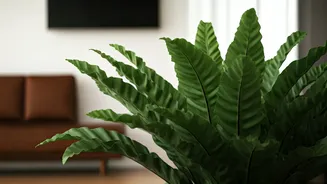
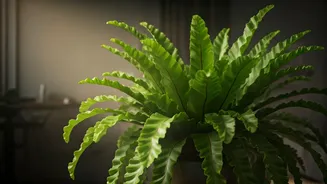
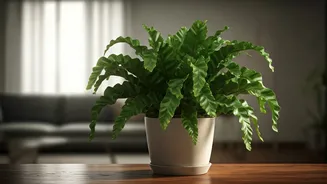
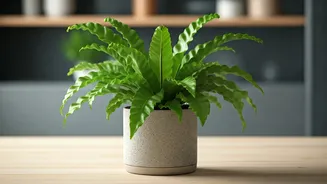
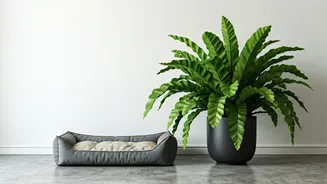
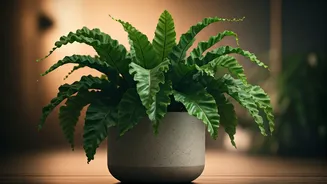
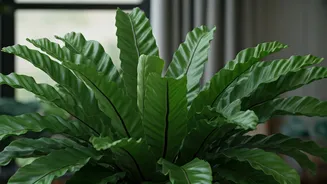
Let’s start with “stylish.” In a world saturated with Fiddle Leaf Figs and Monstera deliciosa, the Bird’s Nest Fern (Asplenium nidus) offers something refreshingly different. Instead of intricate, lacy fronds typical of many ferns, this plant grows a rosette
of wide, wavy, and vibrant green leaves that unfurl from a central, fuzzy 'nest.' The effect is less 'fluffy forest floor' and more 'living sculpture.' The smooth, crinkled edges of its apple-green leaves provide a clean, architectural look that complements a variety of decor styles. In a minimalist space, a single Bird’s Nest Fern can serve as a striking organic focal point. In a bohemian jungle, its broad leaves add a layer of unique texture against more delicate plants. Unlike some trendy plants that demand to be the star, the Bird's Nest Fern has a quiet confidence; it enhances a room without overwhelming it. Its unique form feels both ancient and modern at the same time, making it a design choice with staying power.
The “Safe” Bet for Beginners
Now for the “safe” part, which has two important meanings. First, it’s a relatively safe choice for aspiring plant parents who are tired of accidentally killing their green friends. While no plant is truly unkillable, the Bird's Nest Fern is more forgiving than many of its fern cousins. It communicates its needs clearly. Are the leaves starting to look pale and washed out? It’s likely getting too much direct sun. Are the fronds turning yellow or brown at the base? You might be overwatering the crown.
These cues are easy to read and act upon before it’s too late. The plant teaches you the fundamentals of houseplant care—the delicate dance of light and water—without the unforgiving nature of more notorious species. It prefers consistency but won't immediately throw a tantrum if your watering schedule is off by a day. For anyone who has felt the sting of a crispy Calathea, the Bird's Nest Fern is a reassuring and rewarding step back into the hobby.
True Peace of Mind for Pet Owners
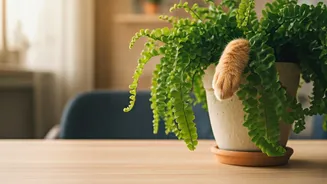
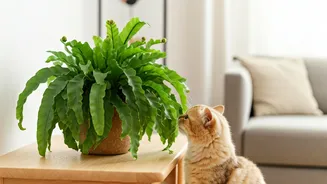
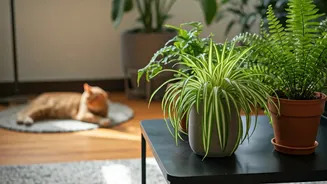
The second—and for many, most important—meaning of “safe” is its non-toxic status. For households with curious cats, dogs, or small children, the fear of bringing in a poisonous plant is very real. Many popular houseplants, including lilies, pothos, and philodendrons, can be harmful if ingested. This is where the Bird’s Nest Fern truly shines as a worry-free option.
According to the ASPCA, the Bird's Nest Fern is non-toxic to cats and dogs. This single fact elevates it from just a pretty plant to a genuine solution for pet owners and parents who want to cultivate a green space without creating a household hazard. You can place it on a low table or on the floor without the constant anxiety that a nibble could result in an emergency vet visit. This peace of mind is a luxury that can’t be overstated.
Simple Care for a Thriving Fern
Convinced? Keeping your new stylish and safe friend happy is straightforward. Focus on replicating its natural home on the floor of a tropical rainforest.
Light: It thrives in medium to low indirect light. Think of a spot a few feet from an east-facing window or in a brighter room but out of the sun’s direct rays. Too much sun will scorch its delicate leaves.
Water: Keep the soil consistently moist but not waterlogged. Water the soil around the plant, not directly into the central 'nest,' as this can cause rot. Let the top inch of soil dry out between waterings. It’s better to underwater slightly than to overwater.
Humidity: As a tropical plant, it loves humidity. This makes it a perfect candidate for a bathroom or kitchen. If your home is dry, you can place it on a pebble tray with water or group it with other plants to create a more humid microclimate. A simple misting a few times a week will also be appreciated.