






The Legend of the NASA Study
The idea that houseplants are tiny air-scrubbing machines comes from a famous 1989 NASA study. Researchers, looking for ways to clean the air in sealed space stations, placed various plants in small, airtight chambers and pumped in volatile organic compounds
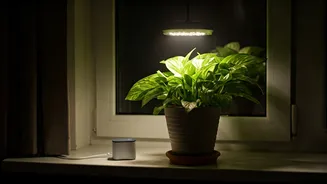
(VOCs) like benzene and formaldehyde—nasty stuff found in some household products. They discovered that certain plants, including the peace lily (Spathiphyllum), were remarkably good at absorbing these pollutants. The study was a sensation, launching the billion-dollar houseplant industry and putting a peace lily in countless living rooms. It’s the origin story for nearly every claim you’ve heard about plants purifying indoor air.
A Reality Check for Your Living Room
So, case closed? Not exactly. The problem is that your home isn’t a small, sealed NASA chamber. It’s a much larger, draftier space with constant air exchange from doors, windows, and ventilation systems. More recent scientific analysis has concluded that to replicate the effects seen in the NASA study, you would need an almost comical number of plants—somewhere between 10 and 1,000 per square meter, depending on the plant and the pollutant. While your peace lily does, on a microscopic level, absorb some VOCs, its impact on the overall air quality in a typical room is, scientifically speaking, negligible. The effect is simply too small to make a meaningful difference compared to basic ventilation. Opening a window for a few minutes will do infinitely more to “clear” the air.
The Real Magic: It’s the Humidity
But don’t move your peace lily to the compost heap just yet. While its pollutant-fighting power is overstated, it has another trick up its sleeve that directly addresses that feeling of “stuffiness.” Peace lilies are excellent at a process called transpiration. They pull water up from their roots and release it as vapor through their leaves. In a dry, stuffy room, a healthy peace lily acts as a natural, silent humidifier. This added moisture in the air can make a room feel more comfortable, alleviate dry skin and sinuses, and reduce the static cling of winter. This humidity-boosting effect is real, measurable, and something you’ll actually notice, especially if your home has dry air from heating or air conditioning.
The Feel-Good Factor
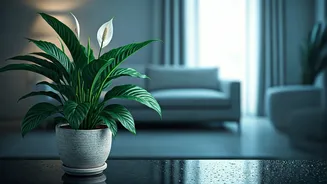
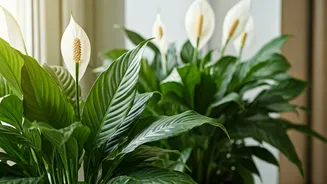
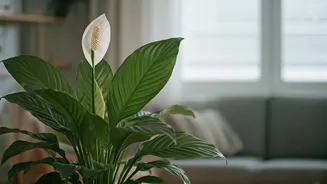
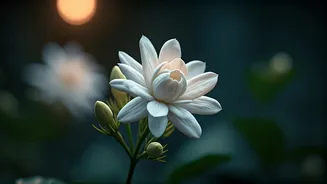
Beyond the physical environment, there’s a powerful psychological component at play. The concept of “biophilia” suggests that humans have an innate tendency to seek connections with nature. Studies have shown that the simple presence of indoor plants can reduce stress, improve mood, and even increase focus and productivity. The vibrant green leaves and elegant white spathes of a peace lily add a touch of life and tranquility to a space. That feeling of a room being less “stuffy” might have as much to do with your mental state as it does with the air molecules. A room with a thriving plant simply *feels* fresher and more inviting.
Caring for Your Humble Helper
To get the most out of your peace lily—both in terms of humidity and happiness—you need to keep it healthy. Luckily, they are famously forgiving. They prefer bright, indirect light but can tolerate lower light conditions (though they may not flower). Keep the soil consistently moist but not waterlogged; a good rule of thumb is to water thoroughly when the top inch of soil feels dry. They’ll even give you a dramatic signal when they’re thirsty by drooping their leaves, which perk right back up after a good drink. Wiping down the leaves with a damp cloth occasionally will keep them free of dust, helping them breathe and transpire more effectively.