



The Shock That Forged a Team
Argentina’s World Cup campaign began with a disaster. Their opening match against Saudi Arabia, a team ranked 48 spots below them, ended in a stunning 2-1 defeat, snapping a 36-game unbeaten streak. In that moment, it looked like the dream was already
over. But paradoxically, this humiliating loss became their foundation. Coach Lionel Scaloni later called it a necessary “thump” that forced the team to abandon any sense of complacency. It transformed every subsequent match into a do-or-die final, galvanizing the squad around a shared sense of desperation and resilience. They had to scrap, fight, and claw their way out of the group stage, a mindset that served them perfectly in the brutal knockout rounds.
Lionel Messi’s Final Masterpiece
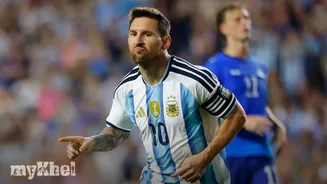
This wasn’t the younger, faster Messi who weaved through entire defenses. This was the 35-year-old conductor, a master of time and space who controlled games with his intelligence, gravity, and unparalleled vision. He scored seven goals, including two in the final, and provided three assists. But his impact went far beyond statistics. Messi was the team's emotional core and tactical centerpiece. He scored the opening goal in crucial knockout games against Mexico, Australia, the Netherlands, and Croatia, breaking the tension and setting the tone. In moments of extreme pressure, like the penalty shootouts or the dying seconds of extra time, he was a beacon of calm and genius. This wasn't just a player on a team; the team was an extension of his will to win the one trophy that had eluded him.
The Rise of the Young Guard
While Messi was the star, he couldn’t do it alone. The key difference between this Argentina team and previous versions was the emergence of a dynamic and fearless supporting cast. After the Saudi Arabia loss, Scaloni made brave changes, injecting youth and energy into the lineup. Enzo Fernández, who won the tournament's Best Young Player award, became the engine in midfield, providing defensive grit and progressive passing. Up front, Julián Álvarez replaced the veteran Lautaro Martínez, offering tireless pressing and a clinical finishing touch, scoring four crucial goals. Alexis Mac Allister provided the midfield balance and intelligence that allowed Messi to roam freely. These players weren't just helping Messi; they were elevating the entire system.
The Tactical Genius of Scaloni
Lionel Scaloni, the youngest coach at the tournament, proved to be its sharpest tactician. He built a system of remarkable flexibility, which he called “La Scaloneta.” Unlike teams locked into one formation, Argentina adapted to every opponent. Against the Netherlands, he matched their 3-5-2 system to neutralize their strengths. Against Croatia's vaunted midfield, he deployed a compact 4-4-2 to deny them space. In the final against France, his initial game plan was a masterclass, completely overwhelming the defending champions for nearly 80 minutes. When France roared back, Scaloni adjusted again, making substitutions that helped Argentina regain a foothold. His pragmatism and lack of ego allowed the team to find a solution for every problem they faced.
The Man with the Golden Gloves
You don't win a World Cup without a goalkeeper who can steal a game, and Emiliano “Dibu” Martínez stole several. He was the tournament's indispensable clutch performer. His swagger and mind games during penalty shootouts against the Netherlands and France became legendary, as he made decisive saves in both. But his single most important contribution came in the 123rd minute of the final. With the score tied 3-3, French forward Randal Kolo Muani was through on goal for a certain game-winner. Martínez made himself massive and produced a miraculous kick-save, a stop that will be replayed in Argentina for a century. Without that moment, the Messi masterpiece would have remained unfinished.