




A Generation's Search for Meaning
To understand the pull of a place as remote as the Indus, you first have to understand the spiritual landscape of young America. Millennials and Gen Z are the least religiously affiliated generations in U.S. history. Yet, this departure from organized
religion hasn't erased a deeper hunger for meaning, connection, and transcendence. The popular label is “spiritual but not religious” (SBNR), a catch-all for a highly individualized approach to faith and existential questions. This is a generation that distrusts institutions but craves authentic experience. They aren't looking for sermons and doctrine; they're looking for awe, personal insight, and a direct connection to something larger than themselves—qualities often found not in a church pew, but in the raw, undeniable presence of nature and history.
The Power of an Ancient Waterway
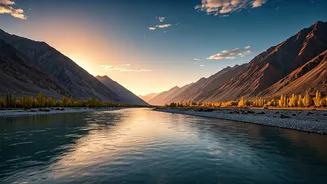
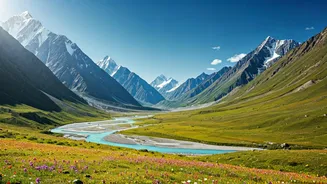
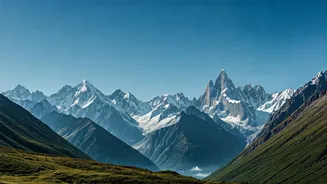
The Indus River is not just a line on a map of Pakistan and India; it's a foundational artery of human civilization. Flowing from the Tibetan Plateau through the Himalayas and down to the Arabian Sea, it nurtured the Indus Valley Civilization over 4,500 years ago, one of the world's first great urban cultures. In the ancient Hindu scriptures, the Rigveda, it is revered as the mighty Sindhu, a goddess and a life-giver. Its very name gave India its own. Unlike the Ganges, which is more famous in the West for its crowded ghats and public rituals, much of the Indus remains wild, remote, and less touched by the machinery of mass tourism. This rawness is precisely its appeal. To stand on its banks is to feel a connection not just to a belief system, but to the deep, unbroken history of human searching.
Rejecting Curated Wellness
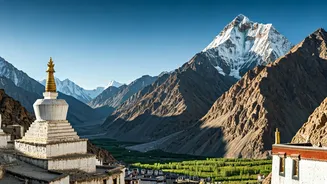
The modern wellness industry, with its expensive retreats, celebrity gurus, and Instagram-perfect aesthetics, can feel as commercialized and hollow as the institutions many young people have left behind. A trip to the Indus is the antithesis of this. It’s often an arduous journey, demanding self-reliance and a willingness to embrace the uncomfortable and unpredictable. There are no branded yoga mats or green juice cleanses. The experience is not curated for a Western consumer. Instead, the reward is authenticity. It’s about trekking through Ladakh, where the Indus flows clear and fast through high-altitude desert, or finding quiet contemplation in regions where Sufi mystics have meditated for centuries. It's an active pilgrimage, not a passive vacation, forcing an internal reckoning that a week at a spa cannot.
A Journey Inward, Powered by Place
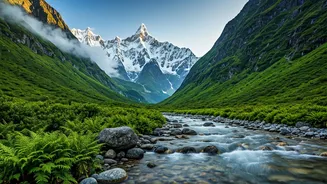
Ultimately, the journey to the Indus is a physical manifestation of an internal quest. In a hyper-connected world saturated with digital noise and fleeting trends, the river offers a powerful sense of permanence and perspective. Its sheer scale and ancient legacy can make personal anxieties seem manageable, even trivial. For a spiritual seeker, being in such a place strips away the non-essential. The focus shifts from the self to the surroundings, from consumption to contemplation. It’s a chance to disconnect from the relentless churn of modern life and plug into a current that has been flowing for millennia. The answers they find aren't dictated by a guru or a text, but are discovered in the silence between the wind, the water, and the mountains.