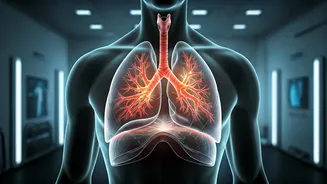







Recovery Isn't Just Passive Rest
Think about 'recovery.' For most people, it conjures images of ice baths, foam rollers, or simply collapsing on the couch after a tough workout or a long week. It’s seen as a passive state—the absence of effort. But top performers, from pro athletes to Silicon
Valley CEOs, are redefining it. They treat recovery as an active skill, a system to be controlled and optimized. The goal is no longer just to stop stressing the body, but to actively signal to it that it's time to repair, rebuild, and prepare for the next challenge. This shift in mindset transforms recovery from a necessary chore into a strategic advantage, and the remote control for this system is your breath.
Your Body's 'Fight or Flight' Switch
To understand how this works, you need a quick primer on your autonomic nervous system. Think of it as having two modes. The first is the sympathetic nervous system, better known as 'fight or flight.' It’s your gas pedal. It floods you with adrenaline and cortisol, increases your heart rate, and gets you ready for action. It’s essential for a workout, a big presentation, or dealing with a crisis. The second is the parasympathetic nervous system, or 'rest and digest.' This is your brake pedal. It slows your heart rate, aids digestion, and shifts your body into a state of calm and repair. The problem is, modern life—with its constant pings, deadlines, and stressors—can leave the gas pedal stuck to the floor. Chronic stress means we're living in a low-grade 'fight or flight' state, which torpedoes quality recovery.
Breathing as the Control Panel
So, how do you manually press the brake? Through your breath. Breathing is unique because it's both an automatic and a voluntary process. You don't have to think about it, but you *can* take control of it. And when you do, you gain a direct line into your nervous system. Slow, deep, controlled breathing—especially with a longer exhale than inhale—is a powerful signal to your brain that you are safe. This consciously activates the 'rest and digest' system. Your heart rate slows, your blood pressure drops, and your body gets the all-clear to begin deep recovery. Instead of waiting for calm to happen, you are generating it on demand. This is the central mechanism: using voluntary breath to influence your involuntary nervous system.
Techniques from the Pros' Toolbox
This isn’t just about taking a few deep breaths. Specific, structured protocols are used for different outcomes. **Box Breathing:** Popularized by Navy SEALs, this technique involves inhaling for four seconds, holding for four, exhaling for four, and holding for four. It’s a simple, powerful tool for managing stress in real-time and resetting your mental state. It acts like a metronome for your nervous system, forcing a calm, steady rhythm. **The Physiological Sigh:** Championed by Stanford neuroscientist Andrew Huberman, this involves two sharp inhales through the nose (the second one topping off the lungs) followed by a long, slow exhale through themouth. This is the body's natural way of off-loading stress and can quickly reduce feelings of anxiety. Two or three cycles can have a near-instant calming effect. **Cyclic Hyperventilation (e.g., Wim Hof Method):** This more intense practice involves rounds of deep, rapid breathing followed by a long breath-hold. Proponents claim it can reduce inflammation and improve resilience to stress. It's more of an acute 'workout' for your nervous system than a simple relaxation tool.
From Better Recovery to Peak Performance
The connection to performance becomes crystal clear. By using breathwork to deliberately downshift after a workout or at the end of a stressful day, you accelerate the repair process. This leads to deeper, more restorative sleep—the single most critical component of recovery. Better sleep means better hormone regulation, muscle repair, and cognitive function. You aren't just less tired; you're more resilient, focused, and powerful the next day. You can handle more training volume or more cognitive load without burning out. By mastering your breath, you're not just recovering from yesterday's stress; you're proactively preparing your body and mind to perform at their best tomorrow.