


Anatomy of a Perfect Bite
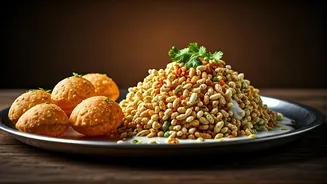
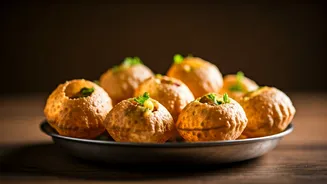
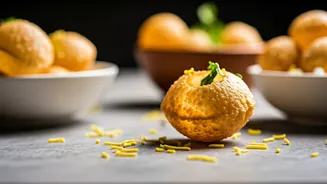
At first glance, dahi puri seems impossessibly delicate. It starts with a ‘puri,’ a small, hollow, and exceptionally crispy puff made from semolina or flour, fried to a pale gold. These fragile spheres are the vessel for a meticulously layered world of
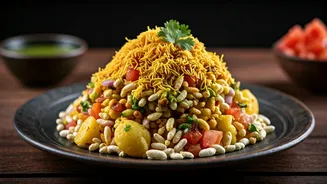
flavor. A small hole is gently tapped into the top of each one, creating an opening for the magic to begin. Inside, a humble but essential filling of boiled potatoes and chickpeas, often lightly spiced, provides a soft, savory base. Then comes the cooling deluge of ‘dahi’—creamy, lightly sweetened yogurt that cascades into the puri, filling it almost to the brim. This isn't just any yogurt; it's thick and luscious, acting as a soothing balm against the spice that’s about to arrive. The final flourishes are a drizzle of two essential chutneys: a dark, sweet-and-sour tamarind chutney and a vibrant, spicy green chutney made from mint and cilantro. A generous shower of ‘sev,’ crunchy fried chickpea flour noodles, crowns the top, adding one last layer of texture.
A Symphony in One Mouthful
There’s a strict protocol for eating dahi puri: it must be consumed in one go. This isn't a suggestion; it's a structural necessity and the key to the entire experience. To hesitate is to risk a soggy collapse. You pop the entire sphere into your mouth, and for a brief moment, everything happens at once. The puri shatters, releasing its contents in a flood of sensation. You get the crispiness of the shell and the sev, followed immediately by the cool, creamy yogurt. Then the chutneys hit—the deep, tangy sweetness of the tamarind wrestling playfully with the fresh, zesty kick of the mint. Just as you register the spice, the soft, earthy potato and chickpea filling grounds everything. It's a culinary rollercoaster that lasts about three seconds, a perfect sequence of contrasting temperatures, textures, and tastes. It’s the pop of the shell, the rush of cool yogurt, the spike of spice, and the satisfying crunch of sev, all resolving into a single, harmonious flavor that leaves you reaching for the next one.
The Culture of Chaat
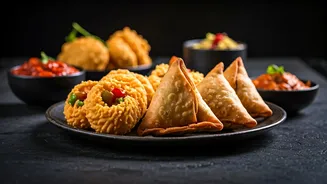
To understand dahi puri, you have to understand ‘chaat.’ Chaat is the sprawling, diverse, and beloved category of Indian street food snacks to which dahi puri belongs. It’s a style of eating that’s fundamentally social, informal, and joyous. You don’t book a reservation for chaat; you find it at a bustling street-side stall, order a plate to share with friends after work, or grab it as a quick, satisfying break from a shopping trip. Chaat is the food of everyday celebration. It's messy, vibrant, and unapologetically bold. The vendors, or ‘chaatwallas,’ are artists of assembly, working with practiced speed to build each plate to order. This environment is part of the comfort. It isn’t a formal, sit-down meal. It’s a moment of spontaneous, affordable delight—a quick escape from the daily grind into a world of explosive flavor. Dahi puri, as a star of the chaat world, carries this cultural DNA. It’s not just food; it’s an experience, a social ritual, and a small act of self-care.
The Universal Language of Comfort
So, is dahi puri a snack that *everyone* understands? While the name may be new to some, the feeling it delivers is profoundly universal. The core principle—a perfect, self-contained bite that balances sweet, salty, crunchy, and creamy—is something every food culture has sought to perfect. Think of the perfect loaded nacho, with its crisp chip, melted cheese, cool sour cream, and spicy jalapeño. Or a perfectly constructed bruschetta, with its toasted bread, fresh tomato, and sharp balsamic. We all recognize the genius of packing maximum contrast and satisfaction into a single mouthful. Dahi puri is simply one of the most elegant executions of this concept. It doesn't rely on heavy fats or overwhelming sugar for its appeal. Its comfort comes from its balance, its complexity, and the sheer fun of eating it. It’s the kind of snack that makes you close your eyes for a second to fully appreciate what’s happening. That, right there, is a language we can all understand.