







The Monsoon Mood
To understand India’s love affair with rainy day food, you first have to understand the monsoon itself. After months of oppressive, blistering heat, the annual rains are more than just a weather event; they are a cultural and emotional reset. The season,
which typically runs from June to September, brings relief, romance, and a sense of cozy introspection. The gray skies and steady drumming of rain against rooftops create a specific atmosphere known as 'mausam,' a Hindi-Urdu word that captures not just the weather but the entire mood that comes with it. It’s a time for slowing down, gathering with family, and indulging in simple comforts. And nothing says comfort quite like a hot, savory snack.
The Reign of Fried Food and Chai
At the heart of this culinary tradition are two undisputed champions: pakoras and chai. Pakoras are savory fritters made by dipping vegetables like onions, potatoes, spinach, or paneer in a spiced chickpea flour batter and deep-frying them until golden and crisp. Served piping hot, often with a side of mint-coriander chutney or tangy tamarind sauce, their crunchy texture and warming spices are the perfect antidote to the damp chill in the air. Each household has its own variation, a secret spice blend passed down through generations. Of course, no plate of pakoras is complete without a steaming cup of masala chai. This isn't your standard coffee-shop chai latte. Authentic Indian chai is a robust concoction of black tea leaves boiled with milk, water, sugar, and a potent mix of spices like ginger, cardamom, cloves, and cinnamon. The process is a ritual in itself—the gentle simmer, the fragrant steam, the final strain into a cup. The pairing is iconic: the spicy, milky warmth of the tea cuts through the richness of the fried snacks, creating a perfect balance of flavor and feeling.
Street-Side Staples
The obsession isn't confined to the home. As soon as the drizzle starts, street food vendors across the country fire up their stalls. One of the most quintessential monsoon street foods is bhutta—roasted corn on the cob. Charred over hot coals until the kernels are tender and smoky, the corn is then rubbed vigorously with a mixture of salt, chili powder, and a generous squeeze of lime juice. The resulting flavor is a vibrant explosion of smoky, spicy, and sour that feels intrinsically linked to the rainy season. Alongside bhutta, you’ll find vendors selling piping hot samosas, their flaky pastry shells filled with spiced potatoes and peas, and kachoris, another type of fried pastry with a lentil filling. These snacks are cheap, accessible, and designed for immediate gratification, making them a beloved part of the public monsoon experience.
So, What Makes It a 'New' Obsession?
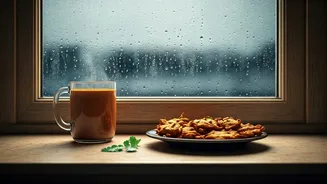
While the love for these foods is ancient, the framing of it as a national 'obsession' is a distinctly modern phenomenon, supercharged by social media. What was once a personal or familial ritual is now a public performance of comfort. Instagram feeds and TikTok videos fill with aesthetically pleasing shots: a rain-streaked window pane in the background, a beautifully arranged plate of pakoras in the foreground, and a hand cradling a rustic teacup. Food bloggers share stylized recipes, and hashtags like #monsoonfood and #chaipakora trend for months. This digital amplification has turned a quiet, seasonal tradition into a shared, highly visible cultural moment. It has codified the menu, created a new kind of 'fear of missing out' on the perfect rainy day experience, and introduced these cozy rituals to a global audience. The craving is old, but the need to capture and share it is what makes it feel like a fresh, collective obsession.