




The Aurora Borealis in Alaska
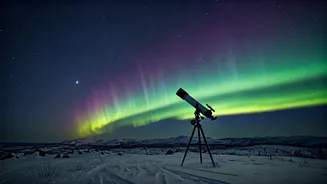
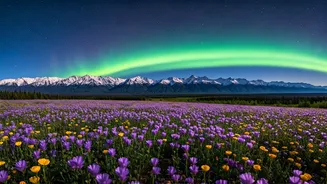
Often called the Northern Lights, the aurora borealis is a celestial ballet of shimmering green, pink, and violet curtains of light dancing across the night sky. This phenomenon occurs when charged particles from the sun collide with gases in Earth's
upper atmosphere. While many associate this spectacle with Iceland or Norway, the United States has its own front-row seat in Alaska. For the best chance of witnessing this wonder, head north to the region around Fairbanks, which sits inside the “auroral oval,” a zone with high aurora activity. The viewing season is long, stretching from late August to late April, when the nights are dark enough. Your odds increase on clear, moonless nights away from city light pollution. It’s a show that requires patience—and a very warm coat—but watching the sky come alive is a core memory in the making.
Yosemite's Fleeting Firefall
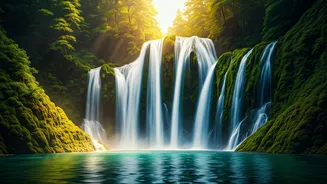
For just a few precious days each year, a slice of granite in Yosemite National Park puts on an almost unbelievable performance. The “Firefall” is a natural illusion that happens when the setting sun hits Horsetail Fall at the perfect angle, illuminating the cascade of water in fiery oranges and reds. It looks exactly like a stream of molten lava pouring over the eastern face of El Capitan. This spectacle is incredibly specific. It typically occurs for about 10 minutes at sunset during a two-week window in mid-to-late February. But conditions must be perfect: the sky must be clear to the west, and there needs to be enough snowmelt to feed the waterfall. Due to its popularity, the National Park Service now manages viewing areas to protect the landscape, often requiring reservations. It’s a testament to nature's perfect timing and a photographer's dream.
The Great Monarch Migration
It’s not a single event but a sprawling, multi-generational journey. Each fall, millions of monarch butterflies travel thousands of miles from as far north as Canada to their overwintering grounds in Mexico and coastal California. Watching them funnel through the country in great, fluttering rivers of orange and black is a quiet miracle. In the U.S., the best places to witness the culmination of this journey are the coastal groves of California from October through February. Cities like Pismo Beach, Santa Cruz, and Pacific Grove (nicknamed "Butterfly Town, U.S.A.") host massive clusters of monarchs. They hang from eucalyptus and pine trees in such dense numbers that they can look like clumps of dead leaves—until the sun warms them and they take to the air in a dizzying, beautiful cloud.
California's Desert Superblooms
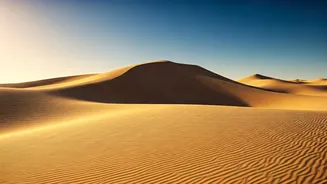
Most of the time, America’s deserts are defined by stark, beautiful emptiness. But every so often, after an unusually wet winter, they explode into a riot of color. A “superbloom” is a colloquial term for a breathtaking display of wildflowers, where millions of dormant seeds germinate at once, carpeting the arid landscape in a sea of gold, purple, pink, and blue. Anza-Borrego Desert State Park and Death Valley National Park are two of the most famous locations for these rare events, which don't happen every year. Predicting them is an inexact science, but when they occur (typically in the spring), the sight of endless desert sand verbena, poppies, and desert sunflowers is profoundly moving. It’s a powerful reminder of the life and resilience hidden just beneath the surface of the harshest environments.
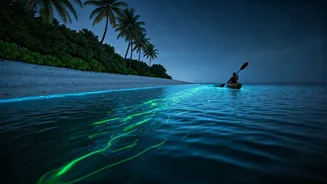
The Ocean's Living Light
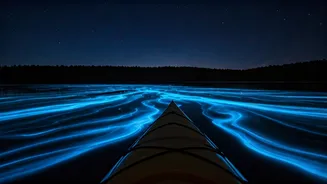
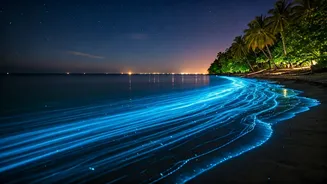
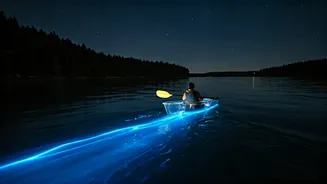
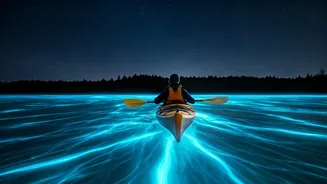
Imagine kayaking on a calm bay at night, and with every paddle stroke, the water around you erupts in a trail of brilliant blue-green light. This is bioluminescence, a chemical reaction created by tiny marine organisms called dinoflagellates. When disturbed, they emit a flash of light, turning the water into a liquid galaxy. While this occurs in oceans worldwide, one of the most famous and accessible spots for Americans is Mosquito Bay in Vieques, Puerto Rico. It's recognized as the brightest bioluminescent bay in the world due to the high concentration of these organisms. Guided kayak tours allow you to experience the magic without harming the fragile ecosystem. It’s an immersive, surreal experience that makes you feel like you’re paddling through a field of fallen stars.