






Redefining 'Working Out'
So, what exactly is gentle movement? Forget punishing boot camps and competitive leaderboards. This approach prioritizes listening to your body over pushing it to its limits. It encompasses a wide range of low-impact activities, such as yoga, Pilates,
tai chi, stretching, and mindful walking. The goal isn't to burn the maximum number of calories or achieve a specific heart rate, but to connect with your body, improve mobility, and reduce stress. It's about sustainability and feeling good, not just during the workout, but long after. This philosophy reframes exercise not as a chore or a punishment for what you ate, but as an act of self-care and maintenance—a way to inhabit your body more comfortably and consciously.
An Antidote to Hustle Culture
To understand why this trend resonates so deeply with young India, you have to understand the immense pressure they face. For millions in India’s bustling cities, life is a high-stakes competition. From grueling school entrance exams to a hyper-competitive job market and the always-on nature of corporate life, burnout is becoming a generational hallmark. The pressure to succeed is immense, leading to widespread anxiety, stress, and sleep deprivation. In this context, the idea of adding a high-intensity, physically demanding workout regimen can feel less like a solution and more like another source of stress. Gentle movement offers a necessary exhale—a way to decompress and counteract the constant state of fight-or-flight that defines many young professionals' daily existence.
The Mind-Body Connection
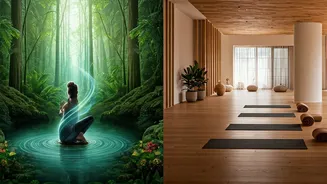
The benefits of gentle movement extend far beyond the physical. While it certainly helps with flexibility, balance, and core strength, its most profound impact is often on mental well-being. Practices like yoga and mindful walking are proven to lower cortisol (the stress hormone), calm the nervous system, and improve mental clarity. By focusing on breath and deliberate motion, participants are pulled out of the chaotic rush of their thoughts and into the present moment. This form of moving meditation is a powerful tool for managing anxiety and fostering a sense of inner peace. For a generation grappling with a growing mental health crisis, this is not just a nice-to-have; it's an essential survival tool. It’s a way to build resilience from the inside out, providing a stable foundation in a fast-paced world.
A Modern Return to Ancient Roots
While gentle movement feels like a modern trend, it’s deeply intertwined with India’s ancient traditions. Yoga, its most famous export, is the original form of mindful, gentle movement. For centuries, its purpose was primarily spiritual and holistic, not purely aesthetic or athletic. The current trend can be seen as young Indians reclaiming this heritage and adapting it for modern life. They are stripping away the Westernized, commercialized, and often intimidatingly athletic veneer that yoga has acquired and returning to its core principles of balance, mindfulness, and union of mind and body. It represents a reconnection with a slower, more intentional way of being that was always part of the cultural fabric, now rediscovered as a necessary balm for the wounds of modernity.