



The Soul of a Haveli
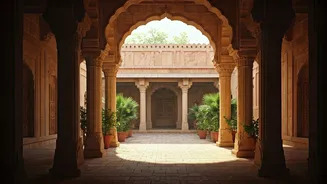
The magic of these restored Jaipur villas begins with their bones. Many are modern interpretations or careful restorations of the traditional Rajasthani haveli—a private mansion built around a central courtyard. This architectural feature is more than just
an open space; it's the heart and lungs of the home. Designed for the arid climate, the courtyard acts as a natural air conditioner, drawing cool air through the surrounding rooms. It’s a concept that is both deeply practical and poetic. In these restored spaces, the courtyard becomes a tranquil sanctuary filled with the sound of a small fountain, the scent of jasmine, and shaded colonnades offering respite from the afternoon sun. It’s a design that encourages communal living and a connection to the elements, a stark contrast to the sealed-off nature of much of Western architecture. This is where the story of the home begins, with an inward-facing world of privacy and beauty.
A Symphony in Stone and Light
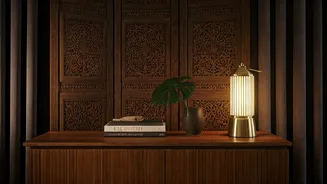
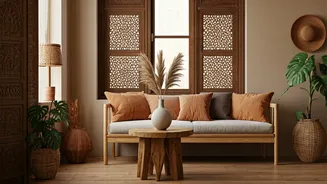
Rajasthani architecture is a masterclass in manipulating light. Walk through these villas, and you’ll notice how sunlight doesn’t just enter a room; it performs. This is largely thanks to two signature elements: the jharokha and the jaali. A jharokha is an ornate, overhanging balcony, often enclosed with intricate carvings, that juts out from the building’s facade. Historically, it allowed women of the court to observe public life without being seen, but today it serves as a perfect, shaded nook for reading or sipping chai. The jaali is an exquisitely carved latticed screen, typically made from stone or wood. These screens break the harsh glare of the desert sun into a thousand soft, shifting patterns on the floors and walls, creating a perpetually moving work of art. More than just decoration, this feature provides ventilation while maintaining privacy, proving that ancient design solutions are often the most elegant and sustainable.
The Colors of the Desert Kingdom
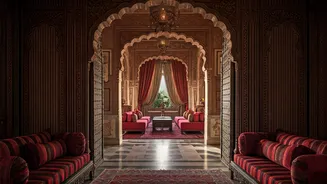
While the architecture provides the structure, it’s the color that gives Rajasthani interiors their soul. Jaipur is famously known as the “Pink City,” but inside these exclusive villas, the palette explodes into a full spectrum of desert brilliance. You’ll find entire rooms washed in a deep, calming indigo, a nod to the region's history of textile dyeing. Other spaces might feature the vibrant fuchsia of a bougainvillea, the saffron yellow of a marigold, or the rich emerald green of a peacock's feather. These bold choices are rarely overwhelming. They are expertly balanced with cool, white marble floors, dark wood furniture, and the earthy tones of sandstone. This fearless use of color is a direct reflection of Rajasthan itself—a vibrant culture blooming in the middle of the Thar Desert. It’s a powerful reminder that a home’s palette can be a source of energy, joy, and identity.
Where Every Surface Tells a Story
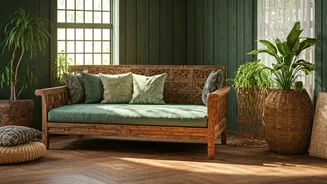
The true luxury of these restored interiors lies in the celebration of craftsmanship. This is where you see the painstaking work that connects the present to a rich artistic past. Look closely at the walls, and you might find thikri work, a mesmerizing mosaic technique where hand-cut pieces of mirror are embedded in plaster to create glittering patterns. In another room, a delicate fresco might depict a scene from Hindu mythology or a procession of caparisoned elephants, painted by artisans whose families have practiced this craft for generations. Furniture is often heavy, carved from dark teak or mango wood, and textiles are king. Block-printed cottons with intricate floral and geometric motifs adorn everything from curtains and cushions to bedspreads, providing layers of texture and softness. This isn't mass-produced decor; it's a living gallery of human skill, where every surface has a story to tell and every object feels imbued with history and soul.