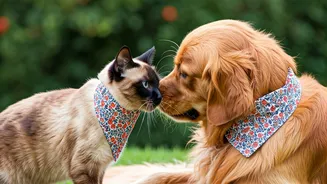






Breathability is Everything
When the air feels thick enough to swim through, the last thing your pet needs is another insulating layer. This is where lightweight cotton shines. Unlike heavier synthetic materials like polyester or fleece, which can trap heat and moisture against
your pet's skin, a single layer of thin cotton allows for crucial air circulation. Think of it like choosing to wear a linen shirt on a sweltering day instead of a wool sweater. For dogs, who primarily cool themselves by panting, keeping their neck and chest area free from trapped heat is a small but significant comfort. A lightweight bandana won't actively cool them down like a dip in a pool, but it avoids adding to the heat load, making it a far superior accessory choice to thicker, more decorative neckwear during humid weather.
The Organic Advantage for Sensitive Skin
The “organic” in organic cotton isn't just a buzzword; it signals a difference you can often feel and that your pet's skin will appreciate. Organic cotton is grown without the use of synthetic pesticides and fertilizers. Its fibers are typically processed more gently, without harsh chemical treatments, bleaches, or dyes that can linger in the final product. For pets, especially those with sensitive skin, allergies, or hot spots, this is a game-changer. A conventional fabric might contain residues that can cause irritation, itching, or contact dermatitis. An organic cotton bandana is softer, naturally hypoallergenic, and free from these potential irritants, making it a comfortable, worry-free option to have resting against your furry friend's skin and coat all day.
Style Meets Safety and Comfort
While a dog in a bandana is undeniably cute, responsible pet ownership means prioritizing safety. A well-chosen bandana is both stylish and secure. First, ensure the fit is right: it should be loose enough that you can easily slide two fingers between the bandana and your pet’s neck. It should never be tight or restrictive. A simple, tied-on square of fabric is often safer than models with buckles or clasps that could get caught. Also, consider your pet’s activity level. If you're heading out for a vigorous hike or a romp at the dog park where things could get snagged, it might be best to leave the accessory at home. For leisurely neighborhood walks, patio lounging, or photo ops, however, it’s the perfect blend of fashion and function.
How to Pick the Perfect One
When you're shopping, not all cotton bandanas are created equal. Look for terms like “lightweight,” “gauze,” or “voile” to ensure the fabric is thin and breathable. Hold it up to the light; you should be able to see through it slightly. If you see a GOTS (Global Organic Textile Standard) certification, that's the gold standard, ensuring its organic status from field to final product. Color matters, too. While a dark plaid might look sharp, lighter colors are more practical for sunny days as they do a better job of reflecting, rather than absorbing, the sun's heat. Finally, check the dimensions. A simple square gives you the most versatility, allowing you to fold it into a triangle and tie it to the perfect size for your dog, cat, or even a particularly stylish guinea pig.
Keeping It Fresh and Clean
A bandana worn during humid weather is going to absorb some sweat, drool, and general outdoor grime. To keep it comfortable and hygienic for your pet, regular washing is a must. Fortunately, cotton bandanas are incredibly easy to care for. Most can be tossed in the washing machine with a gentle, pet-safe detergent. To maintain the softness of the organic cotton and prevent shrinking, opt for a cold water wash and either a low-heat tumble dry or, even better, a simple air dry. A clean, fresh bandana is not only more pleasant for your pet to wear but also prevents the buildup of bacteria that could lead to skin irritation.