


A Different Kind of Indian Kingdom
When Americans dream of royal India, their minds usually drift to the grand forts of Rajasthan or the opulent Mughal courts. But tucked away in the country’s northeast, bordering Bangladesh, lies Tripura, a state with a royal story that’s just as compelling
and far less traveled. For nearly five centuries, the Manikya dynasty ruled this unique kingdom. Unlike many princely states that were creations of larger empires, Tripura boasted an independent lineage stretching back to antiquity, according to its own royal chronicles. What made the Manikyas particularly distinctive was their deep integration with the region's indigenous tribal communities. The kings weren't just rulers; they were patrons of a hybrid culture, blending Bengali courtly traditions with local customs. This history gives Tripura a cultural texture you won't find anywhere else in India, offering a narrative that’s richer than a simple fairy tale.
Neermahal: The Floating Fairy Tale
The ultimate proof of Tripura’s visual splendor—and its social media potential—is Neermahal, or the “Water Palace.” Completed in 1938 by Maharaja Bir Bikram Kishore Manikya, it’s one of only two major water palaces in India. Set in the middle of Rudrasagar Lake, the palace is a breathtaking fusion of Hindu and Mughal architectural styles, with pristine white walls, elegant chhatris (domed pavilions), and graceful arches. In the monsoon season, when the lake is full, the palace appears to float magically on the water's surface, its reflection creating a perfect, dreamlike symmetry. Visitors arrive by boat, the journey across the water building anticipation for the moment they step into its deserted halls and courtyards. The palace is divided into two sections: the Andar Mahal, the private quarters for the royal family, and an open-air theater for cultural performances. Exploring its quiet corridors, it’s easy to imagine the vibrant life it once held—a lost world waiting to be captured.
Ujjayanta Palace: A Capital's Crown Jewel
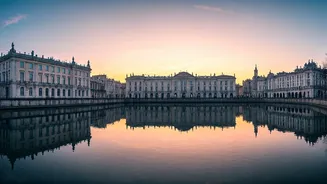
While Neermahal offers secluded drama, Tripura’s other great royal landmark stands proudly in the heart of its capital, Agartala. The Ujjayanta Palace, a gleaming white neoclassical building, served as the primary royal residence until the state merged with India in 1949. Designed by Sir Alexander Martin of the Martin & Co. engineering firm (the same minds behind Kolkata’s Victoria Memorial), its domed central tower, sprawling grounds, and serene reflecting pools feel more like a European country estate than a typical Indian palace. Rabindranath Tagore, the Nobel laureate and a close friend of the royal family, gave the palace its name. Today, Ujjayanta Palace is home to the Tripura State Museum, offering visitors a two-for-one experience. You can admire the grand architecture while also exploring exhibits that detail the region’s rich history, art, and diverse cultural heritage, providing context to the beauty.
The New Guard of an Old Dynasty
This legacy isn't just gathering dust. The current head of the erstwhile royal family, Pradyot Bikram Manikya Deb Barma, is a modern-day custodian of his family’s history. An active political and social figure, he has been instrumental in preserving and promoting Tripura’s heritage. His most ambitious project involves converting a portion of the Ujjayanta Palace grounds into a luxury heritage hotel, allowing travelers to experience royal hospitality firsthand. This initiative aims not just to create a high-end travel experience but also to generate local employment and fund the upkeep of these historic structures. It’s a forward-thinking approach that bridges the gap between a storied past and a sustainable future, ensuring that the legacy of the Manikyas is not just remembered, but lived.