



A Journey to a Disappearing World
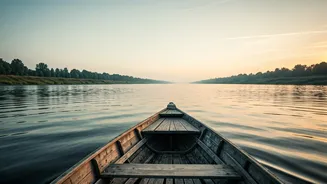
Getting to Majuli is the first step in its enchantment. There are no bridges connecting it to the mainland; the only way is a rumbling, rustic ferry that chugs across the vast, silt-heavy waters of the Brahmaputra River. As the bustling city of Jorhat
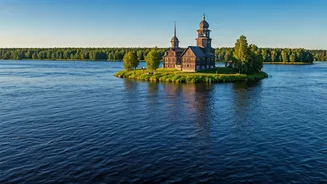
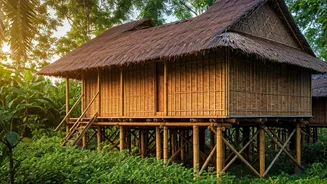
recedes, you enter a different realm. Majuli is often cited as one of the world's largest river islands, a title it holds precariously. Each monsoon, the Brahmaputra’s powerful currents chip away at its edges, a slow-motion erosion that lends a poignant, fragile beauty to the entire experience. This isn’t a slick tourist resort; it's a living, breathing cultural landscape, a place of bamboo stilt houses, emerald-green rice paddies, and roads shared by bicycles, wandering cattle, and the occasional sputtering motorcycle. Arriving here feels less like a vacation and more like a pilgrimage to a place gently resisting the relentless pace of modernity.
An Island Steeped in Culture
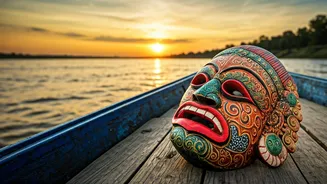
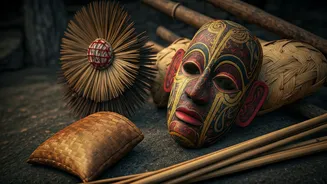
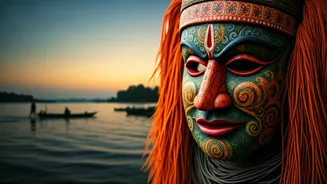
Majuli’s soul resides in its 'Sattras'—unique monastic centers of Neo-Vaishnavism, a branch of Hinduism that has flourished here for centuries. These are not just places of worship but vibrant cultural hubs. Inside their serene compounds, you can see young monks learning traditional music and dance, or watch artisans craft intricate masks used in religious performances. These masks, depicting gods, goddesses, and demons, are a key part of the island’s identity. Life here moves with the rhythm of the seasons and spiritual calendars. Villagers, primarily from the Mising tribe, are masters of weaving, creating beautiful textiles on handlooms beneath their elevated homes. There's a profound sense of community and peace that settles over you as you explore the island’s quiet lanes, a feeling that prepares you for the grand finale of each day.
The River's Grand Canvas
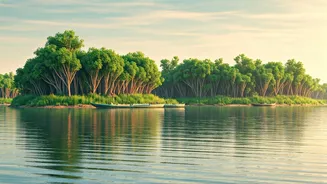
Before you can appreciate the sunset, you must appreciate the Brahmaputra. This is no ordinary river. Originating in the Himalayas, it flows through Tibet, India, and Bangladesh, and in this stretch of Assam, it can spread to be miles wide. On Majuli, the river is everything: the source of life, the cause of its fragility, the main highway, and the horizon. Its scale is almost oceanic. Standing on its banks, the far shore is often just a hazy line in the distance. The water is a shifting palette of gray, brown, and, as evening approaches, liquid gold. Small fishing boats, with their single sails or long poles, drift across its surface, their occupants seeming impossibly small against the river’s immense backdrop. It is this sheer, uninterrupted expanse of water and sky that makes the island the perfect theater for a sunset.
The Golden Hour Spectacle
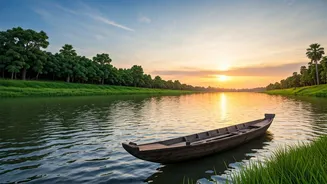
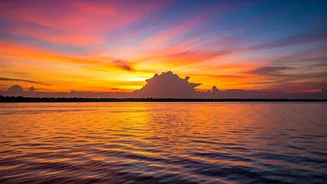
Find a quiet spot on the western edge of the island as the day begins to fade. The heat subsides, replaced by a gentle breeze rustling through the reeds. The first sign is a softening of the light. The harsh sun mellows into a warm, honeyed glow that bathes the entire landscape. Then, the real show begins. The sun, a perfect, fiery orb, starts its slow descent. The sky transforms into a canvas of impossible colors—deep orange, fiery red, soft pink, and regal purple, all blending and shifting. These colors don't just stay in the sky; they spill onto the Brahmaputra, creating a shimmering, molten reflection that doubles the spectacle. The silhouettes of distant fishing boats become stark black cutouts against the blaze. There are no crowds, no applause—just the quiet lapping of water, the distant call of a bird, and the overwhelming feeling of watching something ancient and profound. It’s a moment of pure, unadulterated awe.