


Intentional Curation Beats Accumulation
The primary reason a large home can feel crowded is simple: more space often encourages more accumulation. Empty corners, spare rooms, and vast walls beg to be filled. Over time, this can lead to a collection of items that aren't necessarily loved or used,
creating visual and mental clutter. A small home, by contrast, forces a different mindset. Every item must justify its existence. This leads to a curated environment where you're surrounded only by things that are functional or beautiful. This intentionality creates a sense of calm and order that a randomly filled 3,000-square-foot house can't compete with. The focus shifts from 'how much can I fit?' to 'what truly belongs here?'
Master the Flow of Light and Reflection
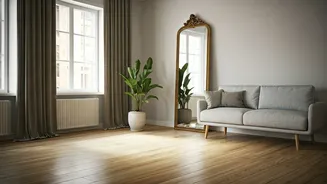
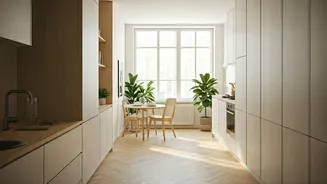
A dark, poorly lit room feels smaller, regardless of its actual dimensions. Small spaces often excel when designed to maximize natural and artificial light. By using light-colored paints (whites, soft grays, pale blues), you create a bright, airy canvas that reflects light around the room. The strategic placement of mirrors is a classic trick for a reason; a large mirror can visually double the size of a space and bounce light into darker corners. In a large home with chopped-up rooms or dark hallways, these principles are often overlooked. A small, sunny studio can feel infinitely more expansive than a cavernous great room with heavy drapes and dark wood paneling.
Think Vertically, Not Just Horizontally
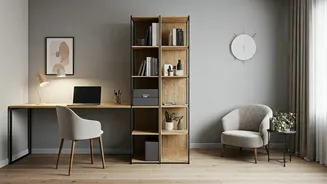
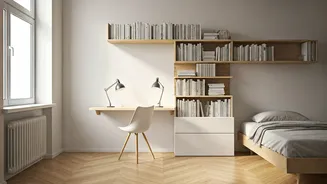
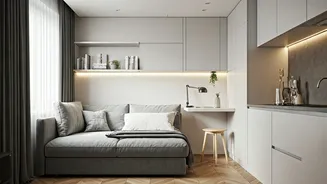
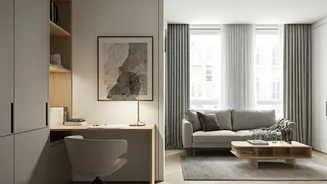
Crowding is often a result of too much stuff competing for limited floor space. The solution is to look up. Small homes encourage the use of vertical space, which draws the eye upward and creates an illusion of height and openness. Think tall, narrow bookcases that go almost to the ceiling, floating shelves that keep surfaces clear, and art hung slightly higher than usual. This approach frees up the floor, which is critical for creating a sense of flow and movement. In a larger home, there’s less incentive to use walls efficiently, so furniture and clutter tend to spread out horizontally, making rooms feel busier and more difficult to navigate.
Embrace Furniture That Does More
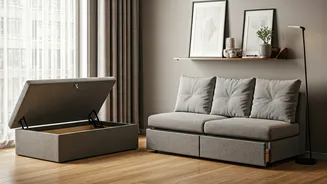
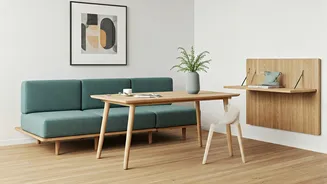
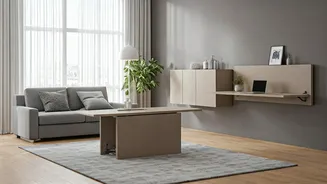
Every piece of furniture in a small home needs to work hard. Multi-functional pieces are the heroes of compact living: the coffee table with hidden storage, the ottoman that doubles as extra seating, the dining table that can shrink for daily use and expand for guests. This reduces the sheer number of items needed in a room. A large living room might have a sofa, three armchairs, a coffee table, two end tables, and a console. A smaller, smarter space might achieve the same functionality with a sectional, a storage ottoman, and one clever C-table. The result is more breathing room and a cleaner, more streamlined aesthetic that feels inherently less crowded.
Create Clearly Defined Zones
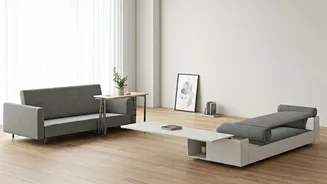
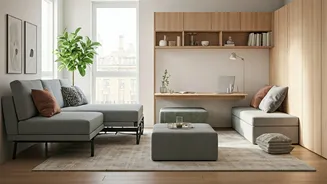
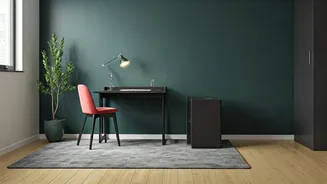
A single, large, open-plan room can feel chaotic if it lacks definition. A small space, like a studio apartment, forces you to be clever about creating zones. Using a rug to anchor a living area, placing a bookshelf as a soft divider for a sleeping nook, or positioning a desk to face a window to create a workspace can make a single room feel like a multi-room home. This organization brings a sense of purpose to every square foot. Without these defined areas, furniture 'floats' and the space can feel jumbled and unmoored. By giving every part of your small home a job, you create a psychological map that feels organized and spacious, not cramped.