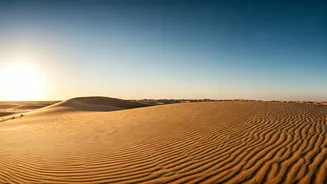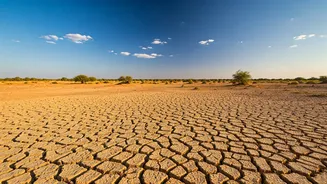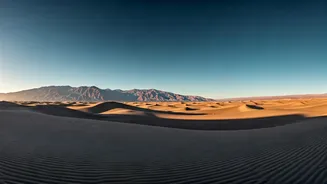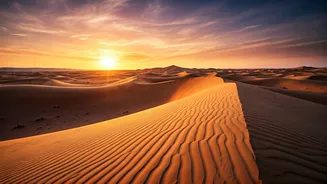







The Bone-Dry Beauty of Sam
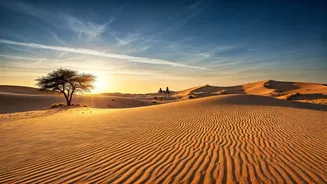
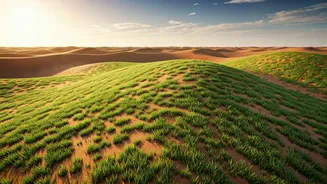
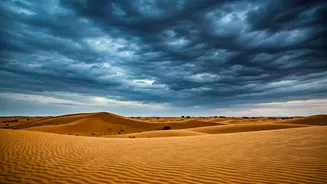
First, let's head to the place staying dry: the Sam Sand Dunes. Located on the outskirts of Jaisalmer in the state of Rajasthan, these rolling dunes are the picture-perfect image of a desert. They are part of the massive Thar Desert, also known as the Great
Indian Desert, which straddles the border between India and Pakistan. This is an arid landscape, receiving less than 10 inches of rain annually. Life here has adapted to scarcity, not surplus. The dunes are a major tourist attraction, drawing visitors who want to experience a desert safari against a backdrop of dramatic sunsets. The appeal is precisely their unchanging, arid nature—a golden sea of sand that seems a world away from any notion of flooding.
Enter the Monsoon: India’s Lifeblood and Fury
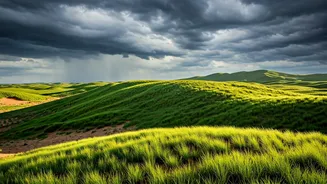
Now, let’s talk about the “soaked” part. The Indian monsoon is one of the planet’s most significant climate phenomena. Every summer, a massive shift in wind patterns occurs. Hot air rising over the Tibetan Plateau and the Indian subcontinent creates a low-pressure area that pulls in cooler, moisture-laden air from the Indian Ocean. These winds, saturated with water, sweep across the country from June to September. They are the lifeblood for agriculture, replenishing rivers and groundwater for hundreds of millions of people. But this life-giving force can also be incredibly destructive. When the monsoon is particularly intense or stalls over a region, it can unleash torrential rainfall, causing widespread, catastrophic flooding in places like Assam in the northeast, the Himalayan state of Himachal Pradesh, or the coastal regions of Kerala and Mumbai.
The Mountain Range That Acts as a Wall
So, how do the dunes stay dry when so much water is flying around? The answer lies in a crucial piece of geography: the Aravalli Range. This ancient mountain range runs northeast to southwest, creating a formidable barrier. The primary branch of the monsoon, coming from the Arabian Sea, blows parallel to the Aravallis. Because the winds don't have to climb over the mountains, the air isn't forced to rise, cool, and release its moisture as rain over the Thar Desert. The mountains effectively create a “rain shadow,” shielding western Rajasthan from the monsoon’s deluge. While the eastern side of the Aravallis gets decent rainfall, the western side, where the Sam Sand Dunes lie, remains arid. The rain-bearing clouds simply pass by, continuing on their journey to drench other parts of Northern India.
A Continent Disguised as a Country
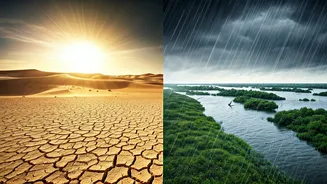
This stark contrast is the perfect illustration of India’s immense diversity. It's easy for Americans to think of foreign countries as having one single climate, but India is geographically more like a continent. Its climate zones are as varied as those across the entire United States. While the Thar Desert experiences extreme heat, the Himalayan north has alpine tundra and glaciers. While the central Deccan Plateau is semi-arid, the coastal plains are humid and tropical. The world’s wettest place on Earth, Mawsynram, is in India’s northeast, while just over a thousand miles away, the Sam dunes bake in the sun. Thinking of “India” as a single weather system is like confusing the climate of Miami with that of Seattle or Death Valley. The dry dunes and soaking plains aren't a contradiction; they are two authentic, simultaneous realities of life on the subcontinent.