





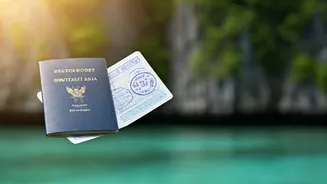


Visa-Free Entry for Americans
For many exotic destinations, the first hurdle is a mountain of visa paperwork and fees. Not with Thailand. For U.S. passport holders, the country offers a visa exemption scheme that typically allows for a 30-day stay for tourism purposes when arriving
by air, with no pre-application required. You simply show up, get a stamp, and you’re in. This policy removes a significant layer of stress, cost, and planning, making a spontaneous or last-minute trip a genuine possibility. For those wanting to stay longer, options for 60-day tourist visas and extensions are also relatively straightforward, but for the average vacationer, the process is as frictionless as it gets.
Getting There Is Simpler Than You Think
While Thailand is a world away, the journey from the U.S. is well-trodden and competitive. Major carriers like EVA Air, Cathay Pacific, and Korean Air offer efficient one-stop routes from hubs like Los Angeles (LAX), San Francisco (SFO), and New York (JFK) into Bangkok's Suvarnabhumi Airport (BKK). These airlines are known for their quality service, which makes the long-haul flight more comfortable. The sheer volume of flights keeps prices competitive, especially if you book in advance or travel during the shoulder seasons (April-June, September-October). Once you land, the airport is modern, efficient, and connected to the city by a fast, cheap rail link, ensuring your arrival is smooth from touchdown to hotel check-in.
Your Dollar Goes Dramatically Further
Perhaps the most significant aspect of Thailand’s accessibility is its affordability. Your travel budget simply stretches in ways that are unimaginable in Europe, the Caribbean, or even at home. A delicious, world-class street food meal can cost a couple of dollars. A comfortable, clean guesthouse might run you $25 a night, while a five-star luxury hotel often costs less than a mid-range chain hotel in a major U.S. city. Activities like scuba diving, cooking classes, and temple tours are all reasonably priced. This financial ease means you can say "yes" more often—to another week on the beach, a spontaneous island-hopping trip, or that extra plate of mango sticky rice. It lowers the barrier to entry and makes a longer, more immersive trip feasible for a wider range of travelers.
A Country Wired for Easy Travel
Thailand has been a global tourism hub for decades, and it shows. The infrastructure is built to move visitors around with minimal fuss. A dense network of low-cost domestic airlines like AirAsia and Nok Air can whisk you from the northern mountains of Chiang Mai to the southern islands of Phuket or Krabi for as little as $30. For shorter distances, the bus and train systems are extensive and affordable. In cities, ride-sharing apps like Grab are ubiquitous and function just like Uber. Need to book a tour, a ferry, or a bus ticket? A thousand travel agents in any tourist town are ready to help, often for a tiny commission. This robust network removes the guesswork and logistical headaches, allowing you to focus on the experience itself.
The Language Barrier Is Surprisingly Low
While learning a few Thai phrases (like 'Sawasdee' for hello and 'Khop Khun' for thank you) is always appreciated, visitors are often surprised by how widely English is spoken, especially in areas frequented by tourists. Menus in restaurants are almost always dual-language, signs for transport are in English, and hotel staff and tour operators are typically fluent. This linguistic accessibility provides a crucial comfort layer, especially for first-time visitors to Asia. It ensures that you can navigate, order food, and ask for help without feeling completely lost, making the entire experience less intimidating and more enjoyable.