



What Exactly Is Clay Paint?
Before you can appreciate its finish, it helps to know what’s in the tin. Unlike conventional latex or acrylic paints, which rely on plastic binders and a host of synthetic chemicals, clay paint is fundamentally simple. Its primary ingredient is, unsurprisingly,
clay, blended with water and natural pigments. These paints are part of a broader category of 'natural paints' that often include other earth-based materials like lime (limewash) or chalk. What sets clay paint apart is its elemental composition. It’s a return to basics, using materials that have been on walls for millennia, but refined for the contemporary home. This natural makeup is the direct source of all its unique aesthetic and functional qualities.
The Science of a Softer, Deeper Matt
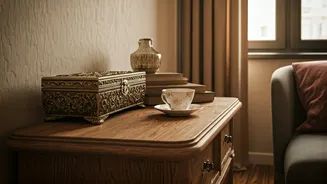
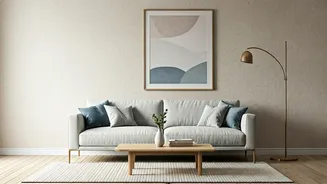
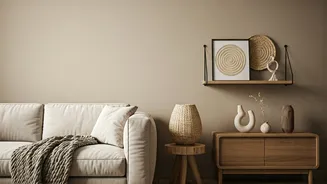
The term 'matt' (or matte) gets thrown around a lot in the paint world, but not all matt finishes are created equal. The 'superior' quality of clay paint's finish comes down to physics. Standard paints contain uniform, spherical binders that reflect light evenly, which can still create a subtle sheen or a flat, one-dimensional look. Clay particles, by contrast, are varied in size and shape. When applied to a wall, they create a micro-textured surface. Instead of reflecting light back at the viewer, this surface scatters it in thousands of different directions. This diffusion of light is what eliminates glare and creates a profound, velvety depth that feels soft and complex. The color seems to emanate from within the wall itself, rather than sitting on top of it. This is why a room painted with clay feels so uniquely immersive and serene; the walls absorb light rather than bouncing it around.
A Rich, Tactile Character
The textural benefits of clay paint are not just about how it plays with light. The finish has a tangible character that adds warmth and sophistication to a space. While the surface is typically smooth to the touch, it possesses a visual texture that makes a room feel complete and layered, even with minimal furniture. It softens hard architectural lines and provides a gentle, organic backdrop for art and decor. In homes that might otherwise feel sterile or new, clay paint can instantly add a sense of history and permanence. Some clay-based plaster-style paints can even be applied with a trowel to create more pronounced, intentionally textured finishes reminiscent of Tuscan villas or desert adobes, offering a spectrum of possibilities from subtly soft to richly dimensional.
The Hidden Benefit: A Breathable Wall
The appeal of clay paint goes beyond aesthetics. Because it lacks the plastic sealants found in acrylic paints, a clay-painted wall is 'vapor-permeable,' or breathable. This means it allows microscopic water vapor to pass through it, rather than trapping it inside the wall cavity. This has two key benefits for the home environment. First, it helps regulate humidity. The clay can absorb excess moisture from the air when it's humid and release it back when the air is dry, contributing to a more comfortable and stable indoor climate. Second, this breathability helps prevent problems associated with trapped moisture, like mildew and peeling paint, making it an excellent choice for historic homes or any space where air quality is a priority. Coupled with the fact that clay paints are naturally zero- or low-VOC (Volatile Organic Compounds), they represent a healthier choice for your home and family.
Practical Considerations Before You Commit
While the benefits are compelling, clay paint isn't a direct replacement for durable acrylics in every situation. Its natural, non-plastic composition means it's generally less scrubbable. While minor marks can often be gently wiped or touched up, it’s not the ideal choice for high-traffic, high-abuse areas like a child's playroom wall or a narrow hallway where it might get frequently scuffed. It also tends to be more expensive per gallon than conventional paint. Application can sometimes require a specific primer to ensure adhesion and a uniform finish, so it's important to follow the manufacturer's instructions closely. However, for a living room, bedroom, or dining space where you want to prioritize atmosphere and a rich, light-absorbing finish, the trade-offs are often well worth it.