



The Land Where Clouds Reside
Perched on the edge of a plateau in the East Khasi Hills of northeast India, the town of Cherrapunji—officially known by its traditional name, Sohra—has a reputation that precedes it. For decades, it held the title of the wettest place on Earth. While
that honor now often goes to the nearby village of Mawsynram, the distinction is almost academic. This is a region that doesn't just experience rain; it is defined by it. The unique geography, where monsoonal winds from the Bay of Bengal are funneled up against the steep Khasi Hills, forces an incredible amount of moisture out of the atmosphere. The result is an annual rainfall measured not in inches, but in feet—often over 30 feet per year. But this isn't a story about dreary, endless downpours. It's about the spectacular transformation this water triggers.
When the Heavens Open
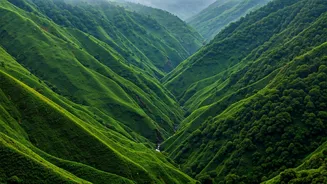
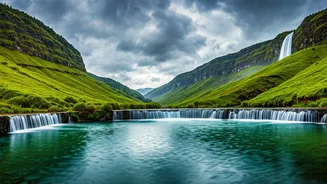
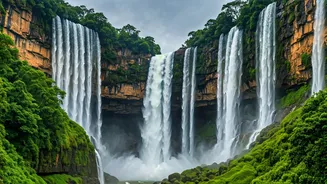
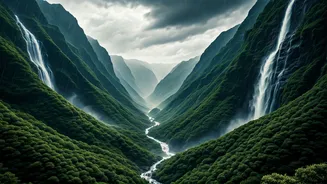
For much of the year, the landscape around Cherrapunji is a beautiful, if somewhat subdued, tableau of rolling hills and deep gorges. But when the monsoon arrives, typically from June to September, the region awakens in an almost violent explosion of life. This is the “peak” mentioned in whispers by travelers. Dry cliffs, once bare and sun-baked, suddenly weep with water. Tiny streams swell into roaring rivers, and entire valley walls become canvases for hundreds, if not thousands, of temporary waterfalls. The sound is constant and all-encompassing—a symphony of drips, flows, and roars. The landscape turns a shade of emerald so vibrant it feels otherworldly, as mosses and ferns blanket every available surface. This is when Cherrapunji truly looks unreal: a place utterly saturated with life-giving water.
The Plunging Giants
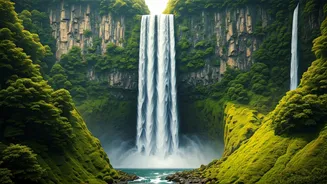
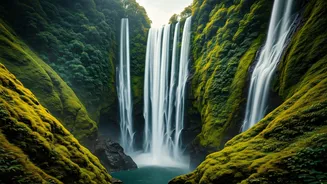
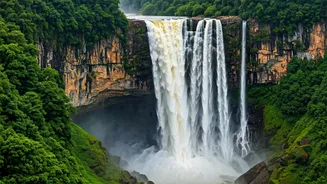
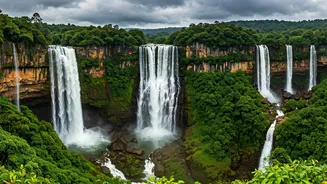
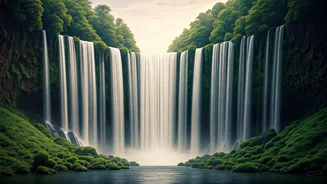
While countless ephemeral cascades appear during the monsoon, Cherrapunji is also home to permanent, monumental waterfalls that reach their zenith during this season. The most famous is Nohkalikai Falls, the tallest plunge waterfall in India. Fed by the monsoon rains, it transforms from a single, elegant ribbon of water into a thunderous, powerful torrent that crashes into a turquoise pool below. Its name carries a somber local legend of a woman named Likai, adding a layer of poignant history to its immense natural power. Nearby, the Seven Sisters Falls (Nohsngithiang Falls) presents a different kind of spectacle. Here, seven distinct streams of water cascade side-by-side over limestone cliffs, creating a magnificent, wide curtain of water that is best viewed during the peak rains when all seven flows are active and commanding.
Bridges Grown from Life Itself
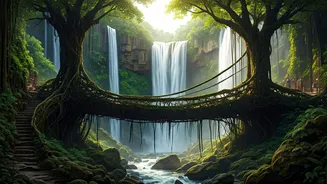
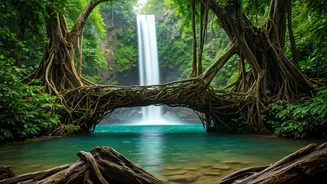
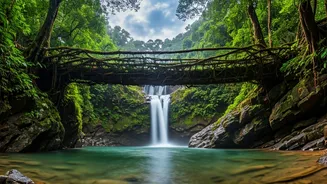
Perhaps the most striking example of how life has adapted to this water-logged world is not a waterfall at all, but a bridge. The indigenous Khasi people have spent centuries perfecting a form of bio-engineering that seems straight out of a fantasy novel: the living root bridge. Instead of building with wood that would quickly rot in the damp climate, they guide the aerial roots of the Ficus elastica tree across rivers and gorges. Over decades, these roots grow and intertwine, strengthened with stones and wood, until they form a solid, living structure capable of withstanding the powerful monsoon floods. These bridges, some of which are hundreds of years old, are a testament to a patient, harmonious relationship with nature. Walking across one, with a river raging below and rain filtering through the jungle canopy, is to understand that in Cherrapunji, even the infrastructure is alive.